The Manga Curmudgeon

Spending too much on comics, then talking too much about them

  • Home
  • About
  • One Piece MMF
  • Sexy Voice & Robo MMF
  • Comics links
  • Year 24 Group links
You are here: Home / Archives for Viz

Upcoming 3/3/2010

March 2, 2010 by David Welsh

An interesting mix of books will be arriving at comic shops this week.

First and foremost is Vertical’s soft-cover version of Osamu Tezuka’s MW. This is one of my favorite comics by Tezuka, as you could probably guess from my really long discussion of it with Tom Spurgeon. Kate (The Manga Critic) Dacey is giving away four copies of the book, and she takes the opportunity to revisit her review.

Staying with the classics, CMX releases the 15th volume of Kyoko Ariyoshi’s peerless ballet drama, Swan. In a weird coincidence, I’ve also written about this one at length.

Underground (Image), a nifty mini-series written by Jeff Parker and illustrated by Steve Lieber with colors by Ron Chan, concludes with its fifth issue. I can’t seem to find a cover image, but you can go visit the title’s site and see some sample pages. I’ve enjoyed this cave-bound tale of rangers versus no-good developers quite a bit.

Marvel gathers a whole lot of talent for its three-issue Girl Comics mini-series, which debuts Wednesday. It’s got a kind of unfortunate name, but what’s new about that? The participation of Colleen Coover will probably meet the price of admission, at least for me. You can take a look at several preview pages over at Comics Alliance.

Or you could just dump all of your comics budget on new volumes of Eiichiro Oda’s One Piece from Viz, specifically the 34th, 35th, 36th, 37th, and 38th. I won’t lie; I’d almost entirely support that decision, because I’ve developed a seriously unhealthy addiction to this tale of dimwitted pirates and the out-there friends and foes they meet as they pursue big dreams.

But if you did that, you’d be denying yourself the pleasure of the ninth volume of Chica Umino’s Honey and Clover, so my support for an Oda-centric purchasing strategy must be at least partly qualified. And really, after five volumes of nutty high-seas adventure, won’t it feel nice to decompress with some quirky, art-school drama?

Filed Under: CMX, ComicList, Contests and giveaways, Image, Linkblogging, Marvel, Vertical, Viz

Weekend reading: Ikigami, Sayonara, Kurosagi

March 1, 2010 by David Welsh

The fourth volume of Motoro Mase’s Ikigami: The Ultimate Limit (Viz) nicely displays Mase’s strengths and weaknesses as a storyteller. Each volume contains two arcs, and the paired tales here include one mawkish affair and one smart outing. “The Last Lesson” displays what happens when Mase neglects his underlying premise – a pernicious government program that randomly kills young people to teach society the value of life – in favor of examining some other social ill. In this case, it’s all about horrible kids, willfully ignorant parents, and overwhelmed teachers, leading one character to wonder “What kind of evil has taken over our schools these days?” That bit of dialogue is in great big type in case you missed the fact that it’s the moral. “A Place of Peace” shows Mase at his sharpest, telling a character-driven story within his larger context. A young mother gets her death notice and must decide what to do with her child in the face of her husband’s complete aversion to responsibility. The human drama plays out with some nice twists and turns and some chilling overall implications. In spite of its inconsistencies, Ikigami is always a very readable series, even when Mase ramps up the melodrama. As always, the bleak little moments of death-dealing bureaucracy provide unsettlingly funny framing. I really wish Mase did four-koma salaryman strips about the death notice office.

I was a little worried when I heard that Joyce Aurino wouldn’t be translating and adapting the fifth volume of Koji Kumeta’s densely satirical Sayonara, Zetsubou-Sensei (Del Rey). I can understand it, because four volumes of copious end notes and incredibly fiddly references must be enough to send anyone off to a healing retreat on an island in a lake in the Alps that can only be reached by rowboat. (I have no idea if Aurino chose that recuperative strategy. I just like to picture the nuns greeting her with a warm bowl of broth and a hand-woven blanket while reassuring her that “Your work is done for now.”) In all seriousness, Aurino did a remarkable job delivering a funny, frisky script and a veritable encyclopedia of annotations to round out the reading experience. David Ury’s translation and adaptation don’t seem quite as… well… flawless as Aurino’s, but they’re still very, very good, and this tale of a suicidal teacher and his diversely horrible students maintains its grim, biting charm. Highlights of the fifth volume include a new student, “mean-looking girl” Mayo Mitima, and the ongoing descent of “methodical and precise girl” Chiri Kitsu, and Kumeta’s twisted dissection of human foibles never really falters.

There’s nothing game-changing in the 10th volume of The Kurosagi Corpse Delivery Service (Dark Horse), written by Eiji Otsuka and illustrated by Housui Yamazaki, but it does show the creators in top form. It occurred to me that Kurosagi’s intentions are the same as Ikigami’s – how people deal with death, and how they address their unfinished business. In spite of the fact that Kurosagi is a comedy, I think it has smarter and more interesting things to say on the subject. I also really enjoy the way that Otsuka and Yamazaki frame their mini-mysteries, both criminal and emotional. Their satirical edge is in evidence as well, tweaking everything from community health initiatives to moronic reality shows. There’s nothing quite as pleasurable as watching creators establish an intriguing, flexible premise and a quirky, engaging cast and apply them to a wide variety of stories that are still thematically linked. It does make the series hard to review volume to volume, because how many ways can you say it’s still really good?

Filed Under: Dark Horse, Del Rey, Quick Comic Comments, Viz

Previews review March 2010

February 27, 2010 by David Welsh

There’s plenty of interest in the new Previews catalog, as befits that Hallmark Holiday known as “Manga Month,” so let’s dive right in.

Dark Horse celebrates the month in style, though it passes on the Manga Month logo. Still, they’re releasing the first volume of their omnibus treatment of CLAMP’s beloved Cardcaptor Sakura, and this excites me immoderately. I thought Dark Horse did an absolutely beautiful job with their Clover omnibus, so this qualifies as the month’s “must buy.” (Page 51.)

CMX will release Miku Sakamoto’s Nadeshiko Club, a shôjo series from Hakusensha’s Hana to Yume, which is a well-known crack mine. (Personally, I find series from Hakusensha’s LaLa slightly crack-ier, but that’s just a matter of personal preference.) This one spins out of the possibly sexist premise of a girl getting dumped for being insufficiently feminine and joining her school’s home economics club to girl up. CMX has demonstrated excellent taste in shôjo, so this one goes right on the “to buy” list. Rando thought: Hakusensha’s trade dress is really boring. (Page 126.)

Hey, you like Adam Warren’s Empowered, right? He’s writing a one-shot for Marvel, Galacta: Daughter of Galactus, with interior art by Hector Sevilla Lujan and a cover by Warren. I’ll buy anything from Warren, but this does raise the question: who’s this girl’s mother? I really love Warren’s renderings of Marvel stalwarts from the cover image. (Marvel’s insert, page 31.)

Okay, so maybe Cardcaptor Sakura has some competition for book of the month, as Fanfare/Ponent Mon finally releases Korea as Viewed by 12 Creators. “Twelve insightful short graphic stories into the ‘Hermit Kingdom,’ six by European and six by indigenous creators,” the publisher notes. They’re also offering Japan as Viewed by 17 Creators again, so if you’re sick of hearing people recommend it and not being able to find a copy, now’s your chance. (Page 251.)

I’ve liked some comics written by Kathryn Immonen, and I think Stuart Immonen is a terrific artist. They collaborate to explore a potentially fascinating story in Moving Pictures (Top Shelf): “During World War II the Nazis pillaged much of Europe’s great art collections. Museum curator Ila Gardner and SS officer Rolf Hauptmann are forced by circumstances to play out an awkward and dangerous relationship in a public power struggle.” Sounds like a winner to me. (Page 292.)

Cats and comfort food sound like an extremely promising combination, so I’ll take a chance on the first volume of Kenji Sonishi’s Neko Ramen: Hey! Order Up! (Tokyopop). It’s about a “former kitten model” (an actual kitten, apparently, so be at ease) who leaves celebrity behind to become a ramen cook. The only possible down side to this is that it’s a manga based on an anime, which sometimes has mixed results. (Page 297.)

I don’t actually think Kumiko Suekane’s Afterschool Charisma is a good comic, but I find it addictively ridiculous. Viz has been serializing the tale of clones of famous historical figures on its SigIKKI site, and now it’s releasing a print version. It’s probably worth the price of purchase just for the thrill of watching the clone of Sigmund Freud torment his classmates. “Daddy. Daddy. Daddy!” (Page 303.)

You all already known how awesome librarians are, right? But did you know that there’s an action-packed shôjo manga that celebrates that awesomeness? It’s Kiiro Yumi’s Library Wars: Love and War, original concept by Hiro Arikawa, and Viz will release the first volume: “In the near future, the federal government creates a committee to rid society of books it deems unsuitable. The libraries vow to protect their collections, and with the help of local governments, form a military group to defend themselves – the Library Forces!” SOLD. This is an example of the crack-iness of Hakusensha’s LaLa anthology. See what I mean about the trade dress? (Page 305.)

If Cardcaptor Sakura isn’t quite enough CLAMP for you, Yen Press accommodates with the first two volumes of the super-group’s Kobato. It’s about a girl who tries to have a wish granted by mending the wounded hearts of people she meets and “fill a magical bottle with the suffering she has relieved.” This sounds like the kind of CLAMP manga that can be injected directly into a vein. (Page 308.)

Oh, and that Twilight graphic novel is due. (Page 309.)

And there are plenty of new volumes of noteworthy series:

  • 20th Century Boys vol. 9, written and illustrated by Naoki Urasawa, Viz, page 303
  • Black Jack vol. 11, written and illustrated by Osamu Tezuka, Vertical, page 300
  • Children of the Sea vol. 3, written and illustrated by Daisuke Igarashi, Viz, page 303
  • Detroit Metal City vol. 5, written and illustrated by Kiminori Wakasugi, page 303
  • The Kurosagi Corpse Delivery Service vol. 11, written by Eiji Otsuka, illustrated by Housui Yamazaki, Dark Horse, page 53
  • Moyasimon: Tales of Agriculture vol. 2, written and illustrated by Masayuki Ishikawa, Del Rey, page 244
  • One Piece vols. 49-53, written and illustrated by Eiichiro Oda, Viz, page 305
  • Filed Under: CMX, Dark Horse, Del Rey, Fanfare/Ponent Mon, Marvel, Previews, Tokyopop, Top Shelf, Vertical, Viz, Yen Press

    License request day: Freesia

    February 26, 2010 by David Welsh

    Looking back on my roster of license requests, I’m noticing a tendency towards the sparkly or the introspective. Those are certainly my two favorite kinds of comics, but I feel like I’m neglecting ultra-violent manga. I mean, if the category is going to get marginalized in popular media for its sexed-up bloodshed, there might as well be more of those comics available in English, right?

    In the interest of full disclosure, I should note that this wasn’t my original intent. I was looking through a list of titles serialized in Shogakukan’s IKKI anthology with the notion of maybe cobbling together a list of comics that might be added to Viz’s SigIKKI site. I saw one title, Freesia, and thought to myself, “Why, that’s one of my favorite botanicals! I wonder what it’s about?”

    Okay, so Freesia, written and illustrated by Jiro Matsumoto, will not be posted on the SigIKKI site any time soon. There are nipples and hunting knives on page two, and while Viz is to be admired for expanding its catalogue with edgier titles, it seems unlikely that this is going to be one of their online loss leaders. Still, the series sounds kind of awesome in a Dark Horse kind of way.

    Like Motoro Mase’s Ikigami: The Ultimate Limit (published in English by Viz, originally serialized in Shogakukan’s Weekly Young Sunday), Freesia spins out of a really misguided government program. Due to recessionary pressures, Japan closes down most of its prisons and passes a law that allows the victims of crime to take revenge on the people who hurt them. Since not everyone is equipped for that sort of therapeutic activity, a thriving sector of “Vengeance Proxy Enforcer firms” pops up in the entrepreneurial landscape.

    Freesia follows an agency full of variously disturbed enforcers, some of whom seem to have specifically useful skills when it comes to assassination. Here are links to Shogakukan’s listings for the first six volumes. If you click on the button with the magnifying glass under the cover image in the listings for the first six volumes, you can look at some sample pages, though I don’t recommend you do it at work:

  • Volume 1
  • Volume 2
  • Volume 3
  • Volume 4
  • Volume 5
  • Volume 6
  • It’s also been published in its entirety in Spanish by Ivrea, and I think there’s also a live-action movie.

    I have no idea if Dark Horse is able to license Shogakukan titles, but they do seem like the most natural habitat for manga with lots of brutality and nudity. Just have the shrink wrap and the “Mature Content” stickers at the ready.

    Filed Under: Dark Horse, License requests, Viz

    From the stack: Ultimo vol. 1

    February 25, 2010 by David Welsh

    Stan Lee created the template for a lot of comics I loved for a very long time. Beyond that, he was a very prominent figure in those comics, at least in terms of the tone that Marvel put forward. He was the cheesy ringmaster in the text pieces, the company’s head cheerleader. Even when I was six, he never seemed as young to me as he seemed to feel, but there was a weird charm to that. So what if he was using made-up lingo that would seem out of date and awkward coming out of the mouths of people 20 years younger? He didn’t convey any cynicism to me, though whether that was because my radar for such things hadn’t yet developed, I can’t say.

    He still doesn’t really convey any cynicism to me, though his bombast does strike me as even more awkward now than it did then. (It’s kind of like seeing snippets of Hef with a trio of girlfriends a quarter of his age, though it’s nowhere near as creepy.) Time hasn’t really seemed to pass for Lee, at least in terms of his enthusiasm for trying new things. He’s continually busy, tinkering around with DC’s characters in those “Just Imagine” books a few years ago, hosting a reality show, animating Pamela Anderson, and so on. So it’s unsurprising that he would eventually get around to manga.

    The result is Ultimo (Viz). Lee provided the concept, and the story and art were executed by Hiroyuki (Shaman King) Takei, with inking support from Daigo and painting duties executed by Bob. It’s serialized in Viz’s Shonen Jump over here and as Karakuridôji Ultimo in Shueisha’s Jump SQ in Japan. That kind of exposure indicates that it clearly isn’t just a vanity project or a courtesy to a comic-book legend. It’s a serious commercial effort by all concerned.

    And Lee is even more present in the narrative as he was in those old Marvel Comics. He provides the introduction. There’s a photo of him in a yukata. He even inspires a character, Dunstan, who sets the whole plot in motion. And still, somehow, none of this is creepy, except for possibly an end-note interview where Lee urges readers to “buy as many copies of Ultimo as [they] possibly can.” Keep your collector’s speculative mentality to yourself.

    I’m fond of Lee, I really am, and nothing here changes that. He’s got the same huckster sense of fun with just enough sincerity underneath. But fondness aside, part of me was hoping that Ultimo would be a train wreck. This isn’t because I wish ill to anyone involved, but because the combination of Lee and manga enticingly suggests a lot of ways things could go wrong. (I think every generation deserves its Broadway musical version of Carrie, don’t you?)

    Sadly, Ultimo is competent, mildly odd action shônen about fighting robots. Given Takei’s participation, it would have been competent and mildly odd without Lee’s participation. In my experience with Takei’s work, he’s given to unsettling character designs that straddle the line between cute and creepy, and that’s in evidence here. Unfortunately, it’s the most interesting aspect of the book.

    Anyway, here’s the plot: a long time ago, Dunstan decides to create powerful robotic dolls that would answer the eternal question: “Who’d win? Good or evil?” The dolls re-emerge in the present day and align themselves with reincarnated versions of the people they knew back in the feudal era. They fight. And we seem to be set to meet a bunch of other robotic dolls that personify a variety of gradations of good and evil. That’s about it, aside from some teen-angst garnish about our hero, Yamato.

    The battle between good and evil is ubiquitous in action shônen, and the interest comes from the ways the creators dress it up. Stripping the concept down to an action-figure version doesn’t doing anything to enhance the core idea. Yamato’s woes are kind of generic, though I always feel at least a little bit sympathetic for reincarnated characters of a certain type. The poor bastards never stood a chance, what with the centuries-old destinies to replay and other people’s unfinished business.

    As I noted, Takei’s character designs bring the most to the table in terms of the actual comic. He doesn’t seem inclined to do straight-up cool, throwing in some kind of unsavory note to each aspect, and his robotic dolls are very much in that vein. They’re delicate and monstrous at the same time, and the unnerving experience of looking at them helps compensate for the fact that they don’t really have much in the way of personality.

    Basically, my problems with Ultimo are my problems with generic action shônen. I can recognize the competence of its execution without being particularly interested in the characters or outcomes. Aside from the novelty of watching Lee interface with manga outside the narrative is the best reason to read the book, and that doesn’t add up to much.

    (This review is based on a review copy provided by the publisher.)

    Filed Under: From the stack, Viz

    Letter head

    February 22, 2010 by David Welsh

    I can’t really say that I’m a huge fan of Yun Kouga’s comics. Earthian (Blu) was one of the comics that cemented my opinion that love stories between angels are relentlessly dull, and Loveless (Tokyopop) struck me as too melodramatic and confusing. I do find her art lovely in an odd way, so I keep trying.

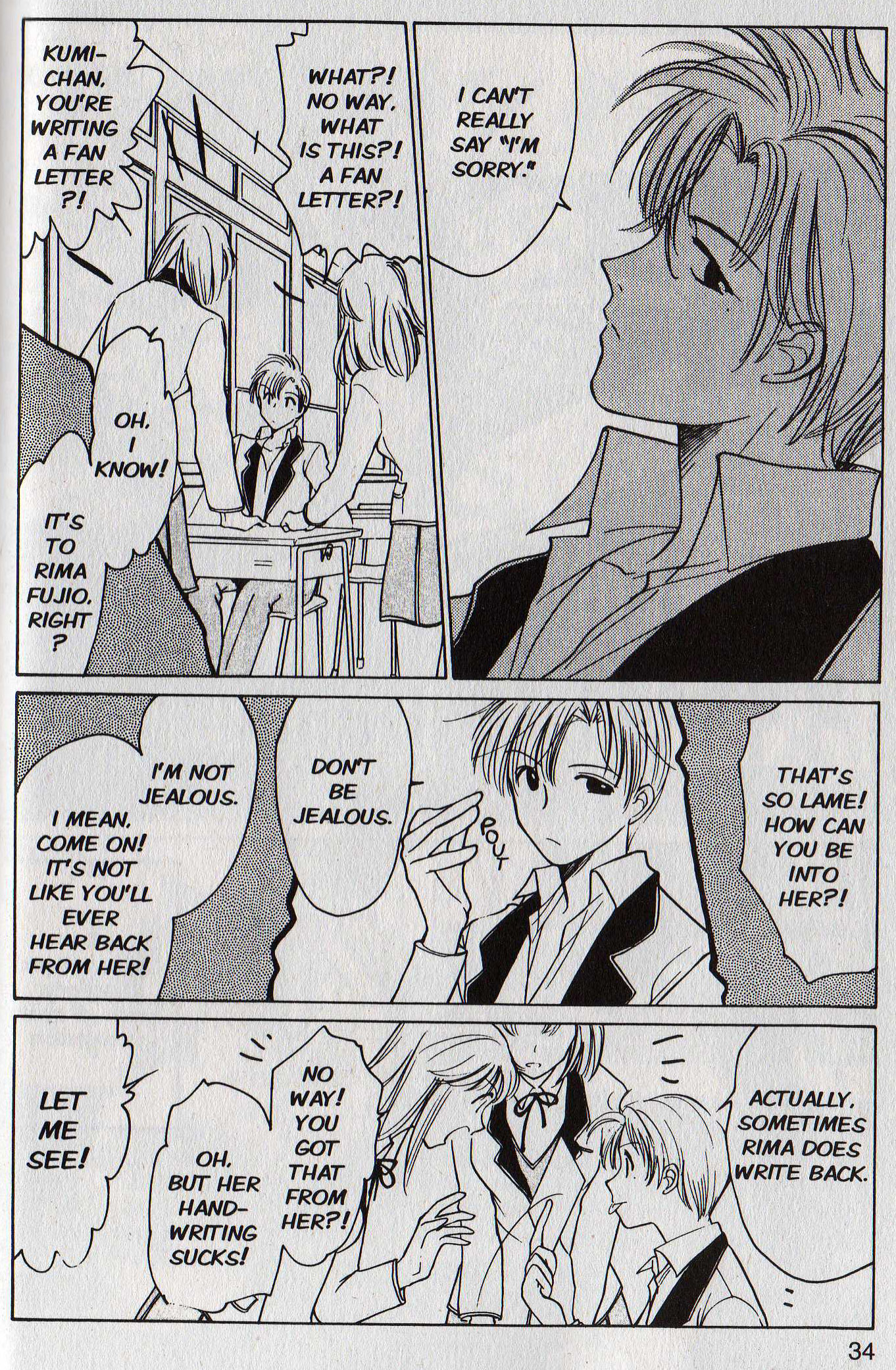
    I might have liked Crown of Love (Viz), a tale of romantically entangled pop idols, but there’s an obstacle. The font choices don’t make any sense to me.

    As you can see in the image above, all of the dialogue is printed in upper-case italics. Internal monologues and asides use sentence-case italics. There’s no distinction between present-moment font choices and flashback font choices, so it can be a little confusing to determine when the story shifts to explore past events.

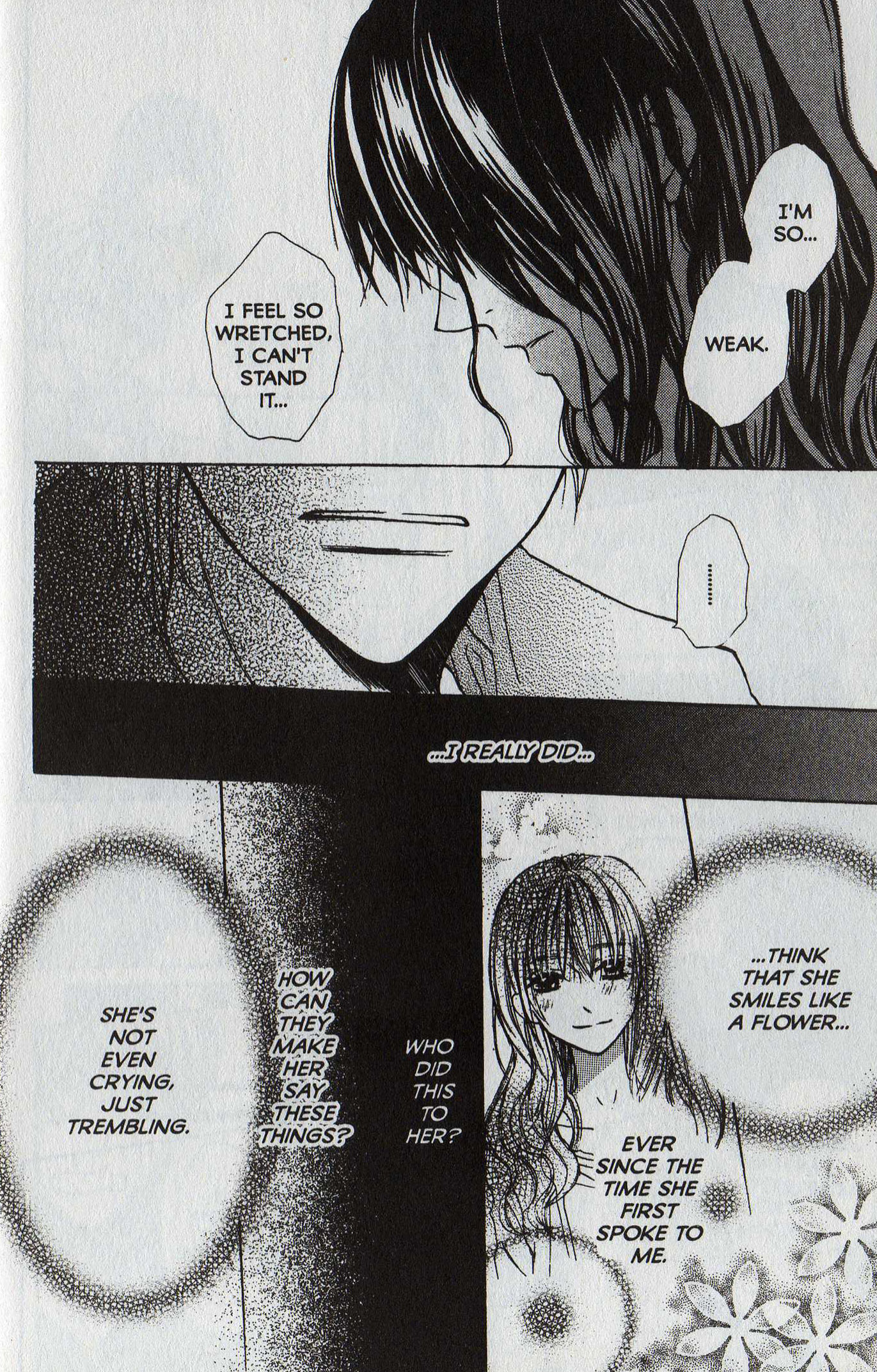
    So my biggest issue with Crown of Love is with the way the words are presented. In my experience, upper-case italics are the font of meaningful flashbacks. Italicized text seems best applied to either shouting or internal musings as opposed to run-of-the-mill dialogue. So the consistent use of upper-case italics puts too much import on moments that should read as breezy and conversational. For contrast, here’s a page from the third volume of Ken Saito’s The Name of the Flower (CMX) that I think uses varied lettering extremely well:

    Gradations of emotion seem important in Crown of Love, as the story shifts from classroom banter to industry scheming to intense and sudden feelings of romance. But the lettering bleeds the dialogue of visual nuance. It renders it in monotone. You can read it into the dialogue, but, frankly, there’s not that much nuance to be mined, and it seems like an awful lot of work to invest in a fairly slight outing.

    There is promise here. Kouga’s illustrations are as attractive as always, and they’re cleaner and clearer than I remember them being in other titles. I like the agent character, Ikeshiba, who uses his charges’ intense emotions to get his way and move them forward in their careers. He’s so forthright in his manipulation, which is refreshing in contrast to the scheming, capricious old pervs agents often are in idol stories. And Kumi, the boy Ikeshiba is trying to sign by dangling a female starlet in front of him, has a domestic situation that’s grippingly unpleasant.

    But the sameness of the lettering, its artificial, often misplaced urgency, flattens so many of the little peaks and valleys that could have been more meaningful. Dave (Comics-and-More) Ferraro notes that “Equal weight is put on everything as the book progresses,” though he doesn’t specifically mention the lettering. So it’s entirely possible that I’m the only person who has this problem, which suggests that I’m nitpicking. Here are a couple of links to reviews by other people:

  • Kate (The Manga Critic) Dacey
  • Sean (A Case Suitable for Treatment) Gaffney
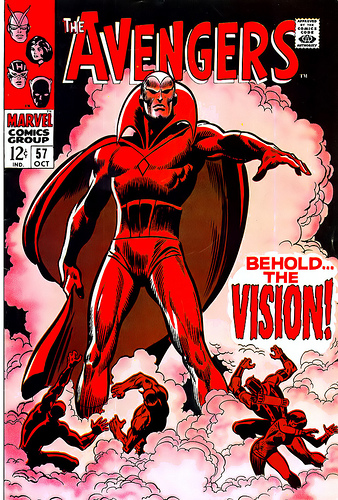
  • There’s always the possibility that my deeply ingrained association of italicized all-caps comes from another source:

    Filed Under: Blu, CMX, From the stack, Marvel, Tokyopop, Viz

    IKKI has returned

    February 18, 2010 by David Welsh

    Viz’s SigIKKI site is back up and running after a hiatus with new chapters of my two favorites series, Natsume Ono’s House of Five Leaves and Shunju Aono’s I’ll Give It My All… Tomorrow.

    Update: Post title changed due to a spam wave.

    Filed Under: Anthologies, Viz, Webcomics

    Upcoming 2/17/2010

    February 16, 2010 by David Welsh

    Now that the Sexy Voice and Robo Manga Moveable Feast has pretty much wound down, things can return to what passes for normal here at The Manga Curmudgeon. (Though if you want to add your thoughts on Kuroda’s book, I’ll happily add them to the roster.) So let’s take a look at this week’s ComicList along with a quick recap on last week’s neglected offerings.

    If a week’s shipping list includes a new volume of Naoki Urasawa’s 20th Century Boys, then that volume will very likely be the book of the week. It’s just that simple. Here are some thoughts on the seventh volume from Johanna Draper Carlson at Manga Worth Reading:

    “Urasawa’s use of standard action manga elements demonstrates that it’s not the raw material, it’s what you do with it. He draws so well and he’s so clearly thought through what he’s doing with these elements that cliched scenes, such as a prison escape chase, become interesting all over again.”

    This is easily one of the most enjoyable series of any provenance that you’re likely to find in a comic shop or bookstore.

    Also out from Viz is the first volume of one of their IKKI series, Bokurano: Ours, written and illustrated by Mohiro Kitoh. It’s about a group of classmates who end up piloting a giant robot. I’m not going to lie. This one runs at about the middle of the pack for me of the titles serialized at the IKKI site, but perhaps reading it in book form will leave me with a more enthusiastic impression. It just feels kind of standard to me next to all of the other series on offer.

    CMX offers new volumes of two series from a category that’s a particular strength for the imprint, endearing shôjo. I preferred Natsuna Kawase’s The Lapis Lazuli Crown to A Tale of an Unknown Country, but the latter is charming enough that I’ll certainly snag the second volume. I am seriously behind on Yuki Nakaji’s Venus in Love, so I’ll likely have to do a big catch-up order at some point before I can commit to buying the eighth volume. It’s an endearing college love triangle-quadrangle-pentagram, so I’ll definitely make the effort.

    As to last week, here are some of the retrospective highlights:

  • Little Nothings vol. 3: Uneasy Happiness, written and illustrated by Lewis Trondheim, NBM: Funny, smart observational comics available for your perusal at NBM’s blog.
  • Ikigami: The Ultimate Limit vol. 4, written and illustrated by Motoro Mase, Viz: Mase has got your death panels right here, Palin. I like this series. I don’t think it’s one for the ages or anything, but I always pick up new volumes in a timely fashion, which has to mean something.
  • Juné’s Reversible anthology, which I reviewed yesterday.
  • Filed Under: CMX, ComicList, Juné, Linkblogging, NBM, Viz

    Sexy Voice and Robo MMF: Matt Blind

    February 15, 2010 by David Welsh

    Matt (Rocket Bomber) Blind not only reviews Sexy Voice and Robo…

    “It’s a great mix of art and story and character, and I can only imagine what it’s reception would have been if Kuroda had been an American comicker in 2008 rather than a manga-ka in Japan in 2001.”

    … he demystifies the “Moveable Feast” as it applies here:

    “So our adaptation and use of the term ‘A Manga Moveable Feast’ could be considered as both a celebration with no fixed date (or location) and also a collection of voices and perspectives that may have no other common associations past the fact that they happen to cohabit the same space at the same point in time, and that they engage each other for so long as all inhabit the same moment. (But, of course, with manga.) (and trying to catch a little bit of that Paris magic.)”

    Click here for a running list of entries to this edition of the Manga Moveable Feast.

    Filed Under: Linkblogging, Manga Moveable Feast, Viz

    Sexy Voice and Robo MMF: Ed Sizemore

    February 15, 2010 by David Welsh

    At Manga Worth Reading, Ed Sizemore draws some interesting comparisons between Sexy Voice and Robo and the work one of the defining creators of gekiga:

    “Gegika chronicled the new social realities of the post-World War II industrial revolution in Japan. In particular, gegika focused on the underbelly of Japanese society that emerged as a result of Japan’s swift transformation from a rural and agrarian economic base to an urban and industrial one. By contrast, Sexy Voice and Robo’s neo-gegika explores the unseemly side of Japanese society that emerges in the wake of the computer revolution in the 1990s and 2000s. Japan is now shifting from an industrial economic base to a computerized one.”

    Click here for a running list of entries to this edition of the Manga Moveable Feast.

    Filed Under: Linkblogging, Manga Moveable Feast, Viz

    « Previous Page
    Next Page »

    Features

    • Fruits Basket MMF
    • Josei A to Z
    • License Requests
    • Seinen A to Z
    • Shôjo-Sunjeong A to Z
    • The Favorites Alphabet

    Categories

    Recent Posts

    • Hiatus
    • Upcoming 11/30/2011
    • Upcoming 11/23/2011
    • Undiscovered Ono
    • Re-flipped: not simple

    Comics

    • 4thletter!
    • Comics Alliance
    • Comics Should Be Good
    • Comics Worth Reading
    • Comics-and-More
    • Comics212
    • comiXology
    • Fantastic Fangirls
    • Good Comics for Kids
    • I Love Rob Liefeld
    • Mighty God King
    • Neilalien
    • Panel Patter
    • Paul Gravett
    • Polite Dissent
    • Progressive Ruin
    • Read About Comics
    • Robot 6
    • The Comics Curmudgeon
    • The Comics Journal
    • The Comics Reporter
    • The Hub
    • The Secret of Wednesday's Haul
    • Warren Peace
    • Yet Another Comics Blog

    Manga

    • A Case Suitable for Treatment
    • A Feminist Otaku
    • A Life in Panels
    • ABCBTom
    • About.Com on Manga
    • All About Manga
    • Comics Village
    • Experiments in Manga
    • Feh Yes Vintage Manga
    • Joy Kim
    • Kuriousity
    • Manga Out Loud
    • Manga Report
    • Manga Therapy
    • Manga Views
    • Manga Widget
    • Manga Worth Reading
    • Manga Xanadu
    • MangaBlog
    • Mecha Mecha Media
    • Ogiue Maniax
    • Okazu
    • Read All Manga
    • Reverse Thieves
    • Rocket Bomber
    • Same Hat!
    • Slightly Biased Manga
    • Soliloquy in Blue
    • The Manga Critic

    Pop Culture

    • ArtsBeat
    • Monkey See
    • Postmodern Barney
    • Something Old, Nothing New

    Publishers

    • AdHouse Books
    • Dark Horse Comics
    • Del Rey
    • Digital Manga
    • Drawn and Quarterly
    • Fanfare/Ponent Mon
    • Fantagraphics Books
    • First Second
    • Kodansha Comics USA
    • Last Gasp
    • NBM
    • Netcomics
    • Oni Press
    • SLG
    • Tokyopop
    • Top Shelf Productions
    • Vertical
    • Viz Media
    • Yen Press

    Archives

    Copyright © 2026 · Genesis Framework · WordPress · Log in