The Manga Curmudgeon

Spending too much on comics, then talking too much about them

  • Home
  • About
  • One Piece MMF
  • Sexy Voice & Robo MMF
  • Comics links
  • Year 24 Group links
You are here: Home / Archives for Viz

From the stack: Bokurano: Ours

March 25, 2010 by David Welsh

Mohiro Kitoh’s Bokurano: Ours (Viz) is one of those comics that apply grimly serious coats of paint to popular fantasy architecture. In this case, it’s about a group of kids climbing into a giant robot to save the world. The twist is that the kids are realistic, or “realistic,” in that some of them are understandably frightened or emotionally disturbed or just plain awful instead of sunny and dedicated. There’s also some play with what would actually happen if giant robots battled in a populated area.

It’s a competent comic, but it isn’t particularly interesting to me. I’m not a fan of un-deconstructed giant-robot stories in the first place, and I’ve never yearned to see anyone expose their seedy underbellies. And it isn’t as though there’s a shortage of bleak versions of kid-friendly concepts, so I can pick and choose from the best of them. (Naoki Urasawa’s Pluto, also from Viz, is a great example. Come to think of it, there’s some great giant-robot nonsense in Urasawa’s 20th Century Boys which treats the concept with the degree of seriousness I feel like it deserves, which is just about none at all.)

I’d read the first few chapters of Bokurano on Viz’s SigIKKI site, but it didn’t hold my attention in the way that site’s weirder, more imaginative series have. I thought it might read better in a larger chunk, but I found myself even less attentive. You can’t win them all.

(This review is based on a complimentary copy provided by the publisher. You can read a bunch of free chapters of Bokurano: Ours here.)

Filed Under: From the stack, Viz

Upcoming 3/24/2010

March 23, 2010 by David Welsh

Depending on your tastes, it’s a relatively lean week for comics arrivals, but there are still some appealing options.

NBM releases the third in a series of graphic novels created in collaboration with the Louvre in Paris. It’s On the Odd Hours by Eric Liberge, and the preview pages are quite striking. Johanna (Comics Worth Reading) Draper Carlson has posted a favorable early review. NBM is offering a bargain if you purchase On the Odd Hours along with Nicolas De Crécy’s gorgeous Glacial Period.

Those of us who’ve been itching to see some of Eisner Hall of Fame nominee Yoshihiro Tatsumi’s early, pulpy dramas will have our itch scratched when Drawn and Quarterly releases Black Blizzard. D&Q doesn’t seem to have a permalink for the book yet, but scroll down a bit on this page and you can see some preview pages.

I’m much more interested in Dark Horse’s omnibus editions of CLAMP’s Cardcaptor Sakura, but I’d be remiss if I didn’t note that the first volume of the manga super-group’s Chobits is due on Wednesday. It’s about a struggling nerd who finds a computer shaped like a beautiful girl. It was originally licensed for English publication by Tokyopop until original publisher Kodansha withdrew its titles from Tokyopop and handed the relevant CLAMP titles over to Dark Horse, perhaps as a consolation prize for the fact that Kodansha yanked Akira and Ghost in the Shell from Dark Horse to sort-of launch its own comics-in-translation imprint. Next week on All My Licenses…

Speaking of properties that used to call Tokyopop home, Image releases the sixth issue of Brandon Graham’s King City. I’m not going to bother trying to link to this one, but I’ve been enjoying this series very much in pamphlet form, and the individual packages are very handsome things.

Viz has only one book to offer, and I bought it a couple of weeks ago at a bookstore. It’s the third omnibus edition of Eiichiro Oda’s One Piece, collecting volumes seven, eight and nine. I’m of the opinion that all of Oda’s gifts as a creator really, truly come together in the ninth volume, but I’ll get into that in more detail at a later date, possibly Sunday, since that’s the day I seem to devote to my pitiful One Piece geek-outs. We now enter an unfortunate fallow period before the release of new volumes and the fourth omnibus. I may have to pick up the tenth, eleventh and twelfth volumes individually, though I may maintain my resolve to stick with the cheaper omnibuses.

Filed Under: ComicList, Dark Horse, Drawn & Quarterly, Image, Linkblogging, NBM, Viz

Crooks and cooks

March 21, 2010 by David Welsh

The Reverse Thieves recently podcast their thoughts on why Eiichiro Oda’s One Piece (originally published by Shueisha and released in English by Viz) isn’t the mega-hit here that it is in Japan. (That’s a volume sold every 1.6 seconds, basically.) As a relatively recent convert to the Cult of the Straw Hats, I’ve pondered this question, and I certainly enjoyed hearing the Thieves speculate. I enjoyed listening to them geek out over the title’s many glories even more, since I’m increasingly given to doing the exact same thing.

One observation that really caught my ear was about Oda’s world building and his willingness to plant tiny, seemingly irrelevant narrative seeds that come to full flower later, sometimes much later. Natsuki Takaya did this all the time in Fruits Basket (Tokyopop), turning seemingly oblique observations and sideways glances from volume two into searing heartbreak in, say, volume nine. It’s quite a skill, that kind of callback work, and it displays a great deal of confidence on the part of the creator that they’ll be able to tell their story according to plan.

That’s a nice element of Oda’s work, but what really make the book addictive are the moments when action, comedy and drama come together perfectly. It’s amazing to see Oda mix heartbreaking bits of character development in with a wild, sprawling brawl packed with over-the-top action and bizarre opponents. It’s what pushes One Piece from the level of very good shônen fantasy to great manga in general.

One of my side obsessions is finding the spot where that combination first really clicked. It doesn’t happen in volumes four through six, collected here. One Piece is still just very good, and Oda is kind of vamping as he assembles his core crew and introduces the kinds of adventures they’ll be having for the foreseeable future.

In this case, it’s settling the affairs of poor old Usopp, the sharpshooter and compulsive liar who’s trying to protect his seaside village from the byzantine schemes of Captain Kuro and Kuro’s bizarre henchmen. These chapters reinforce Oda’s ability to craft antagonists who are freaky and amusing and genuinely menacing at the same time. They also reinforce some of Luffy’s defining qualities, specifically his utter confidence even when he’s getting his rubber butt handed to him.

That settled, the Straw Hats then sail on to a floating restaurant staffed by brawl-happy former pirates and led by a chef with a peg leg and a moustache that’s practically a character in its own right. These chapters highlight Oda’s way with absurd scenarios and interesting settings. They also introduce us to Sanji, the assistant chef with the uzumaki eyebrows and the high-kicking fighting style. Sanji loves the ladies in that ineffectual way of supporting characters in shônen adventure stories, and he loves to feed people. He’s foul-mouthed but oddly dapper, and… wait for it… he has a dream.

Precisely what that dream is will have to wait for the next omnibus. Also on deck for that collection is the secret ingredient to One Piece’s greatness: the crushingly sad character flashback. But there is plenty to enjoy in the meantime. I’d be remiss if I didn’t note that the sprawling fight sequences are really, really good. I don’t have a whole lot of patience for incomprehensible battle techniques and drawn-out struggles, and Oda has yet to fail on those fronts. All of his combatants have specialties, but they always make sense, and there’s more than enough humor and surprise in these knock-down drag-outs to maintain my interest.

But oh, those crushingly sad character flashbacks… you don’t even know, but by volume nine, you will.

Filed Under: From the stack, Viz

Viztube

March 17, 2010 by David Welsh

I’m so much more of a manga fan than an anime partisan, but I do like to track publisher efforts to minimize the allure of pirated content, so I’m running this press release on the new Viz Anime portal after the jump. One thing does strike me, and that’s how un-sexy the adjectives are for this kind of initiative. I mean, “official” and “licensed” and “legitimate” just don’t set the pulse racing, you know? Of course, I’m also opposed to stupid lingo development, so I’m not about to suggest “hipper” alternatives. It’s just something that occurred to me.

VIZ MEDIA LAUNCHES VIZ ANIME

A NEW OFFICIAL WEB DESTINATION FOR SOME OF THE HOTTEST ANIME CONTENT

Optimized Technology Allows Fans To Connect And Interact And Spend Less Time Looking For The Latest Anime Episodes And More Time Enjoying Them

San Francisco, CA, March 15, 2010 – In a significant news announcement, VIZ Media, LLC (VIZ Media), one of the entertainment industry’s most innovative and comprehensive publishing, animation and licensing companies, has detailed the launch of VIZ Anime – a brand new, free-to-use interactive web destination that will become a permanent home to some of the company’s best-loved animated series as well as new content which will be added on a weekly basis. VIZ Anime is accessible at: www.VIZAnime.com.

VIZ Anime kicks off with more than 400 episodes from hit series such as BLEACH, BUSO RENKIN, DEATH NOTE (complete series), HIKARU NO GO, HONEY & CLOVER, INUYASHA (complete series) and INUYASHA: THE FINAL ACT, NANA, NARUTO (complete series) and NARUTO SHIPPUDEN as well as THE PRINCE OF TENNIS. The site will also be the future web home for many other eagerly anticipated anime series set to launch later this year

Episodes can be streamed for free with new ones being added weekly. A variety of interactive social networking tools and features also help foster an official online home and community for VIZ Media anime fans allowing them to connect on and discuss favorite shows, and offer ratings and opinions of various episodes. New functionalities will be added regularly.

  • Users can “follow” as many series as they like and choose to be notified each time a new episode is released, as well as keep track of the last episode they’ve watched. This makes it easy to stay current on series like INUYASHA or NARUTO, which feature more than 100 episodes.
  • Users can comment on individual episodes and also meet and interact with other fans, invite friends to join, ask questions and debate plot twists and characters, voice their opinion on what’s happening in a particular series, and also find out what else is going on across the anime and manga spectrums.
  • Users can rate their favorite episodes by using a “Like” button on each episode page. They can quickly access a list of all the episodes they’ve similarly liked to compare how other users have liked an episode.
  • Users can make a personalized profile page to keep track of the episodes they’ve watched and enjoyed, the series they’re currently following, and comments they’ve made. Mail tools can also be used to send private messages between individual users. Privacy controls let users decide what information is shared publicly and who is able to send them messages.
  • “We’re committed to developing VIZ Anime as a premiere online destination, and hope to offer a real community for VIZ Media fans to interact with each other and share their love of anime,” says Ken Sasaki, Senior Vice President & General Manager of VIZ Media. “We will also utilize the site as a means of two-way communication to better understand what our fans enjoy most and want, and how they engage with anime and manga online. With a lot of content to select from, VIZ Anime will become a favorite site to visit again and again!”

    For more information on VIZ Media or VIZ Anime, please visit www.VIZAnime.com.

    Filed Under: Anime, Digital delivery, Press releases, Viz

    Upcoming 3/17/10

    March 16, 2010 by David Welsh

    I assumed that Natsume Ono’s Ristorante Paradiso (Viz) would be the pick of the week, and I think it’s very good, but I have to say that Bunny Drop (Yen Press) took me by very pleasant surprise. Let’s see what else will arrive on Wednesday.

    Of course, Bunny Drop could just be the debut pick of the week, leaving room for me to single out an ongoing option and rejoice over the arrival of the second volume of Time and Again (Yen Press), written and illustrated by JiUn Yun. I found the first volume to be absolutely delightful, and I can’t wait to learn more about the woman with the positively menacing bouffant who provided that installment’s cliffhanger.

    If you’re interested in the perspectives of sorcerers who navigate landscapes filled with monsters, you’ have no shortage of choices. But what if you’re more interested the monster’s point of view? Look to Q. Hayashida’s Dorhedoro (Viz) for this neglected perspective. In it, “a clan of sorcerers have been plucking people off the streets to use as guinea pigs for atrocious ‘experiments’ in the black arts.” One of those experiments is looking for payback, and he’s just the lizard-headed amnesiac to… well… okay, maybe he isn’t. I can’t say that this is my favorite series in the SigIKKI roster, but it’s got some gorgeously gritty art and an amusingly brutal sense of humor.

    I’m so crazy about Banri Hidaka’s V.B. Rose (Tokyopop), so I’ll have to make a concerted effort to catch up with her I Hate You More Than Anyone (CMX), which hits the nine-volume mark. (I think there are a total of 13 in the series, which was originally serialized in Hakusensha’s Hana to Yume, which is kind of a gold mine of terrific shôjo.) Sean (A Case Suitable for Treatment) Gaffney has been reviewing the series.

    Filed Under: CMX, ComicList, Linkblogging, Viz, Yen Press

    From the stack: Ristorante Paradiso

    March 16, 2010 by David Welsh

    Lori (Manga Xanadu) Henderson wrote a great post about “Noted Women of Manga,” and I agree with all of her choices. I’d certainly add the likes of CLAMP, Junko Mizuno, Ai Yazawa, and Natsume Ono. The thing that I admire about Ono, at least so far, is that she seems to create manga that would interest her more than it would conveniently fit into a magazine’s style. She reminds me of Fumi Yoshinaga in that way.

    This might be ignorance on my part of how things work, but it’s hard for me to imagine a magazine editor saying, “We need a story about a wispy, gullible samurai to really round out our roster. Call Ono!” or “Our line would really be complete if we just had a crushingly depressing family drama. What’s Ono up to?” These very conversations may well have happened, but it strikes me as unlikely. Even the untranslated glimpses I’ve gotten of her yaoi work seem to ignore conventions of category, though that’s just a guess.

    Her latest licensed work, Ristorante Paradiso (Viz), isn’t quite as odd as her other translated titles. It’s a romantic comedy set in an eatery in Rome, driven by an alienated daughter and her irresponsible mother. But it’s got those odd, appealing touches that I’ve come to associate with Ono. For one thing, the restaurant is staffed entirely by older gentlemen who wear glasses because the mother thinks this type of man is smoking hot. (One can assume that Ono shares this sentiment.)

    There’s certainly no shortage of fictional dining establishments run by an army of hot young guys, but it’s nice to see Ono argue that “hot” is relative, or at least a matter of taste. Her waiters, wine stewards and chefs are a generally amiable bunch, pleased to accommodate the fetish of their boss’s wife and the whims of their clientele (within limits). And while 21-year-old Nicoletta doesn’t specifically share her mom’s predilection, she can’t quite resist its effect.

    This is convenient for Olga, the mom, who abandoned Nicoletta 15 years ago to be with a hot, bearish restauranteur. Nicoletta has come to Rome to expose her mother, who concealed her previous marriage from her current husband. But the genial atmosphere of the restaurant and the specific allure of one of its waiters, sad-sack Claudio, keep Nicoletta from executing her planned revenge. Nicoletta even comes to suspect that, while Olga may have been a terrible mother, she’s a pretty interesting woman.

    The book concentrates on gentle, awkward romance and low-key family drama, letting its characters amble through their various arcs at their own pace. Ono’s approach is amiable rather than dramatic. One character even goes so far as to note, “That was anticlimactic.” But that’s not problematic, as there’s nothing wrong with a comic that aims to charm rather than grip. And Ono is certainly equipped to charm, with her graceful art and enticing storytelling.

    (This review is based on a complimentary copy provided by the publisher.)

    Filed Under: From the stack, Linkblogging, Viz

    Resetting sail

    March 14, 2010 by David Welsh

    I don’t know quite why this has happened, or exactly when, but I’ve got an ugly One Piece monkey on my back. Viz sent me some recent volumes from its ramped-up release schedule, and I liked them well enough and, critically, wanted to know what happened next. That desire to know the outcome has gotten steadily worse as I’ve picked up subsequent volumes, and Viz’s omnibus editions of the early volumes have me reading One Piece on two tracks, current and vintage. As a manifestation of this awful addiction (and seriously, I can usually be found wandering around my house with some random volume in hand like a security blanket), I thought I’d revisit an old review of the first two volumes with updated, junkie thoughts in italics and some commentary on the third volume afterwards.

    *

    The “young man with a dream” story is as common to manga as dead girlfriends are to super-hero comics. [I’ve got to apologize for the manga-spandex comparisons that crop up so often in these early reviews. They really don’t serve either kind of comic, but they reflect my head space at the time.] These callow lads want to be sports heroes, great chefs, and master gamesmen. There’s a surprising amount of variety within the genre, and the level of drive the protagonists display can range from amiably low-key to full-out obsessive. But what happens when the dream in question is kind of stupid?

    In the case of Shonen Jump’s One Piece, you get a daft and surprisingly heartwarming comedy that’s probably a lot smarter than it seems.

    Monkey D. Luffy, the dreamer in this instance, wants to be King of the Pirates. There’s some question as to whether he actually knows what pirates do. Luffy grew up in a seaside village that provided refuge for a rather unusual pirate crew, led by good-hearted Captain Shanks. Since the pirates used Luffy’s home as a hideout instead of a target, the boy never saw the darker aspects of piracy. From his perspective, pirates are good-natured rogues, living lives of adventure on the high seas and drunken fellowship on dry land. [Luffy’s vague grasp of the criminality of the pirate’s life seems largely intact.]

    Shanks and company discourage Luffy’s attempts to join their crew. (Did I mention Luffy can’t swim?) He’s impervious to discouragement, though. By the time the pirates save Luffy and his town from a group of mountain bandits, the boy is hopelessly hooked on piracy as a career choice.

    Luffy isn’t much of a long-term thinker, though. By the time he sets off in a sad little tub, he has no crew and only a vague notion of what he’ll do next. And he still can’t swim. As a child, he ate a strange fruit that turned his entire body to rubber. While that has its uses, buoyancy isn’t one of them. [This fruit is part of a horticultural subset known as “devil fruits” that give their eaters amazing and bizarre powers but rob them of the ability to swim a stroke.]

    So Luffy sails off to assemble a crew and pursue his goal, armed only with a beloved straw hat (a gift from Shanks), a rubber body (surprisingly effective for clobbering), and impenetrable optimism (maybe it’s made of rubber, too). In short order, he runs afoul of pirates a bit more representative of the lifestyle. They pillage and murder, often taking sadistic pleasure in the fear they inspire. It’s hard to see how Luffy will fit in with this ilk. [The short answer is that he won’t. Luffy doesn’t want to be a pirate as pirates are; he wants to be a pirate as he has come to conceive them – adventurers who see amazing places and do legendary things, basking in the camaraderie of the crew.]

    Happily, he doesn’t modify his full-speed-ahead tactics a bit. Luffy clearly has his own vision of what piracy is, and he’s blissfully dismissive of any counter-examples. His oblivious determination is also reflected in his attempts at crew recruitment. First up is [Roronoa] Zoro, a noted bounty hunter of pirates who wants to become the world’s greatest swordsman. Second is Nami, a clever thief who preys on pirates and wants to score enough loot to buy a village. Both take an understandably dim view of Luffy’s profession, but the dork who would be King is undeterred.

    In the course of the first two volumes, Luffy bounces through a range of misadventures. He finds Zoro in a town under the thumb of the sadistic Captain Morgan, befriending and inspiring Koby, a would-be navy officer, in the process. Next, he hooks up with crafty Nami in a town under siege by evil pirate Buggy the Clown. There’s peril aplenty, with Morgan, Buggy, and their colorful henchmen doing their best to bring Luffy’s quest to a lethally premature end.

    But there’s plenty to laugh at, too. While creator Eiichiro Oda does some exceptional physical comedy and builds some nice set pieces, the most satisfying laughs come from reversal of expectations. Koby, Zoro, and Nami all do their level best to explain to Luffy what pirates are really like, generally right before Luffy does something courageous and generous. He’s a tough kid to dislike, and it’s hard not to root for him. Dreams of piracy aside, he doesn’t sink to other pirates’ level, and he doesn’t let their brutality disillusion him. [Seriously, Luffy might be congenitally immune to disillusionment.]

    Oda’s visuals are a cartoony treat that remind me a lot of Todd Nauck of Young Justice. He does terrific character design, particularly on scurvy antagonists like Morgan and Buggy. Oda has also come up with some creative renderings of Luffy’s rubbery frame, but he saves them up for maximum impact and comedy. He strikes a very nice balance of actual brutality (Luffy’s kinder, gentler approach to piracy wouldn’t have any impact if there wasn’t a contrasting reality) and highly stylized antics.

    Is One Piece a great manga? Not really, but I don’t think it aims to be. It seems more satisfied to be creative genre entertainment. What raises it above its legion of “young man with a dream” peers are the subtle ways it subverts its own genre. In the final analysis, it offers good pirate fun, solidly crafted and sneakily smart. [This is very clearly wrong, maybe not in terms of Oda’s aims, but certainly in terms of One Piece’s greatness. It has that essential, aforementioned quality that defines great adventure comics – making the reader want to know what happens next because the characters are so likeable and the plots are so engaging. And it can be extraordinarily moving, not so much early on when Oda is setting up his game board, but certainly later.]

    *

    The third volume is most noteworthy for the introduction of Usopp who is, in Whedon-esque terms, “the Zeppo” of One Piece. He’s not exceptional like his cast mates, and his primary skills seem to be in spinning tall tales and taking punishment. (He’s also pretty good with a slingshot. I have no idea if this is meant to reflect a “David in a world of Goliaths” metaphor, but I’ll throw that out there.) His primary function, though, is essential. He’s the (relatively) normal guy, out of his depth but along for the ride because he believes in his friends and cherishes their thrilling adventures, even though those adventures frequently scare him to death. Usopp is Luffy’s opposite in a lot of ways. Luffy is a bulldozer of certainty, while Usopp is characterized by much more realistic doubt, mostly that the Straw Hats will survive their latest mishap. But Usopp keeps trying to contribute and to keep up with the larger-than-life figures around him, and he’s clearly positioned for that thankless role, “the heart of the team.”

    A frequent synonym for “the heart of the team” is “the punching bag,” and Oda seems to be dedicated to a certain consistency in portraying just how Usopp would fare against the Straw Hats’ adversaries. It’s become almost impossible for me to think of Usopp without subconsciously inserting “poor old” in front of his name, but he’s a key ingredient to the series. The central message of One Piece is that everyone should be able to pursue their dreams, even if those dreams are rather beyond the scope of one’s abilities. And that’s why we have friends, to help us achieve those dreams and accept our help in return.

    Filed Under: From the stack, Viz

    Upcoming 3/10/2010

    March 9, 2010 by David Welsh

    Let me just clear a little paperwork out of the way before we delve into this week’s ComicList. I’m keeping a running list of reactions and coverage of yesterday’s grand and glorious news from Fantagraphics, so feel free to drop me a line if you’ve shared some thoughts that I might have missed. Also, the second iteration of the Manga Moveable Feast is in full swing, with Matt (Rocket Bomber) Blind keeping track of everyone’s thoughts on Kaoru Mori’s Emma (CMX), which was originally serialized in Enterbrain’s Comic Beam, the same magazine that hosted Shimura Takako’s Wandering Son. It all comes together.

    Back to the ComicList and sticking with CMX, DC’s manga imprint has some fine comics shipping on Wednesday. I posted a review of the first volume of Mayu Fujikata’s My Darling! Miss Bancho last week, and Kate (The Manga Critic) Dacey rounds up some other early word of mouth in her look at this week’s arrivals.

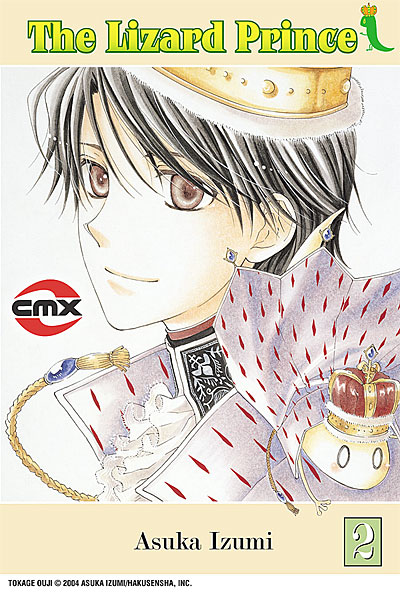
    But, as exuberant pitch persons remind us, that’s not all! There’s also the second (and final) volume of Asuka Izumi’s adorable The Lizard Prince. And in a timely arrival, CMX reminds us that they’ve been putting out classic shôjo for ages. This week’s reminder comes in the form of the 15th volume of Yasuko Aoike’s From Eroica with Love.

    If for some inexplicable reason you missed Scott Chantler’s Northwest Passage in its original, three-volume form or in its hardcover annotated version, Oni Press gives you yet another opportunity to enjoy this terrific period action yarn in the form of a softcover edition of the annotated collection. Chantler does an amazing job combining history and adventure, so treat yourself.

    As with Miss Bancho, I’ve already reviewed the first volume of Yuu Watase’s Arata: The Legend (Viz), and so has Danielle (Comics Should Be Good) Leigh. I’ll quote Danielle so as not to bore you by repeating myself:

    “In the end, the categorization of ‘shonen’ really only tells us that this was published in a shonen magazine and I suppose that makes it useful in some ways. What is more important, though, is the name of the creator attached to the work and in this instance, that name is a tried and trusted ‘brand’ in the world of fantasy manga aimed at a teen audience. Yet in spite of the Watase brand, I want to stress that nothing feels formulaic or stale here — somehow this work feels fresh and energetic and I’m quite looking forward to seeing how the two Aratas’ journeys progress in upcoming volumes.”

    In a very different corner of the Viz catalog, there’s the fourth volume of Kiminori Wakasugi’s Detroit Metal City, a distasteful and hilarious tale of an acoustic kind of guy thrust into the death metal limelight. It’s in the middle of its first multi-part epic, so you might want to pick up the third volume before you read this one. Of course, you probably already own all of the available volumes, right?

    And this is less a recommendation than an inquiry: I remember thinking the first volume of naked ape’s switch was kind of pallid Wild Adapter fan fiction, but I recently got a random later volume in a batch of review copies, and at some point it seems to have become very readable Wild Adapter fan fiction. So my question is this: when did that happen, and is it worth rounding up the previous volumes? Or was the 12th volume just an aberrant quality spike?

    Oh, and in case you were wondering what would top the next Graphic Book Best Seller List at The New York Times, Yen Press is releasing the first volume of the graphic-novel version of Stephenie Meyers’ Twilight, adapted by Young Kim. The only question is whether it will topple Crumb in the hardcover section or Akamatsu in the manga list. I’m sure I’ll read it eventually. I don’t see any reason to rush, though.

    Filed Under: CMX, ComicList, Fantagraphics, Linkblogging, Oni, Viz, Yen Press

    From the stack: Arata: The Legend Vol. 1

    March 8, 2010 by David Welsh

    When I first looked at some pages of Arata: The Legend over at Viz’s Shonen Sunday site, my first thought was that someone was really trying for a Yuu Watase vibe, until I looked at the credits and realized that person was the venerable shôjo manga-ka herself, making her shônen magazine debut. (I’m not very bright.) For whatever reason, I tend to enjoy comics for boys created by women, but the first couple of chapters of Arata didn’t really grab my attention. Having read the first print volume, my attention is newly grabbed. This is some snappy stuff.

    I’ve liked a lot of Watase’s manga. Alice 19th and Imadoki! (both from Viz) are particular favorites. (I rather intensely disliked Absolute Boyfriend, also from Viz, but that’s neither here nor there.) I tend to like her better when she keeps things lively, and that seems to be one of the guiding principles behind Arata. Plot twists come quickly and cleanly, and they promise lots of interesting developments in future chapters.

    The series opens with a boy named Arata forced into drag to fulfill a family obligation to the local princess. This goes rather badly wrong when the princess’s ostensible protectors try and murder her and pin the blame on Arata. He flees a bit farther than he intended, winding up switching places (temporal and dimensional, apparently) with another boy named Arata.

    Modern Arata is a bully-magnet in contemporary Japan whose plans for a happy high-school life are undone when one of his chief junior-high tormentors transfers into his class. Maybe life in a mysterious dimension being chased by murderous godly swords-persons isn’t so bad? Okay, it probably is so bad, as Watase can be rather brutal to her protagonists, but both Aratas seem willing to try and make the best of their respective situations.

    It’s a great set-up for an action fantasy, and I particularly like the parallel fish-out-of-water situations. Both Aratas are appealing types, and they’re surrounded by the expected range of endearing-to-menacing supporting characters. (There’s also a bossy granny, and bossy grannies make just about every manga better.)

    Since this is Watase we’re talking about, you know it’s going to be drawn well. Her work is always detailed but clean, and her action sequences seem a little crisper than usual, if anything. It’s something of a running joke that all of her male characters look the same, but there’s an appealing variety here. Maybe having two male leads inspired her to stretch a bit more. Her designs for the fantasy world are lush and eye-catching, and it’s fun to watch a guy in a school uniform dash around in them.

    In spite of its shônen magazine home, this is really just Watase doing what she does really well – telling the story of a likeable, average person thrust into an alien situation and finding that they have a challenging destiny to fulfill. I think fans of her shôjo work will like it a lot, and I hope readers who wouldn’t touch shôjo with a ten-foot pole will discover a talented creator.

    (This review is based on a complimentary copy provided by the publisher.)

    Filed Under: Digital delivery, From the stack, Viz

    Saturday speculation

    March 6, 2010 by David Welsh

    I don’t really want to wade into the whole scanlation argument. It’s been ably covered by people on all sides of the issue, and if I started fixating on interesting or (in my opinion) arguable points, I probably wouldn’t be able to stop until Wednesday.

    I would like to restate my position, which is that I choose not to read unlicensed translations. I prefer to consume comics in ways that directly benefit the creators or at least have the creators’ consent. It’s entirely possible that, had I come of age when download culture was first emerging instead of later much, much earlier or had more of an interest in the kinds of media that were a big part of the first wave of illegal content (like music), I might have a different opinion on the subject. There’s no way for me to know. Another factor is that I tend to prefer reading physical comics rather than reading them on a computer screen. And last, and probably not least, I don’t have the time to read all of the actual comics I want to read, so the prospect of adding a great volume of legally questionable content to the stack isn’t really alluring to me.

    I would also like to restate that I find those aggregator sites that keep cropping up in online advertisements perfectly revolting, and if I never see one of those ads again, it will be too soon. If people discussing this issue can agree on nothing else, I would hope that we can all concur that those for-profit piracy sites are completely indefensible.

    But I’m all in favor of people being able to sample series online, provided all of the elements of creator consent and participation are in place. I like sampling comics of varied provenance over at the Netcomics site, and I like plunking down my micropayments for series I enjoy. I also have high hopes for Viz’s various online initiatives, the simultaneous release of Rumiko Takahashi’s Rin-Ne and the magazine-specific SigIKKI and Shonen Sunday portals.

    I would love it if Viz developed a similar infrastructure for its Shojo Beat imprint. Since the demise of the magazine, they’ve lost some exposure, and I think online serialization would be a good idea. Viz does have a large number of preview chapters available for online perusal, so that’s a start. But there is a huge catalog of Shojo Beat titles. Some of them do very well in terms of sales, but some really terrific books could probably benefit from online serialization, especially when full runs get squeezed off of bookstore shelves by longer, more popular titles.

    I know there are complications to developing this kind of initiative. In one of the many contentious comment threads that have cropped up over the last week, Erica (Okazu) Friedman noted that many manga-ka aren’t keen on digital distribution of their work. Getting permission to digitally serialize any of the Shojo Beat titles would probably require complicated renegotiation with the creators and original publishers. (Viz was able to do this with the Shonen Sunday books, many of which have been in print for ages, and for a number of series at The Rumic World, some of which were virtually out of print, so it’s not impossible.)

    Then there are potential publisher rivalries. Unlike the Shonen Jump magazine (all Shueisha titles) or the Shonen Sunday site (all Shogakukan), the Shojo Beat imprint is composed of a number of different publishers, including Hakusensha. The Sunday-Jump content divide indicates to me that even co-owning a stateside publishing outlet isn’t enough to negate publisher rivalries, but perhaps the shôjo scene is a little more cordial. The Shojo Beat magazine simultaneously serialized titles from Shueisha, Shogakukan and Hakusensha, so maybe they’d be a little more open to sharing web space. I have no idea. They might go at each other with broken bottles when not in the public eye for all I know.

    But if they do decide to pursue something like this, I think the Shonen Sunday composition of titles would be ideal – one brand-new title with the allure of simultaneous release, a scattering of series that are new to an English-reading audience rolled out before print publication, and a healthy quotient of long-running or completed series to invite new readers to sample stuff that’s already available. And since Viz seems determined to fold some josei into this imprint, I think an online venue would be a great way to build an audience for that tricky demographic.

    It goes without saying that I have no idea if this would be beneficial in terms of building audience or reducing piracy. You need only to look through my license requests to realize just how shaky by commercial sense can be. But a number of reasonable people seem to agree that the best way to minimize the reach of pirated content is to offer a legitimate alternative. This would build on an existing infrastructure and engage another demographic.

    And I won’t lie, it would be cool for me personally, which is really the only reason I suggest anything in terms of business models or licensing decisions. There are lots of Shojo Beat series I’d like to be able to sample in this way.

    Filed Under: Anthologies, Digital delivery, Linkblogging, Netcomics, Viz, Wishful thinking

    « Previous Page
    Next Page »

    Features

    • Fruits Basket MMF
    • Josei A to Z
    • License Requests
    • Seinen A to Z
    • Shôjo-Sunjeong A to Z
    • The Favorites Alphabet

    Categories

    Recent Posts

    • Hiatus
    • Upcoming 11/30/2011
    • Upcoming 11/23/2011
    • Undiscovered Ono
    • Re-flipped: not simple

    Comics

    • 4thletter!
    • Comics Alliance
    • Comics Should Be Good
    • Comics Worth Reading
    • Comics-and-More
    • Comics212
    • comiXology
    • Fantastic Fangirls
    • Good Comics for Kids
    • I Love Rob Liefeld
    • Mighty God King
    • Neilalien
    • Panel Patter
    • Paul Gravett
    • Polite Dissent
    • Progressive Ruin
    • Read About Comics
    • Robot 6
    • The Comics Curmudgeon
    • The Comics Journal
    • The Comics Reporter
    • The Hub
    • The Secret of Wednesday's Haul
    • Warren Peace
    • Yet Another Comics Blog

    Manga

    • A Case Suitable for Treatment
    • A Feminist Otaku
    • A Life in Panels
    • ABCBTom
    • About.Com on Manga
    • All About Manga
    • Comics Village
    • Experiments in Manga
    • Feh Yes Vintage Manga
    • Joy Kim
    • Kuriousity
    • Manga Out Loud
    • Manga Report
    • Manga Therapy
    • Manga Views
    • Manga Widget
    • Manga Worth Reading
    • Manga Xanadu
    • MangaBlog
    • Mecha Mecha Media
    • Ogiue Maniax
    • Okazu
    • Read All Manga
    • Reverse Thieves
    • Rocket Bomber
    • Same Hat!
    • Slightly Biased Manga
    • Soliloquy in Blue
    • The Manga Critic

    Pop Culture

    • ArtsBeat
    • Monkey See
    • Postmodern Barney
    • Something Old, Nothing New

    Publishers

    • AdHouse Books
    • Dark Horse Comics
    • Del Rey
    • Digital Manga
    • Drawn and Quarterly
    • Fanfare/Ponent Mon
    • Fantagraphics Books
    • First Second
    • Kodansha Comics USA
    • Last Gasp
    • NBM
    • Netcomics
    • Oni Press
    • SLG
    • Tokyopop
    • Top Shelf Productions
    • Vertical
    • Viz Media
    • Yen Press

    Archives

    Copyright © 2026 · Genesis Framework · WordPress · Log in