There’s another very noteworthy title in this week’s ComicList, and I didn’t want to bury it under a review of another book, or vice versa. The book is neglected enough as it is, and I didn’t want to contribute to that.
 It’s the final volume of Hitoshi Iwaaki’s horror demi-classic Parasyte (Del Rey), and there are lots of reasons to be excited by its arrival. First of all, there’s the fact that it got here at all. Parayste is one of those sort-of rescues, originally published by Tokyopop. That out-of-print version is lovingly recalled by Shaenon K. Garrity in one of her much-missed installments of the Overlooked Manga Festival. Sincere appreciation should be extended to Del Rey for giving the series another opportunity to reach new readers.
I’m devoted, but lazy, so I’ll just point you to my Flipped column on the book:
“The thing that I like best about Parasyte is that it reminds me that spooky schlock and thoughtful storytelling aren’t mutually exclusive. A story can use shock tactics but not lose its hold on the reader or the authority of its underlying message. Humans and parasites may not be able to peacefully coexist on Iwaaki’s pages, but art and pulp are living in perfect harmony.”
I’m toying with various ideas about how to further promote Parasyte appreciation, so check back on, say, Thursday of next week. Because we know what happens to the inattentive and/or careless.

 You remember that girl who crawled out of the well in
  Of greatest interest to me is Usumaru Furuya’s
  On the Viz front, there are two new Shonen Jump titles, one by the creative team behind Death Note. Tsugumi Ohba and Takeshi Obata reunited for Bakuman, about two students who dream of becoming successful manga-ka.
  I’m not sure if this was announced first at the convention or if I just missed it when mentioned elsewhere, but I’m also looking forward to getting my hands on a copy of Helen McCarthy’s



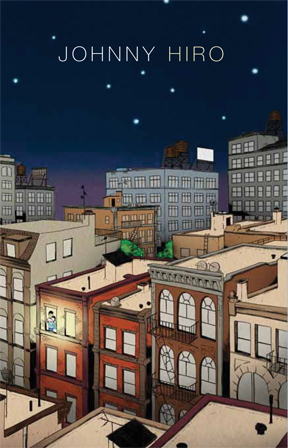 Johnny and Mayumi are young, in love, and living in New York City. That means they work too hard, live in a kind of crappy apartment, and never seem to have enough money at the end of the month. But they have each other and all of the affection, support and loyalty one could hope for; they also have cats. Those things go a long way to compensate for the overworked, underpaid grind.
 That isn’t to suggest that Miwa’s milieu is a pleasant one. The book’s linked short stories are set in a futuristic dystopia full of sometimes terrible people doing what they need to do to get by. Like all good noir casts, the characters all have dark and painful secrets to tote around as they navigate these murky waters. Fortunately, Miwa doesn’t seem inclined to dwell. He doesn’t exactly minimize the suffering on display, but he doesn’t put it on a pedestal either.
 I was largely unmoved by the tale of Naoto, the young girl raised to be a killer by the man she believes murdered her parents. It’s in that segment that Miwa comes closest to flat, straight-faced noir, and while it’s executed well, it lacks the dollops of quirky, what-the-hell humor that characterize the rest of the book.
 The Comics Reporter notes that