 I can’t bring myself to skim when I’m reading for pleasure. If the book is awful enough, I’ll abandon it entirely, but if it doesn’t hit that threshold, I feel compelled to read every word. This can be a problem. It certainly was when I was reading CLAMP’s Clover (Dark Horse). The book is beautifully drawn, economically plotted, often moving, and includes some of the worst poetry I’ve ever read. It includes that awful poetry dozens of times, and, masochistic completist that I am, I felt obliged to read them every time.
“a bird in a gilded cage,
a bird bereft of flight,
a bird that cannot cry,
a bird all by itself”
 These are the lyrics of one of the lynchpin characters, a chanteuse whose untimely death did not, unfortunately, take her songs with her. They’re portrayed as so moving that even isolated psychics can be stricken by their beauty, but I was reminded of the reject pile from my high-school literary magazine.
“Letting me forget with your voice and your touch;
Breaking off the chains that bind my heart and feet”
Now I’m not going to say that my taste in lyrics is impeccable. Sure, I think Stephen Sondheim is a god, but I also liked Air Supply back in the day. But I could hear Air Supply’s awful, awful lyrics being sung, backed by lushly cheesy orchestrations with achingly sincere vocals. In Clover, I have nothing but the words over and over again. I wish there was an advanced version of that greeting-card technology that would allow me to actually hear a song rather than just read its maudlin lyrics. While Dark Horse has done a beautiful and generous job producing this collection, it doesn’t sing when you open it.
 Well, okay, it kind of sings when you open it, because the illustrations are very, very beautiful. The four members of CLAMP trade duties, and Clover was drawn by Mokona with assistance from Tsubaki Nekoi and Satsuki Igarashi, with story by Nanase Ohkawa. What’s most striking to me is the use of negative space. Backgrounds are rather scant; panels float on fields of white and black, creating a precision of emotional effect. It also highlights the elegance, verging on sensuality, of the juxtaposition of the panels.
Lyrics aside, it’s got a story that’s economical and moving, as I said earlier. It’s about immensely powerful psychics identified by the government for possible intelligence and military use who turned out to be a little too powerful for that government’s comfort. The psychics try to find comfort and peace within the restrictions of their daily lives, and some are more successful than others. The collection is less a beginning-to-end narrative than a timeline-jumping look at a group of interconnected characters, a core event, and the things that led up to it. There are some nicely understated moments and many lushly angst-y ones.
“Now, come close to me,
I’ll sing an endless song,
God, please tell me,
Redder than red, the truest love.”
But, god, those lyrics.


 Many may feel that I’m squandering this week’s license request on a sure thing. There are few manga-ka who have had as much of their work translated into English as Fumi Yoshinaga, so the licensing of her current food-fixated comedy,
  Quite a bit of time elapsed between publication of the third and fourth volumes of Yoshinaga’s charming high-school comedy,
  Viz sent out




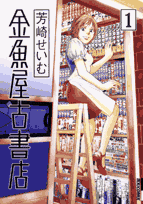
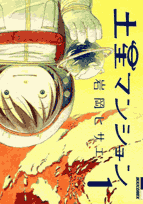
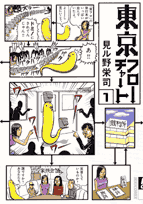
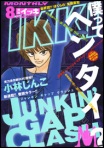
 San Francisco, CA, JULY 15, 2009 – VIZ Media, LLC (VIZ Media), one of the entertainment industry’s most innovative and comprehensive publishing, animation and licensing companies, has announced the full launch of its new SIGIKKI website, which represents a bold new partnership between the company’s VIZ SIGNATURE imprint and IKKI, a monthly magazine published in Japan since 2003 that has established itself as the home of some of the most innovative, bold, and compelling titles in the world of contemporary manga.
 Fortunately, the sampler also includes some pages of Banri Hidaka’s
  To persuade you, I’ll
  The week’s standout (at least in terms of items actually confirmed to be shipping through Diamond) is Osamu Tezuka’s
 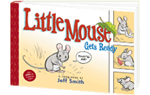 I don’t see it on the ComicList, but the weekly arrivals e-mail from the local shop indicates the arrival of Jeff Smith’s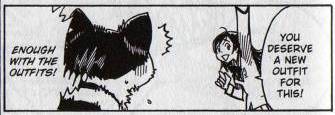
 The prize went to


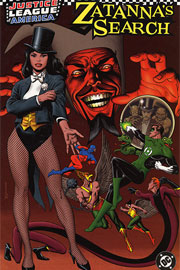 Never fear, though. DC has collected at least one example of Anderson drawing a second-tier, fishnet-wearing heroine in its