Ikigami: The Ultimate Limit (Viz) is about a governmental experiment in social engineering where random young people are killed to encourage the remainder of the citizenry a greater appreciation for life. The condemned are given 24 hours notice by the bureaucracy. You’d think the most engrossing material would come from how they spend their last day. In the second volume, as with the first, I was much more intrigued by the framing-device functionary who delivers the bad news and tries to make sure the people he notifies don’t do anything drastic.
This time around, our young bearer of bad news is finding that the grind of the job, the minute-to-minute demands and stresses, is blurring his underlying moral concerns. He’s becoming callous to his charges, a soulless paper pusher.

Scenes like the one above are chilling and very effective. They constitute a small fraction of the book as a whole, but they’re far and away the best reasons to read the book. These scant pages of context say more about a repugnant initiative than the portrayals of its victims.
That isn’t to say that those portrayals are bad, exactly. Creator Motoro Mase certainly has a penchant for melodrama and a reasonable enough aptitude for portraying it, but there’s a bluntness to these sequences that’s much less interesting than the sly, layered glimpses of the system’s operational details.
This time around, we get two contrasting stories. The first strains to teach a valuable lesson about drug abuse in a thoroughly by-the-numbers fashion. In my opinion, Nancy Reagan left addiction narratives dead on the side of the road before I could even drive a car, and Mase isn’t storyteller enough to resuscitate them. Is anybody?
The second is potentially more interesting, as Mase is daring enough to show the end of a life with real potential. In the abstract, it highlights the dreadful arbitrariness of the program and how harmful it can be to society, or at least a corner of it. Moment to moment, Mase is more concerned with the sentiment of the experience, which mutes the story’s potential to condemn.
But I keep coming back to those creepy, bureaucratic moments and the deft handling of tone and undercurrent they display. For now, they’re enough to carry me through the only average majority of the comic for the spikes of sneaky, economical subplot.
 Among my various comics partialities, I really like stories that rely heavily on specific workplaces or careers. From
  Realtors: Thanks to HGTV, there aren’t many untold aspects of the real-estate profession, so I’m thinking of a weirder take on the topic. It occurs to me that fictional vampires and demons and sorcerers always have great old money pits in which to reside, but how do they acquire them? It then occurs to me that there must be specialists in finding just the right dilapidated pile of stone for just the right supernatural or other-dimensional buyers. They might even have interior designers on staff to make sure the cobwebs are just so and the wallpaper is suitably stained and peeling. And they certainly track the crime reports to find properties with the kind of history that might make them unattractive to the average mortal. (Stubborn bloodstains lower resale value!)
 Travel writers: This is basically the urban version of the previous entry, but with a focus on cityscapes rather than canyons or forests. If I were forced to pick, I’d probably go with a murder mystery angle since the setting would change frequently. Then you could avoid the whole question of why everyone didn’t move away from Cabot Cove since it had such an astonishingly high homicide rate for a small town in Maine.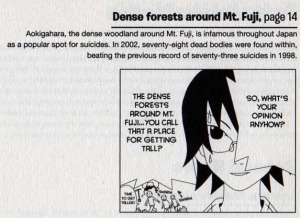
 But today’s title is actually an independent work Smith did with James Robinson for Image: Leave it to Chance. It ran for a mere thirteen issues, but it was really terrific while it lasted. I like
 So apparently someone has decided that the internet needs
  Of course I’m talking about
  This proves to be difficult, and the family decides to keep the kitten. While being housebroken, she mistakenly answers to ‘Chi,’ (the Japanese word for ‘small’, can also be ‘pee’) and this becomes her name. Chi then has a splendid time living with her new family, learning about different things and meeting new people and animals.”
 Okay, so it sounds like it’s
  Morning is in the
 The first may be the fact that Real is perceived as sports manga, which seems to be right up there with josei in terms of stateside salability. Sports manga partisans are devoted, but they are not numerous. Now, I have a theory as to why this category might be significantly less popular in the United States than it is in Japan. It involves a fair amount of stereotyping, so I apologize in advance if this reasoning doesn’t apply to you, and I acknowledge that there will certainly be exceptions, possibly numerous.
 But Real isn’t actually a sports manga. It’s a character-driven drama. There’s certainly athletic activity being portrayed, and some characters are motivated by their desire to excel in competitive sports, but that’s really just one color in the book’s spectrum of aspirations. It’s much more about achieving independence and respect, which are much more universal.
 Real suffers from neither of those failings. It’s gritty and funny and, as I noted before, driven by complex characters. There are no plaster saints in Inoue’s cast. That’s not to say that they’re unsympathetic, and I think the fact that they can be obnoxious or alienating makes the audience’s sympathetic reaction more genuine. Their flaws negate the potentially queasy feeling of abstract pity in favor of actual identification.
 I don’t usually feel compelled to write a proper review of every volume of a given manga series. There are too many of them, to be honest, and I’m usually too lazy. I have to make an exception for
 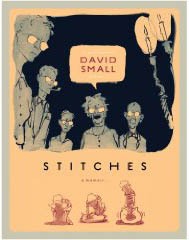 In a given year, you usually get one original graphic novel as ambitious and accomplished as David Mazzucchelli’s
  This is one of those weeks when Viz decides to release loads and loads of manga upon an unsuspecting public, including many of their very best shôjo titles. Those include:
 Dark Horse continues its CLAMP collection project with the
  I’ve been meaning to read Makoto Tateno’s Yellow for ages, as it sometimes shows up on those lists of yaoi titles gay guys might like. DMP offers
  Oh, glorious day! Tokyopop finally releases the fifth volume of Ai Morinaga’s pointed and hilarious
  Viz has been inching me towards financial ruin for ages now, but they really give it their best effort this time around. There are the second volumes of Fumi Yoshinaga’s