The Manga Curmudgeon

Spending too much on comics, then talking too much about them

  • Home
  • About
  • One Piece MMF
  • Sexy Voice & Robo MMF
  • Comics links
  • Year 24 Group links

Highs and lows

December 24, 2009 by David Welsh

Over at About.Com, Deb Aoki surveys a lot of the year-end lists of best graphic novels to assemble a list of the most acclaimed manga of 2009. Every title on there is on my list of Eisner-worthy books, which means I’m either a cutting-edge taste-maker or that I’m unpardonably middlebrow. It could mean both, who can say? One other conclusion one can draw is that Viz had a really great year in terms of publishing quality manga.

December need not be all rainbows and sunshine and fond looks back, though. Kate (The Manga Critic) Dacey inducts some works into her Manga Hall of Shame. This leads Kurt (Yen Press) Hassler to mount a forceful but cordial defense of one of Yen’s inductees.

Filed Under: Awards and lists, Linkblogging

The Shôjo-Sunjeong Alphabet: K

December 23, 2009 by David Welsh

“K” is for…

And a shônen-ai supplement…

What are some of your favorite shôjo and sunjeong titles that start with the letter “K”?

Filed Under: The Shôjo-Sunjeong Alphabet

Upcoming 12/23/2009

December 22, 2009 by David Welsh

I’m sure there’s a lot to delight many people on this week’s ComicList, but I find myself underwhelmed and a little bit relieved by that. My “to read” pile is sufficiently tall to get me through the upcoming holiday, so taking a break from compounding the problem is welcome.

There is one book of particular note this week, though I already own all of the comics collected in it: Evil Twin Comics releases More Than Complete Action Philosophers, written by Fred Van Lente and illustrated by Ryan Dunlavey. Van Lente and Dunlavey take a wild and wooly approach to educating about the lives and belief systems of some of history’s great philosophers, and the results are always lively and informative. I have a particular nostalgia for this title, as I discovered it at my first visit to a Small Press Expo and got my copies signed by Van Lente and Dunlavey. (“Keep thinking!”) If you enjoyed R. Sikoryak’s marvelous Masterpiece Comics (Drawn & Quarterly), then this would be an excellent piece of follow-up reading.

If you want something to read right now, here are some links:

  • Kate Dacey runs through the shipping list and tracks some of the recent Best Manga of 2009 lists that are out there. The most recent example is Deb Aoki’s excellent list of Best Continuing Manga of 2009.
  • Writing for CTV News, Reed Stevenson takes a look at Europe’s manga market. Any article that starts with a Van Gogh anecdote and uses Paul Gravett as a source is worth a look.
  • Over at The Comics Journal, Shaenon K. Garrity weighs in on the state of manga translation and the question of authenticity versus readability: “The thing is, you can’t have both.” Let it be known that I favor readability.
  • Filed Under: ComicList, Evil Twin, Linkblogging

    Fond farewells from 2009

    December 21, 2009 by David Welsh

    The words “final volume” are always a bit bittersweet. While one can eagerly anticipate emotional closure and the tying up of narrative threads, there’s the misty-eyed knowledge that you won’t be paying any new visits to favorite characters and absorbing scenarios. I already mentioned two concluded series yesterday (Kaoru Mori’s Emma and Natsuki Takaya’s Fruits Basket), but here are some other admirable titles that bid farewell in 2009.

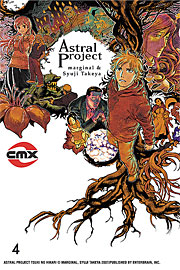
    Astral Project, written by marginal, illustrated by Syuji Takeya, four volumes published by CMX. This series was always difficult to summarize, and that’s almost always a sign of a series I’ll enjoy. Part mystery, part science fiction, part scathing satire, part romance, part family drama, part primer on obscure jazz appreciation, and so on, Astral Project managed to juggle its many different aims with nothing quite so showy as aplomb. There’s nothing self-congratulatory about the book’s density of ideas; they’re never underlined or followed with exclamation points. They’re just there, emerging and recurring when they can do the most good or spark the most interest. A great and under-appreciated title.

    Flower of Life, written and illustrated by Fumi Yoshinaga, four volumes published by Digital Manga. You know what’s weird about Yoshinaga? The bittersweet knowledge that a series will inevitably conclude starts when the license for said series is announced. The certainty of how lovely her comics will be is accompanied by the knowledge that they won’t be nearly long enough. Flower of Life, which follows a group of high-school students through that titular phase, is as funny as it is touching. Every time I post something close to a “Best of” list, I realize that I’ve forgotten something essential, and since the final volume of this series was released in 2009, I hasten to add it to my list of suggested nominees for the Best Publication for Teens Eisner.

    Future Lovers, written and illustrated by Saika Kunieda, two volumes published by Deux Press. You wouldn’t think that two volumes were enough to make one particularly mournful of a title’s conclusion, but yaoi series tend to run shorter than those in other categories, and Future Lovers is just that good. It has the distinction of being one of the best comics about gay people I’ve ever read, which is remarkable for a category that doesn’t routinely concern itself with the realities of sexual orientation. It’s also a splendid romance with terrific characters that inhabit a richly realized context of work, family, friends, and personal history.

    Kitchen Princess, written by Natsumi Ando, illustrated by Miyuki Kobayashi, ten volumes published by Del Rey. I have a well-documented lack of resistance for cooking manga, along with equally well-documented weaknesses for sparkly shôjo and desserts of almost every variety. So I was a natural audience member for this title. What surprised me was how emotionally lacerating it would become. It took Ando and Kobayashi a while to really start putting their characters through the ringer, but when they did, it elevated the title from sweet and diverting to something really absorbing and memorable. And it’s hard to go wrong with a comic that offers recipes.

    Parasyte, written and illustrated by Hitoshi Iwaaki, eight volumes published by Del Rey. Manga as a category offers a rich vein of substantial, thought-provoking science fiction, and Parasyte is an excellent example. Lots of titles ask what it means to be human, and many ask that question in interesting ways. Parasyte certainly does, and it doesn’t skimp on the blood-soaked, pulse-pounding action in the process. It also doesn’t ignore the pulpy absurdity of its premise, sprinkling rueful humor throughout. And it pays keen attention to the emotional evolution of its characters, whether they’re a human teen-ager or a carnivorous parasite trying to figure out its place in the world.

    Now, for two series which both debuted and concluded in 2009 but are worthy of mention all the same:

    A Distant Neighborhood, written and illustrated by Jiro Taniguchi, two volumes published by Fanfare/Ponent Mon. Does the notion of exploring the middle-aged malaise of a straight man trigger one of your reader defense mechanisms? That’s a perfectly reasonable response, but there are always exceptions to these aversions. It’s about a salaryman who finds himself replaying a critical phase of his own adolescence, and, as Kate Dacey notes, it’s “one of the most emotional, most intimate stories Taniguchi’s ever told.”

    The Lapis Lazuli Crown, written and illustrated by Natsuna Kawase, two volumes published by CMX. As I’ve noted previously, someone at CMX has a real knack for finding sweet (but not cloying), cute (but not pandering), quirky (but not outlandish) shôjo titles for its catalog. This year saw the arrival and departure of Kawase’s endearing fantasy about a young girl who wants to learn how to use her rather random magical powers and finds an ally in the prince of her Epcot-ian kingdom. Kawase’s polished art enhances this entirely pleasant romantic fantasy.

    So what are some of your favorite concluding series of 2009?

    Updated: After School Nightmare, written and illustrated by Setona Mizushiro, ten volumes published by Go! Comi. Maybe it’s a sign of how strong this year was overall, or maybe I’m just an airhead. Whatever the cause, I can’t believe I forgot After School Nightmare on this list, seeing as it’s one of my favorite series of all time. A complex psychological drama, this follows a group of teenagers into a dreamscape where they battle for identity, not to mention the drama this imposes on their waking hours. Excellent in so many ways, this series is worth the price of admission for cute-on-the-outside Kureha’s fascinating character arc and gradual empowerment.

    Filed Under: Awards and lists, CMX, Del Rey, Deux, DMP, Fanfare/Ponent Mon, Go! Comi

    For your Eisner consideration

    December 20, 2009 by David Welsh

    ‘Tis the season for lists of the best comics and graphic novels of 2009, an event I always enjoy more as a spectator than as a provider. I would feel comfortable listing my favorite comics of the year, but some pocket of insecurity blocks me from using the word “best.” Fortunately, ‘tis also the season to nominate titles for the 2010 Will Eisner Comics Industry Awards.

    As you might recall, there was some disgruntlement over the rather narrow field of manga nominees in last year’s Eisner slate. This came on after a couple of years where there was a healthy sprinkling of comics and creators from Japan throughout the roster. While complaining afterwards is always fun (it’s the peak pleasure of “Best of” season, after all), I thought it certainly couldn’t hurt to throw out some suggestions for various Eisner categories while it might still make a difference.

    Just looking at the aforementioned “Best of” lists, we can be reasonably certain that at least two titles are locks for some form of Eisner nomination: Naoki Urasawa’s Pluto: Urasawa x Tezuka (Viz) and Yoshihiro Tatsumi’s A Drifting Life (Drawn & Quarterly). They’re the two comics from Japan that have appeared most frequently on lists of the best comics and graphic novels of 2009. They’re fine choices and among my favorite new works from 2009, but their respective inevitability makes me disinclined to dwell on them too much, except to recommend that A Drifting Life be nominated in the Best Reality-Based Work category.

    I make that suggestion because 2009 saw a whole lot of extraordinary comics from Japan, so the real estate in the Best U.S. Edition of Foreign Material – Japanese category will be costly indeed. To start, there’s Urasawa’s other series in current release, 20th Century Boys, which I actually prefer to Pluto. I’m not saying it’s a better comic point by point, but I enjoy reading it more. It may lack Pluto’s seriousness of purpose and craftsmanship, but it’s compulsively readable and friendlier. Perhaps the solution is to nominate Urasawa in the Best Writer/Artist – Drama category or to nominate Pluto in the Best New Series slate. Urasawa has popped up in a variety of categories in the past, and I see no reason for that trend to stop now.

    Of course, I would hope that there’s room in the Best Writer/Artist roster for Takehiko Inoue, who has three series currently in English release, all from Viz: samurai epic Vagabond, available in regular and VizBig editions; shônen hoops classic Slam Dunk; and the achingly good, criminally underappreciated Real, which examines the lives of wheelchair basketball players. If the judges can’t bring themselves to give Inoue a Writer/Artist slot, I urge them in the strongest possible terms to save a space in Best U.S. Edition of Foreign Material – Japanese or Best Continuing Series for Real, because it’s one of the finest comics currently in release, magnificently drawn and faultlessly written.

    On the subject of magnificently drawn and beautifully written manga, this will be judges’ final opportunity to recognize Kaoru Mori’s breathtaking period drama, Emma (CMX). The tenth and final volume came out earlier this winter, offering a satisfying conclusion to the driving storyline and a sentimental farewell to the rich cast of supporting characters that made this series so rewarding. Intelligent, meticulously researched, emotionally resonant, and all-around glorious, a lot of people are going to miss this book terribly.

    In a rather different vein, one devoid of delicacy or refinement but brimming with genius, please don’t forget Junko Mizuno’s subversive Little Fluffy Gigolo Pelu (Last Gasp). Mizuno is a household name, assuming that household name counts a hardcore comics omnivore among its residents. She should be more famous, with her inimitable aesthetic and subversive sensibilities, and Pelu could be the book that pushes her over the top. It’s a profane, hilarious look at the intersection of sex, love and obsession from the perspective of a sentient space ovary. It’s the comic equivalent of a hallucinogen mixed with an amphetamine, and it’s my favorite new manga of 2009. But I would also hope that there’s room for Daisuke Igarashi’s Children of the Sea (Viz), the first release in that publisher’s tremendously promising SigIKKI imprint of alternative manga. It’s a contemporary environmental fable with absolutely immersive artwork and subdued storytelling all around.

    Speaking of the SigIKKI iprint, I see nothing that would prevent anyone from nominating the SigIKKI site in the Best Anthology category. One of the great pleasures of 2009 has been the ability to read new chapters of around a dozen exciting, alternative manga titles each Thursday. Beyond the extraordinary quality of some of the comics in rotation (many of which will be likely Eisner candidates when they see print), the whole thing strikes me as a very forward-looking initiative, a smart and generous loss leader to build an audience for books with perhaps marginal commercial potential.

    Back on the subject of taking your last chance to recognize worthy work, judges might also do something really nervy and give a slot in the Best U.S. Edition of Foreign Material – Japanese to Natsuki Takaya’s Fruits Basket (Tokyopop). Commercial success has never been a barrier to nomination in the past, and Fruits Basket is so much more than the piles and piles of money it made. It was a wrenching and lovely series throughout, and it ended with all of the grace and emotion its fans had every reason to expect. The Eisners haven’t nominated a shôjo title in this category since Fumi Yoshinaga’s Antique Bakery in 2007. (And while it’s not shôjo, nor is it explicitly for teens, keep an eye on Yoshinaga’s Ôoku from Viz for 2011. It’s off to a promising start, but I suspect it will hit its full stride next year.)

    Of course, it wouldn’t be the worst thing in the world if Fruits Basket was nominated in the Best Publication for Teens category, which manga could handily pack from top to bottom and still have partisans crying out at the injustice of some exclusion or another. I’ll limit myself to one suggestion for this category, Karuho Shiina’s Kimi ni Todoke: From Me to You (Viz). It’s a hilarious romantic comedy about an outwardly creepy but inwardly sparkly girl trying to make friends on her own terms. It seesaws smartly between laughter and tears and speaks to the odd kid out.

    Moving down the age scale, someone really should recognize Yen Press for rescuing Kiyohiko Azuma’s Yotsuba&! from publishing limbo. It was nominated in 2008 in the Best Publication for Kids category (or whatever it was called back then), and another nomination is in order. It’s still one of the funniest, freshest comics around, following a green-haired girl as she experiences the world’s many wonders, from riding a bike to running errands. Of course, it wasn’t conceived for kids, but who cares? And if you, like me, don’t read as many comics for kids as you feel you should, you can always check out this marvelous list of the year’s best from Good Comics for Kids.

    Given that it’s so damned funny, Yotsuba&! might also sit comfortably in the Best Humor Publication category, but I have other plans there. The first involves a nomination for Kiminori Wakasugi’s hilariously distasteful Detroit Metal City (Viz), about a would-be emo-pop crooner forced to moonlight as a vile, death-metal front man. The second involves a nomination for Koji Kumeta’s dense satire, Sayonara, Zetsubou-Sensei: The Power of Negative Thinking (Del Rey). Beyond being a master class in the art and science of translation, this is a very funny book.

    Jiro Taniguchi is a good writer, and he’s a positively magnificent illustrator, so I would recommend he be nominated as Best Penciller for his work on The Summit of the Gods (Fanfare/Ponent Mon), written by Baku Yumemakura. For reinforcement, Taniguchi sturdily wrote and gorgeously drew A Distant Neighborhood (Fanfare/Ponent Mon).

    I can’t quite bring myself to recommend Inio Asano’s What a Wonderful World! (Viz) for a major category; there’s some outstanding work contained in these two volumes of short stories, but a goodly portion is merely very good. I’d have no reservations about suggesting “A Town of Many Hills” from the first volume for the Best Short Story prize, as it shows Asano at the peak of his considerable powers.

    I’m not really worried that Taiyo Matsumoto’s GoGo Monster (Viz) will be neglected. It’s just too good. The only question is in which categories it will be nominated. To my thinking, it’s eligible for Best U.S. Edition of Foreign Material – Japanese, Best Graphic Album – Reprint Material, and Best Publication Design. Judges may want to limit that last possibility to new designs rather than stateside reproductions, but the packaging is extraordinary.

    None of the Eisner categories will be easy to limit, but I suspect that Best Archival Collection will be particularly difficult. I’m not going to make it any easier. A year without a nomination for a work by Osamu Tezuka would just seem odd, and Vertical has been providing a valuable service (and really entertaining comics) by releasing a steady stream of Tezuka’s excellent medical melodrama Black Jack. At least some of the material in culinary classic Oishinbo (Viz), written by Tetsu Kariya and illustrated by Akira Hanasaki, is 20 years old, and all of it is lively, informative, and enriches the scope of Japanese comics available in translation and available comics in general. If it doesn’t qualify for the archival award, put it in the Best Edition of Foreign Material – Japanese. Just put it somewhere. Beyond being very, very good on strictly qualitative terms, Susumu Katsumata’s Red Snow (Drawn and Quarterly) gives readers a glimpse of a different kind of gekiaga, a category of dramatic comics for grown-ups previously defined by the aforementioned Tatsumi.

    Entries for Eisner consideration are due March 8. Publishers, get cracking. Judges, get reading.

    Filed Under: Awards and lists, CMX, Del Rey, Drawn & Quarterly, Last Gasp, Linkblogging, Tokyopop, Vertical, Viz, Yen Press

    Paper chase

    December 19, 2009 by David Welsh

    Kate (The Manga Critic) Dacey notes that Michelle (Soliloquy in Blue) Smith spotted some new Viz listings from the SigIKKI category:

  • Saturn Apartments vol. 1, written and illustrated by Hisae Iwaoka, due May 18
  • I’ll Give It My All… Tomorrow vol. 1, written and illustrated by Shunju Aono, due May 18
  • These are two of my favorites series on the SigIKKI site, so I’m delighted that they’re due for print versions.

    Filed Under: Linkblogging, Viz

    License request day: Salvatore

    December 18, 2009 by David Welsh

    The recent announcement that NBM would be publishing another comic about the Louvre got me thinking about their first in this series, Nicolas de Crécy’s Glacial Period, which is wonderful. So for this week’s license request, I’d like to take a break from Japan and head back to France, because there are too few comics by de Crécy in translation, and there are also too few comics about dogs who are auto mechanics. If some kind publisher were to pick up de Crécy’s Salvatore, we could ameliorate both of those shortages.

    Dupuis has published the three available volumes, and they describe the story thusly:

    “Salvatore is a garage mechanic. And a good one at that: he is known throughout the region! Someone who has elevated mechanics to the level of art. And yet, Salvatore lives right up in the mountains, far away from noise and people. He does not like people very much. Those who hurry him when he is savouring his fondue, or those who prevent him from enjoying a cigarette and reading the newspaper after a meal. So he shamelessly makes them wait. And sometimes, he even steals a part from the engines entrusted to him… Like well-oiled machinery, Salvatore has conceived a diabolical plan to find Julie, the one he loves. And no one will stand in his way, no one.”

    The first volume, Transports amoureux, seems to feature a demanding pig. The second, Le grand depart, involves a found-object artist who happens to be a cow and an inconvenient litter of piglets. The third volume, Une traversée mouvementée, sees our cantankerous canine hero off on the road to find his true love. All three volumes feature de Crécy’s eye-catching, adorable but somewhat grotesque illustrative style.

    Now, anyone who has read Glacial Period (and I hope that’s most of you) knows that de Crécy has a knack for idiosyncratic, anthropomorphous protagonists, and I see no evidence that he’s lost his touch. And if you can look into your soul and say that no, you really don’t want to read a comic where a dog makes himself fondue, then perhaps you need to sit down and think about your priorities.

    Filed Under: License requests

    Coverage

    December 17, 2009 by David Welsh

    Some folks have noticed the narrow focus of this list of the 50 Best Comic Book Covers of 2009. It doesn’t really bother me, since the awkwardness lies entirely in the list’s name. Throw “Super-heroes” in there, and it’s good to go. And it did get me thinking about the best manga covers of the last year, which turned out to be trickier than I’d expected.

    Off the top of my head, I came up with two that struck me as really extraordinary:

    But I tossed the question out on Twitter and got a gratifying number of responses. Most intriguing to me was Read About Comics’ Greg McElhatton’s suggestion that “most manga in [North America is more suited to great cover design… rather than great cover art,” going on to note that he’d “certainly never say a single [volume] of Pluto had an outstanding cover, but the whole set looks great together, face-out or spine.”

    That strikes me as very true. When designing covers for series, it does seem best to design a scheme that’s flexible, identifiable for the individual title, and still attractive, which is a complex task, and a lot of publishers do it well. So while individual installments may not be breathtaking, the cumulative effect of the series in sequence can be tremendous.

    Here are some other favorites from the Twitterati:

    Filed Under: Awards and lists

    From the stack: Natsume's Book of Friends vol. 1

    December 17, 2009 by David Welsh

    Does the world really need another manga about the husbandry of yôkai, those mischievous, minor demons that populate Japanese folklore? Is there room for more adolescents who can see these creatures and seem fated to interact with them? Sure we do, and sure there is, if the stories are good and the adolescents are interesting and sympathetic. Both are true of Natsume’s Book of Friends (Viz), written and illustrated by Yuki Midorikawa.

    Orphan Takashi Natsume has spent his whole life wondering why he can see these beings and being pegged as the weird kid, shuffled from relative to relative. There was an escalation in his yokai encounters when he moved to his late grandmother’s village. Takashi never met the lady during her short lifetime, but I’d wager he’d have some choice words for her if he did.

    Takashi inherited his yôkai sensitivity from Reiko, his grandmother. She apparently had no other sensitivity to offer as a legacy, having spent her own adolescence challenging yôkai, defeating them, and ensuring their servitude by putting their names down in a book. The yôkai who are pestering Takashi so insistently want their names and independence back, and, since Reiko is unavailable, Takashi will have to do. Learning of his grandmother’s malicious hobby makes Takashi more sympathetic to the yôkai. He takes it upon himself to return their names.

    This obviously ends up being more complicated than you’d expect. Some of the yokai aren’t especially appreciative of Takashi’s intentions and would be more than content to take their names back by force. Others have pressing concerns beyond servitude to an angry dead woman. An opportunistic demon named Nyanko (who spends his day in the form of a stuffed cat) offers his protection and assistance with the condition that, should Takashi die during his quest, Nyanko gets whatever’s left of the book.

    I like the variety that Midorikawa finds in the premise and the mix of comedy and sentiment in the individual episodes. Her view of the relationship between humans and yôkai is complex, and I particularly love the counterpoint between grandmother and grandson. Reiko turned her isolation and otherness into hostility and control. Takashi turns his into generosity of a sort, or at least into enlightened self-interest. And young Reiko is a sly hoot, even if she is nasty, or maybe because she’s nasty.

    Natsume’s Book of Friends doesn’t exactly reinvent the yôkai genre, but it’s got some very promising underpinnings, and Midorikawa’s execution is rock solid.

    (Review based on a complimentary copy provided by the publisher.)

    Filed Under: From the stack, Viz

    Undercover

    December 16, 2009 by David Welsh

    It’s always easier for me to contribute to someone else’s “Best of” list than to concoct my own, so I was happy to be asked to pitch a title for this roster of the Best Graphic Novels of 2009 over at Flashlight Worthy Book Recommendations. I think it’s a neat mix of comics.

    Filed Under: Awards and lists, Linkblogging

    « Previous Page
    Next Page »

    Features

    • Fruits Basket MMF
    • Josei A to Z
    • License Requests
    • Seinen A to Z
    • Shôjo-Sunjeong A to Z
    • The Favorites Alphabet

    Categories

    Recent Posts

    • Hiatus
    • Upcoming 11/30/2011
    • Upcoming 11/23/2011
    • Undiscovered Ono
    • Re-flipped: not simple

    Comics

    • 4thletter!
    • Comics Alliance
    • Comics Should Be Good
    • Comics Worth Reading
    • Comics-and-More
    • Comics212
    • comiXology
    • Fantastic Fangirls
    • Good Comics for Kids
    • I Love Rob Liefeld
    • Mighty God King
    • Neilalien
    • Panel Patter
    • Paul Gravett
    • Polite Dissent
    • Progressive Ruin
    • Read About Comics
    • Robot 6
    • The Comics Curmudgeon
    • The Comics Journal
    • The Comics Reporter
    • The Hub
    • The Secret of Wednesday's Haul
    • Warren Peace
    • Yet Another Comics Blog

    Manga

    • A Case Suitable for Treatment
    • A Feminist Otaku
    • A Life in Panels
    • ABCBTom
    • About.Com on Manga
    • All About Manga
    • Comics Village
    • Experiments in Manga
    • Feh Yes Vintage Manga
    • Joy Kim
    • Kuriousity
    • Manga Out Loud
    • Manga Report
    • Manga Therapy
    • Manga Views
    • Manga Widget
    • Manga Worth Reading
    • Manga Xanadu
    • MangaBlog
    • Mecha Mecha Media
    • Ogiue Maniax
    • Okazu
    • Read All Manga
    • Reverse Thieves
    • Rocket Bomber
    • Same Hat!
    • Slightly Biased Manga
    • Soliloquy in Blue
    • The Manga Critic

    Pop Culture

    • ArtsBeat
    • Monkey See
    • Postmodern Barney
    • Something Old, Nothing New

    Publishers

    • AdHouse Books
    • Dark Horse Comics
    • Del Rey
    • Digital Manga
    • Drawn and Quarterly
    • Fanfare/Ponent Mon
    • Fantagraphics Books
    • First Second
    • Kodansha Comics USA
    • Last Gasp
    • NBM
    • Netcomics
    • Oni Press
    • SLG
    • Tokyopop
    • Top Shelf Productions
    • Vertical
    • Viz Media
    • Yen Press

    Archives

    Copyright © 2026 · Genesis Framework · WordPress · Log in