The Manga Curmudgeon

Spending too much on comics, then talking too much about them

  • Home
  • About
  • One Piece MMF
  • Sexy Voice & Robo MMF
  • Comics links
  • Year 24 Group links

Lots of links

January 20, 2010 by David Welsh

Publishers Weekly Comics Week gets into the license request game with the launch of its “Found in Translation” column. Jonathan Bethune contributes the inaugural installment, which focuses on Berry Dynamite, by the creator of Love*Com, rounded out by a request for more Golgo 13.

Speaking of license requests, you know how I love to mine awards programs for likely candidates, so thanks to Gia Manry for sharing the 2010 nominees for the Manga Taishou Awards.

Over at comiXology (which really has one of the finest line-ups of columns of any comics site on the web), Kristy Valenti looks at the conclusion of Natsuki Takaya’s Fruits Basket:

“Fruits Basket is what I personally define as a ‘fat’ text: something that can support discourse on its themes and engender different (but germane) responses in its readers. (As opposed to a “thin” text, in which the author lays it all out for you on the surface, with no real entry point for interpretation: for example, I find Neil Gaiman’s novels to be disappointingly ‘thin.’)”

The Hooded Utilitarian crew and friends are in the midst of another roundtable discussion, this time on the first three volumes of xxxHoLic by CLAMP. Thus far, most participants seem to find it visually striking but not as well-written as they’d like. I admit that this is my usual reaction to work by CLAMP, though I think xxxHoLic improves as it goes along and has become my favorite CLAMP work available in English. I’ll point you to the contribution by Ng Suat Tong, which links to all of the pieces thus far and includes this intriguing and provocative statement:

“For some reason, I’ve found that western readers seem to be far kinder to commercial dreck from the shores of Japan, lacing their reviews with only the mildest of reservations. Is this representative of a certain indifference to the qualities of commercial manga or is there some sort of cultural forbearance and variation in standards at work here?”

And to wrap up, a few links to reviews I enjoyed:

  • Danielle Leigh on Natsume Ono’s not simple, because glowing reviews of that excellent book cheer me
  • Kate Dacey on Kou Matsuzuki’s Happy Café, because Kate’s writing is always a pleasure to read and because she gives a shout-out to the underrated Cafe Kichijoji de
  • Nina Stone on a blind date with manga, which is almost certain to trigger some lively chatter in the comments.
  • Filed Under: Awards and lists, License requests, Linkblogging

    The Shôjo-Sunjeong Alphabet: O

    January 20, 2010 by David Welsh

    “O” is for…

    And while it’s not yet licensed or, technically speaking, shôjo…

    What are some of your favorite shôjo and sunjeong titles that start with the letter “O”?

    Update: This was a part of the mental list I was making before I made an actual list and started gathering images and stuff, but an important brain cell must have died between then and now. Omission rectified.

    Filed Under: The Shôjo-Sunjeong Alphabet

    A request from the host

    January 19, 2010 by David Welsh

    Hi!

    While I was reading some comments this morning, I noticed that some truly odious advertisements had shown up on my blog, apparently uninvited. I’ve since learned that I can pay for the privilege of guaranteeing not to have this junk appear and have done so. This is mostly because I don’t want to run any advertising at all on my blog, even randomly and intermittently, but I absolutely do not want to direct any traffic to those loathsome, for-profit content thieves (and guess what was in the ad roster I saw today?), so I guess a little protection money isn’t the worst solution.

    So if you ever see advertisements appear anywhere on my blog, could you please drop me a line at davidpwelsh at yahoo dot com? I’ll grudgingly upgrade, but I’ll be damned if I’ll upgrade with no good result.

    Update: In response to a question, yes, according to the terms of service, “To support the service (and keep free features free), [WordPress] also sometimes run[s] advertisements.”

    As I said, it’s important enough to me to eschew advertising to pay for the upgrade. Now, I have no problem with running advertising on a blog, but I just have no interest in doing so, largely because I don’t want to expend the effort necessary to keep advertisers I find objectionable off of my web presence. I dropped a line to WP support to let them know about the suspect advertisers on Google AdWords. The reply I received from one of their “Happiness Engineers” suggested I contact Google support to inform them as well, which I’ll probably do if I can ever figure out how.

    I can’t find David Doub’s original article on this subject, but here’s Brigid Alverson’s link to the piece.

    Filed Under: Uncategorized

    Upcoming 1/20/2010

    January 19, 2010 by David Welsh

    I’m sorry, but that page from Natsume Ono’s not simple just haunts me. And the book is on this week’s ComicList, so I have an excuse. But I wrote about the book at length yesterday, so I’ll move on to the other fine offerings due to arrive in shops on Wednesday.

    Jason Thompson, author of Manga: The Complete Guide, noted comiXology columnist, and webcomic creator is back making comics in the form of King of RPGs (Del Rey), illustrated by Victor Hao. It’s about a recovering online gamer who gets drawn into the old-school dice-and-graph-paper version of the titular pastime. I’ve enjoyed what I’ve read of the review copy Del Rey sent, and I plan to finish it today between bouts of self-medication. Because I really feel gross. Heal me, satirical comics.

    I don’t specifically know what blend of unsettling medical oddities, low comedy and crazed melodrama lurks in the ninth volume of Osamu Tezuka’s Black Jack (Vertical), but it doesn’t really matter. I know that all three of these ingredients will be present in sufficient volume to make the purchase of said book entirely worthwhile. As long as there’s at least one totally unnerving sequence with Pinoko, I’ll feel my money has been spent well.

    I sometimes wonder if I’ll ever again read a Yuji Iwahara comic that’s as good as Chikyu Misaki (CMX), and Cat Paradise certainly isn’t it, but it’s pretty enjoyable all the same. The third volume arrives Wednesday, promising more mayhem at a cat-friendly boarding school where the student council fights an insurgence of gruesome demons. Iwahara mentioned in a text piece that he wanted to do a straightforward school adventure, but it’s Iwahara, so the definition of straightforward is somewhat loose.

    And now for the Viz portion of the program, where this publisher leaves us impoverished but stocked with quality comics. Yes, it’s Signature week. As I mentioned, I’ve already blathered on about not simple and Fumi Yoshinaga’s All My Darling Daughters, and you’d think those two comics would be enough for any publisher in a given week, but wait, as the purveyors of kitchen appliances of questionable utility claim, there’s more!

    Instead of dwelling too much on the incipient loss we’ll all suffer, I’ll just point you to this press release about the final A la Carte volume of the excellent culinary manga, Oishinbo. Let’s all keep our fingers crossed that Viz re-launches this series at a later date, because there’s certainly enough material in the wings.

    We’re nearing the conclusion of Naoki Urasawa’s Pluto, with the penultimate volume due Wednesday. (There’s lots more of Urasawa’s 20th Century Boys yet to come, just to ease the imminent separation anxiety.) And surely, after all of my incessant nagging, you’ve all caught up on the previously published volumes of Takehiko Inoue’s Real and are poised and ready to buy the seventh, aren’t you?

    Filed Under: ComicList, Del Rey, Linkblogging, Vertical, Viz, Yen Press

    Ono, Ono, Ono

    January 18, 2010 by David Welsh

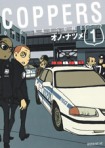
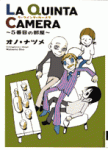
    Hey, are you sick of me obsessing over Natsume Ono? If so, this week’s Flipped is probably not for you. And I make no promises about the situation improving in the future. And yes, I am illustrating my blog like a teenager pasting magazine covers to the inside of my locker. I make no apologies.

    Filed Under: Flipped

    From the stack: All My Darling Daughters

    January 18, 2010 by David Welsh

    Is All My Darling Daughters (due this week from Viz Media) the best comic Fumi Yoshinaga has ever created? Of course it isn’t. It’s not as ambitious as Ôoku: The Inner Chambers, as funny as Flower of Life, or as sexy as Ichigenme… The First Class Is Civil Law.

    Should you buy All My Darling Daughters? Of course you should. It’s by Yoshinaga, so it’s still funnier, smarter and warmer than most comics you’re likely to encounter.

    The book collects interconnected short stories that spoke out from an adult daughter and her mother. They live together until the mother remarries a much younger man she met in a host club. Your automatic assumption might be that the mother is in the midst of a mid-life crisis or that the husband is looking for a meal ticket, and the daughter would agree with you. I remind you that this is Yoshinaga, so it’s more complicated than that.

    Everything is more complicated than it seems in Yoshinaga’s narrative universe. People are both nicer and meaner than they initially seem, and relationships are more quietly satisfying and functional than an observer might assume. Yoshinaga is deeply interested in the grace notes of interpersonal interaction, even in her slighter works. That’s the source of a lot of the pleasure for me – the apparently minor, digressive moments that get to the heart of her characters.

    I enjoyed all of the pieces collected here, but my favorite was a two-part look at a beautiful, selfless young woman who decides to pursue an arranged marriage. It works very nicely as a comedy of nightmare dating, but it evolves into a much richer character study. It’s sweet, funny and, by the end, surprisingly sad, but sad in a way I can absolutely support.

    While she’s not in every story, Mari, the mother, is a treasure. She’s a survivor, but she’s got self-esteem issues. She can be abrasive, but her honesty never fails to be refreshing and sometimes even useful. I smiled a little every time she showed up, knowing she’d provide some withering observation on the endearing flakes around her, a flash of unexpected tenderness, or both. Of all the men and women portrayed here, she best embodies the aspects of life that interest Yoshinaga – work, family, love, and the resentment and solace they can provide.

    All My Darling Daughters ran in Hakusensha’s Melody magazine, an older-skewing shôjo magazine that’s home to Ôoku. I’m not all that familiar with the magazine’s output, but Yoshinaga’s participation is certainly enough to put it on my radar.

    (This review is based on a complimentary copy provided by the publisher.)

    Filed Under: From the stack, Viz

    The reporter's notebook

    January 16, 2010 by David Welsh

    So your editor has given you an assignment to write about manga and/or anime, but you don’t really know very much about either. It’s never fun to be told to sound informed about something that may be completely new to you, but you decided to be a journalist at some point, and that’s pretty much going to be your job until you inevitably slide into public relations after all of the newspapers close. (They should have mentioned that in your orientation class or during one of your advising sessions, but you can probably understand why they didn’t. Sorry!)

    There are lots of ways this assignment can go wrong, but there’s one that can really make you look dumb for a number of reasons. In your desire to inform people, it may occur to you to point people towards examples of manga and anime. That’s a good impulse, and it demonstrates a willingness to embrace the hyperlink as an informative tool, and all journalists will need to figure that out sooner or later after all of the newspapers and magazines become web-based instead of printed. (I bet your college offered a new media course, and I bet you took it, because you could surf the web for credit instead of just texting quietly under your desk in the lecture hall. Learning is great!)

    But here’s a tip: don’t rely on the top search results for a title you’re writing about, because they’ll almost always point you to pirated versions of the property in question. I’ve seen this happen a few times in the last month via links that showed up in news alerts based on common search terms, and it’s been evident in those cases that the writer in question had no idea that there was a distinction between a pirated comic online and a licensed, published work. And in fairness, none of those sites are going to rush to tell the casual visitor that the site has no right to publish and/or broadcast the manga and/or anime, because then they’d be admitting they were stealing stuff. Now, you may not immediately see a problem with this, but I’m sure someone in your organization (possibly the publisher or, if it’s large enough, the general counsel) can probably tell you all about the ethical conundrum of driving traffic to an enterprise predicated on the violation of copyright and the theft of intellectual property. (Isn’t it great that the senior media ethics seminar is just an elective now? I heard those classes are hard! Daniella [All About Comics] Orihuela-Gruber assures me that all of her college journalism courses included a significant ethics component. Snark withdrawn.)

    I’ll do a quick test by typing in the name of a very popular manga series into a search engine to see what comes up. The top link is Wikipedia, and your superiors probably don’t like it when you use that as a source. (I’m a blogger, so I can link to whatever I like!) The second link is a for-profit piracy site. It’s not until the third link that you get to someone who actually has a right to publish the comic, which you can tell from the fact that the first word in the link description is “Official,” which admittedly doesn’t immediately promise hours of fun, but it has that comforting sheen of legality. The next link is for an informational site, and the one after that is for a pirated version of the anime. Then there are two more links for pirated versions of the manga. It’s a mine field, isn’t it?

    So what’s the quickest way to make sure that you’re writing about the versions that actually allow the creators to receive a portion of the profits? My advice would be to skip the search engines or at least to hold off on them until after you’ve done a search at a legitimate online retailer like Amazon, Barnes & Noble, or Right Stuf. All of these vendors list a publisher for every product, and then you can search for that publisher and link to the property description on their site. Some publishers share previews of many of their titles, though possibly not the specific title that you’re writing about. Some publishers even share big chunks of series online either for free or for small fees per chapter. There are also some legitimate online anime distributors that make a lot of preview content available for free.

    Here’s the thing: if you can’t tell the difference between a legal version of a product and a pirated version, your editors certainly can’t. Your webmasters might be able to, but they’re overworked and cynical and people treat them badly. (Your editor is just cynical.) So it’s ultimately up to you to try and find out if you’re driving traffic to a web site that’s stealing stuff. Your best bet is to see who’s legitimately distributing the product you’re writing about and to pick your links accordingly. It isn’t as hard as it sounds, and you won’t look dumb.

    And just as a quick addendum, if the online platform for your writing offers visitors the opportunity to comment on your articles, you should check those comments regularly. Sometimes people show up and mention that you’re driving traffic to a piracy site, and when you neglect to reply or modify your article, you look even dumber or indifferent to legitimate concerns about the outcome of your article.

    Filed Under: Media

    License request day: I'll take the usual

    January 15, 2010 by David Welsh

    It probably won’t come as any surprise to you that I was a weird kid. One of the many, many ways I was weird had to do with beverages. Virtually anything one could imbibe just tasted better to me if it was served in a glass from my parents’ cocktail set, and it would taste better still if it was garnished in some way, preferably with a maraschino cherry. This applied to everything from soda (in the evenings, obviously, or as an after-school libation) to juice in the morning.

    It’s not like I’ve turned into a huge drunk or anything. As I age I find that my tolerance is waning for such things, so I tend to drink for the taste of things. I don’t really get cocktail culture, and I die inside when I look at a restaurant’s “martini menu” and see ingredients best confined to the candy counter and not the bar. (I blame Sandra Lee. I could endorse a “Cocktail Time” segment in just about any cooking program, but not when it involves so much white chocolate liqueur, or any at all.)

    But mixology does have its allure for me. As a result, today’s license request is served up by a handsome fellow in a vest with a shaker at the ready: Bartender, originally published by Shueisha in Super Jump, written by Araki Joh (which just sounds like a name you’d hear in a lounge, doesn’t it?) and illustrated by Kenji Nagatomo.

    Bartender is about a guy who works in a tucked-away watering hole in the Ginza, mixing life-changing cocktails for a long line of customers from all walks of life. With his gift for mixology and the apocryphal wisdom of the booze peddler, Sasakura makes everything better through liquor. That, my friends, is a beautiful, uplifting message for a comic. Okay, maybe not, but it sounds like a lot of fun. It’s possible that 15 volumes of cocktails might be too much for the average reader, but we can all throw up over that bridge’s railing when we come to it, right?

    Joh followed Bartender with Sommelier in Business Jump, so libations are clearly something of a fixation for the author. Sommelier sounds kind of like the wine snob’s equivalent of Black Jack, which could be all kinds of awesome, but I feel like I should only have one wine manga in the hopper at a time.

    Filed Under: License requests

    Go, vote: last chance!

    January 15, 2010 by David Welsh

    Today is the last day to vote in Deb Aoki’s 2009 Manga Readers Polls. I’ve already voted, and I’ll resist the urge to stuff the ballot box in the service of my favorites, but I do like to call up my “Polls” category and look at all the covers of my chosen candidates.

    Filed Under: Linkblogging, Polls

    Choice words from 2009

    January 14, 2010 by David Welsh

    Maybe I’ll indulge in just one more look back on 2009. The bloggers at The Hooded Utilitarian assembled a list of their choices for the Best Online Comics Criticism for the year. I won’t claim I psychically predicted that Johanna Draper Carlson would notice that there are no articles by women on the final list, but I was sitting next to her during the critics’ panel at SPX, so it’s not like there’s no precedent for this observation. And it inspired Melinda Beasi’s warm tribute to some of the many women who write regularly and brilliantly about comics, manga and manhwa in particular.

    To my way of thinking, that’s always the most desirable outcome of lists like these… people tossing in their two cents. And while I haven’t approached this with anything resembling rigor, here are some of my favorite comics-related think pieces of the last year:

    “I Am Cynical (Orange)” by Chris Butcher: If you’ve just discovered Butcher through his excellent pieces on “10 Manga That Changed Comics” (here’s #8), let me reassure you that he’s been brilliant for ages. Case in point is this piece on the vicissitudes of distribution to the Direct Market.

    “The Manga Hall of Shame” by Kate Dacey: Sometimes, manga hurts. And when that happens, it’s good to have a writer of Dacey’s caliber to speak up on behalf of the wounded. Here are this year’s inductees.

    Matthew Brady’s pieces on Shojo Beat: Among the many reasons to miss Viz’s anthology of comics for girls is the fact that it also meant the end for this series of informative, enthusiastic, persuasive examinations.

    “The Nana Project” by Melinda Beasi, Danielle Leigh and Michelle Smith: Three of my favorite manga critics geek out over one of the best shôjo titles ever published in English.

    “The Patrick Swayze Manga Recommendation Guide” by Shaenon K. Garrity: Picking only one great piece by Garrity is like trying to choose the prettiest tulip in Holland. It’s just impossible. This one strikes me as emblematic of what I love about her writing: a great hook in service of some wonderful comics with her enviably flawless prose throughout.

    The “Rethinking the Box” articles by Matt Blind: If Butcher is the go-to analyst on comic shops, Blind covers the general bookstore front in an equally astute manner. The link above points you to many of the articles in the occasional series.

    “Reviewers Can’t Win” by Johanna Draper Carlson: I always enjoy Johanna’s writing, but I have an unflattering confession to make. I tend to enjoy her writing most when she’s indignant about something. Now, I know I shouldn’t wish for life to fling irritations in anyone’s path, but I do love the results.

    “You And I Until The Day We Die” by Tucker Stone. Stone was one of the judges for The Hooded Utilitarian’s poll, so he wasn’t eligible, which is too bad. I think he’s an amazing writer.

    So what are some of your favorite essays from 2009? Remind me of my egregious oversights, please.

    Filed Under: Awards and lists, Linkblogging

    « Previous Page
    Next Page »

    Features

    • Fruits Basket MMF
    • Josei A to Z
    • License Requests
    • Seinen A to Z
    • Shôjo-Sunjeong A to Z
    • The Favorites Alphabet

    Categories

    Recent Posts

    • Hiatus
    • Upcoming 11/30/2011
    • Upcoming 11/23/2011
    • Undiscovered Ono
    • Re-flipped: not simple

    Comics

    • 4thletter!
    • Comics Alliance
    • Comics Should Be Good
    • Comics Worth Reading
    • Comics-and-More
    • Comics212
    • comiXology
    • Fantastic Fangirls
    • Good Comics for Kids
    • I Love Rob Liefeld
    • Mighty God King
    • Neilalien
    • Panel Patter
    • Paul Gravett
    • Polite Dissent
    • Progressive Ruin
    • Read About Comics
    • Robot 6
    • The Comics Curmudgeon
    • The Comics Journal
    • The Comics Reporter
    • The Hub
    • The Secret of Wednesday's Haul
    • Warren Peace
    • Yet Another Comics Blog

    Manga

    • A Case Suitable for Treatment
    • A Feminist Otaku
    • A Life in Panels
    • ABCBTom
    • About.Com on Manga
    • All About Manga
    • Comics Village
    • Experiments in Manga
    • Feh Yes Vintage Manga
    • Joy Kim
    • Kuriousity
    • Manga Out Loud
    • Manga Report
    • Manga Therapy
    • Manga Views
    • Manga Widget
    • Manga Worth Reading
    • Manga Xanadu
    • MangaBlog
    • Mecha Mecha Media
    • Ogiue Maniax
    • Okazu
    • Read All Manga
    • Reverse Thieves
    • Rocket Bomber
    • Same Hat!
    • Slightly Biased Manga
    • Soliloquy in Blue
    • The Manga Critic

    Pop Culture

    • ArtsBeat
    • Monkey See
    • Postmodern Barney
    • Something Old, Nothing New

    Publishers

    • AdHouse Books
    • Dark Horse Comics
    • Del Rey
    • Digital Manga
    • Drawn and Quarterly
    • Fanfare/Ponent Mon
    • Fantagraphics Books
    • First Second
    • Kodansha Comics USA
    • Last Gasp
    • NBM
    • Netcomics
    • Oni Press
    • SLG
    • Tokyopop
    • Top Shelf Productions
    • Vertical
    • Viz Media
    • Yen Press

    Archives

    Copyright © 2026 · Genesis Framework · WordPress · Log in