The Manga Curmudgeon

Spending too much on comics, then talking too much about them

  • Home
  • About
  • One Piece MMF
  • Sexy Voice & Robo MMF
  • Comics links
  • Year 24 Group links

Sexy Voice and Robo MMF: Ogiue Maniax from 2008

February 9, 2010 by David Welsh

Ogiue Maniax wrote in to share this review from 2008:

“Ah, Kuroda Iou’s Sexy Voice and Robo. I must say, I love this manga. Not because of the characters, though they’re all really engaging and interesting to watch, and not because of the story, though it is very entertaining and its premise is unique. No, I love Sexy Voice and Robo because of the art.

“It is so damn good that it makes me cry.”

Filed Under: Linkblogging, Manga Moveable Feast

Sexy Voice and Robo MMF guest review: Erica Friedman

February 9, 2010 by David Welsh

Sexy Voice and Robo – a glimpse inside the obsession

Inside every guy is a cool, suave, man-of-the-world, a veritable James Bond of a man. A man who can rip his shirt off and people won’t shriek in laughter, a man who can leap across spaces between building rooftops 30-stories up without a blink. The geekier and more hopeless the guy, the more the man inside them obsesses them. They just *know* that if one day the world can be saved by a detailed knowledge of Wolverine’s origins, or the differences between Zaku models they will be that savior. But until then, he’ll just keep building those models and reading those comics…and dreaming of the women he might meet on that day.

Sudoh Ichiro is such a man. He wants what the world conspires for him to never have – a normal relationship with a woman. And because he cannot have this thing, he reaches out to what appears to him to be a completely sensible alternative – a phone dating service.

Hayashi Niko is a middle-school student. She is the voice on the other end of that phone, creating the perfect fantasy for the poor onnazuki on the other end. Her bread and butter is talking to those men who just can’t find the hero inside them and need some help to bring him forth. Niko’s skills at mimicking voices and her understanding of human nature puts her in the unique position to turn Sudoh into the hero he longs to be. Except he’s still a yutz – something Niko makes plain by nicknaming him “Robo.” This nickname not only represents his obsession with models, it reflects her ability to manipulate him into doing pretty much anything she wants.

In Sexy Voice and Robo, we watch as time after time the otaku has a chance to be that hero, and as time after time he fails to be anything more than just a sidekick. Why? Why can’t Sudoh find the James Bond that lives within him? Because there is a secret all otaku know, even if it is buried deep in our hearts. Despite the fact that we know the hero lives in there, somewhere, if only we can find him, we also know that even deeper still is a couch potato who obsesses over toys. I mean…really. Let’s get a grip here. If we were Olympic athletes, we wouldn’t be blogging this stuff, or trolling 2chan for pictures, we’d be at the freaking Olympics!

Obsession is not healthy, whether it be for gold medals or for writing prizes, but when our obsessions take the form of fake relationships on the phone and plastic models, you just gotta *know* that a hero is not you.

Of course we all want love, but. If you’re sitting on the sofa putting together *another* gashapon and thinking that you’d like to see a real girl’s underwear, the hero within may never really have a chance to come out.

Sexy Voice and Robo is a life lesson for the obsessed among us. It’s also an incredibly compelling and well-conceived manga written with a little glimpse into the obsessions that make us otaku, and a sense of humor for what makes us us.

This is the lesson of Sexy Voice and Robo – that our obsessions make us weak. They make us predictable…and they make us human.

  • Erica Friedman reviews Yuri manga, anime and related media at Okazu
  • Filed Under: Manga Moveable Feast, Viz

    Sexy Voice and Robo MMF: Chris Butcher from 2005

    February 8, 2010 by David Welsh

    Over at Comics212, Christopher Butcher revisits his 2005 review of Iou Kuroda’s Sexy Voice and Robo, which was enthusiastic:

    “So, to make up for lost time (and a two-paragraph introduction…), run out and buy SEXY VOICE AND ROBO right now.“

    Filed Under: Linkblogging, Manga Moveable Feast

    Sexy Voice and Robo MMF guest review: Sam Kusek

    February 8, 2010 by David Welsh

    Sexy Voice and Robo was one of the first graphic novels that I can remember seeing on the bookshelves, right when I was first getting into manga. It stood out to me because of its abnormally large format (something which I was not used to at the time) and I was reluctant to buy it because of its larger price point. When you are 10 years old, 20 dollars can be a difficult amount to come by. 12 years later, when I am financially responsible and now have a job, I am lucky to have finally picked it up. The wait was certainly worth it.

    Sexy Voice and Robo is certainly a much more ‘adult’ graphic novel than most books I’ve read before, yet in many ways, it is a coming-of-age story. Sexy Voice, as talented as she is with her voice talents, reminded me of the main character of Juno. Mature far beyond her peers, Sexy Voice is still very much a child on the inside, putting on a front of maturity in an attempt to understand and relate to the adult world around her. She is still trying to understand what she wants to do with herself in life (as evidenced by her indecision to choose a career path) and is thrown into this extreme situation; one that ultimately deals with aspects of life that she is not ready for.

    SV has learned from communicating with and observing people but there are certain aspects of life that she can never really understand at this time in her life. Her interactions with manipulative woman in ‘Voice Two’, the responsible hair stylist in ‘Voice Seven’ and the playful girl who is harboring a dark secret in ‘Voice 12’, serve as wonderful examples. These experiences serve as a time machine for SV, giving her the opportunity to peer into different lifetimes and places she could ultimately end up in. Seeing the fun she could continue to have but also the consequences of her actions takes a real affect on her. She even chooses to add a new career, a negotiator, to the list at the end of ‘Voice Seven’, after being so impressed by the hair stylist.

    Speaking in terms of relationships, I can’t avoid talking about the budding (and possibly unrequited?) romance between Sexy Voice and Robo. It’s a very interesting dynamic to think about; I initially didn’t pick up on it at first. Sexy Voice, as I mentioned before, is more mature than most of those around her. To an extent, she can be perceived as more mature than Robo. I think that’s what initially attracts her to Robo though, the reason that she keeps calling him back, taking him out to dinner and on all these adventures. In him, she sees what she doesn’t see in most adults, which is a very childlike, naïve way of viewing the world. Robo has a sense of purity about him. He collects robots not for the money or to sell them, but for the pure passion of it. He cries like a baby at a complete stranger’s sob story. I think that Sexy Voice is afraid, that one day she will lose that same passion and become like the rest of the adults around her.

    To contrast, Robo, while searching for his perfect woman (not compromising for breast size along the way), has fallen in love with her several times over, even though he will never admit it. From countless phone calls to even seeing her in disguise on the street, he willingly follows her wherever she goes. She gives him a sense of purpose that he has been looking for in his life. Even if it is just driving around together or tracking down a wayward thief, the two of them really influence each other in a number of ways.

    All in all, this book can certainly be placed up high on my favorites list and will be venerated as one of the greats. The art is impeccable, being very clean and well thought out but at the same time, so raw and unique. The people and places give the story a very timeless feel. I know it was set in 2002 but it transcends time, feeling like it could happen today, tomorrow, or the next.

  • Contributed by Sam Kusek of Manga Recon
  • Filed Under: Manga Moveable Feast, Viz

    Sexy Voice and Robo MMF: About the book

    February 7, 2010 by David Welsh

    Welcome to the first round of the Manga Moveable Feast, a week when a bunch of manga bloggers have decided to focus our attention on a particular book. We’re lauching with Iou Kuroda’s Sexy Voice and Robo (Viz). I thought it might be useful to provide some basic introduction of the book and its creator, so here’s the publisher’s take:

    About the book:

    “Working part-time as a telephone-dating operator, Nico Hayashi has plenty of clients eager to engage her in titillating conversation. But what her customers don’t know is this: the person they’re flirting with is really a 14-year-old junior high school girl with a secret agenda.

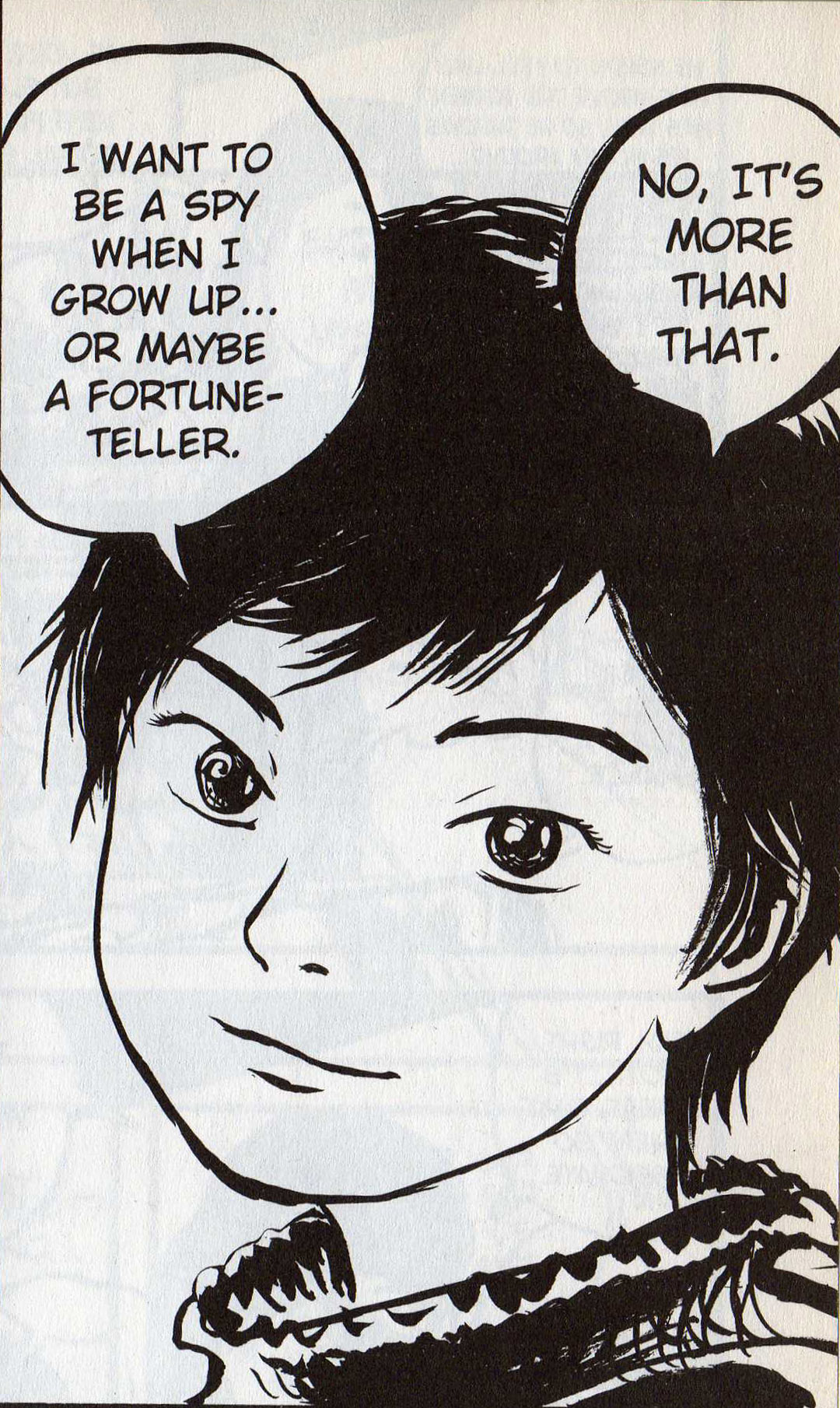
    “On the phone she’s known as Sexy Voice. But, really, she’s more than a professional flirt. Secretly, she wants to change the world and maybe become a spy and fortuneteller, too.

    “Along for the ride is her friend Iichiro Sudo. He’s an underemployed twentysomething hipster with an obsession for collecting toy robots. Together they are Sexy Voice and Robo… two people doing their best to bring some hope into this crazy world.”

    The series was originally published in Shogakukan’s IKKI anthology. It was published in Spanish by Ponent Mon, though I don’t think it’s in print. It was adapted into a live-action drama by Nippon TV.

    About the author:

    “Iou Kuroda, one of Japan’s premier young manga talents, combines expressive artwork with reflective, poetic storytelling. Earning the Grand Prize for manga from Japan’s Agency for Cultural Affairs’ Media Arts Festival in 2002, Sexy Voice and Robo exists as a testament to the creator’s dynamic artistry.”

    Other series by Kuroda include the as-yet-unlicensed Nasu (three volumes, originally published in Kodansha’s Afternoon) and Japan Tengu Party Illustrated (four volumes, originally published in Kodansha’s Morning).

    Related Links:

  • Japanese collections: first volume, second volume
  • Iou Kuroda’s web site
  • To follow all the various posts this week, please bookmark this page.

    Filed Under: Manga Moveable Feast, Viz

    We have a winner!

    February 7, 2010 by David Welsh

    Congratulations to Ahavah for winning a copy of Fumi Yoshinaga’s All My Darling Daughters (Viz)! I asked entrants to name their favorite comic mom (by which I mean mothers or mother figures from comic books, graphic novels or comic strips as opposed to moms that are laugh riots, though they could also be that). Here’s Ahavah’s choice:

    “My favorite manga mom is Kyoko Honda from Fruits Basket, but not just because of the sweet-as-sacharine way she brought up Tohru before her untimely death…

    “Kyoko Honda embodies a great message for girls: Tough chicks can be devoted mothers and never lose their strength. If you’re lucky enough to find one as your mentor, hold on to them, because they know the worst of life’s crapile and can help you figure out how to turn it all to your advantage.”

    Other noteworthy moms mentioned by entrants include:

  • Mitchell Hundred’s mother in Ex Machina
  • Daisuke’s mom, Emiko, from D.N.Angel
  • Sachiko Azuma from With the Light: Raising an Autistic Child
  • Ms. Ichinose from Maison Ikkoku
  • The mom from Rose Is Rose
  • Memaw from Swallow Me Whole
  • Grandma Ben from Bone
  • Fee Carmichael from Planetes
  • Yukino’s mother in Kare Kano: His and Her Circumstances
  • Kate Spencer from Manhunter
  • Ryoji “Ranka” Fujioka from Ouran High School Host Club
  • Luba from the Palomar stories in Love and Rockets
  • Thanks to everyone who entered!

    Filed Under: Contests and giveaways

    Previews review February 2010

    February 6, 2010 by David Welsh

    There are some interesting arrivals and very welcome debuts in the February 2010 edition of Diamond’s Previews catalog. It’s also nice to think about what things will be like three months from now. Most of this snow might have melted by then.

    I really enjoyed Seth Grahame-Smith’s undead mash-up of Jane Austen, Pride and Prejudice and Zombies (Chronicle Books). Del Rey has tapped writer Tony Lee and artist Cliff Richards to make the novel more graphic. It was only a matter of time. Here’s the listing at Amazon. (Page 230.)

    Speaking of adaptations, the only thing I know about The Last Airbender is that a lot of people like the Disney Nickelodeon series and that a lot of people were upset when the makers of the live-action movie version cast a lot of white people as non-white characters. Del Rey Manga will offer a Movie Prequel, which is notable for the fact that it’s been written by Dave (Agnes Quill, X-Men: Misfits) Roman, with Alison Wilgus, and illustrated by Nina (Yôkaiden) Matsumoto. (I’m not having any luck finding a cover image. Sorry!) (Page 230.)

    Chigusa Kawai’s La Esperança (Digital Manga) is quite a lovely series, full of semi-romantic schoolboy angst. DMP debuts another Kawai series, Alice the 101st, which features an elite group of musical students, one of whom is a complete novice who earns the contempt of his classmates. I’m guessing at least one classmate will probably revise his opinion in short order. (Page 245.)

    Ever since reading A Drifting Life, I’ve been eager to see some of Yoshihiro Tatsumi’s early gekiga, the hard-boiled crime dramas that helped him build his reputation. Drawn & Quarterly will slake my curiosity with Black Blizzard, the tale of two convicts, cuffed together and on the run. (Page 249.)

    :01 First Second is sure to please fans of Gene Luen (American Born Chinese) Yang with the publication of his Prime Baby, which promises a “tale of mat, aliens, and sibling rivalry.” This was first serialized in The New York Times Magazine, but one can always expect nice packaging from First Second. (Page 255.)

    Viz offers more IKKI goodness in the form of Shunju Aono’s I’ll Give It My All… Tomorrow, the ruefully funny story of a schlub who tries to make a late-in-life decision to become a manga-ka, and Hisae Iwaoka’s slice of life in orbit, Saturn Apartments. You can sample hefty chunks of both over at Viz’s SIGIKKI site. They’re two of my favorite series in that rotation, so I’m really excited. (Page 301.)

    It’s just the month for the arrival of eagerly anticipated manga, isn’t it? Vertical releases the first volume of Ken Yaginuma’s Twin Spica. It’s about kids who attend the Tokyo Space Academy in hopes of exploring the stars. (Page 306.)

    Filed Under: Del Rey, DMP, Drawn & Quarterly, First Second, Previews, Vertical, Viz

    License request day: The Life of the Genius Professor Yanagizawa

    February 5, 2010 by David Welsh

    Sometimes I want a book to be licensed and translated when I’ve only heard the title, and that’s certainly the case with The Life of the Genius Professor Yanagizawa, written and illustrated by Kazumi Yamashita. I just heard of this book via Shaenon Garrity’s smart look at the style and influence of Rumiko Takahashi over at The Comics Journal. Garrity added that the series is “one of the few manga with an elderly protagonist,” and since I feel like an elderly protagonist myself, I have to throw my sympathy in with Professor Yanagizawa.

    It is serialized in Kodansha’s Morning magazine, which we all know offers a rich vein of license request ore. The Life of the Genius Professor Yanagizawa won the 2003 Kodansha Manga Award. It’s 28 volumes long, and it’s about a senior citizen, and these factors probably conspire to make it incredibly unprofitable for any publisher brave enough to take it under its wing. The picture doesn’t get any brighter when one discerns that it’s a slice-of-life look at a scholar of free-market economics. Because what’s sexier, I ask you, than 28 volumes about an old guy than 28 volumes about an old guy teaches economics?

    There isn’t a great deal of information about the series available in English, but I have been able to gather that Yamashita focuses on the minutiae of Yanigazawa’s well-ordered life and dedicates the manga to precise observations of the people around him. It sounds like one of those soothing, slice-of-life serials that don’t go anywhere quickly, and that makes it all the more theoretically appealing to me. There are plenty of comics from all over that are all about the momentum, and we can all use a change of pace, right?

    I’ve also seen Yamashita praised for her observational abilities and her skill at illuminating a variety of characters. Like some of her Morning colleagues, she’s worked on shôjo titles, hers largely for Shueisha’s Margaret. That magazine is the home of her other current (or most recent) series, Beautiful Girls Palace, which seems to be about a very old, very beautiful, very formidable woman. (I have to say, that is a fabulous example of fashion-mag inspired comic cover.) She’s also done several series for the Shueisha’s defunct josei magazine Young You.

    But let’s turn our attention back to the Professor. Given the length and content of the series, it does seem unlikely that any publisher would commit to it in its entirety given current market and economic conditions. (And I’m sure the Professor would appreciate those concerns!) But what about a “best of” sampler in the style of Viz’s A La Carte editions of Oishinbo? It sounds like The Life of the Genius Professor Yanagizawa has much less narrative momentum than Oishinbo, and I thought that approach worked well as an introductory gambit. And to be totally honest, sometimes it’s just fun to note what’s out there, even if I don’t have any realistic expectations of seeing it published in English.

    Filed Under: License requests, Linkblogging

    Pieces of One Piece

    February 4, 2010 by David Welsh

    I hadn’t realized that Eiichiro Oda’s One Piece (Viz) was popular enough here to get the Naruto Nation treatment. I know it’s huge in Japan, but I thought it was one of those books that sells very respectably if not spectacularly. (Favorite bookstore memory: seeing two stylish exchange students from the local university totally geek out when they saw One Piece on the shelf.) But Viz is releasing a whole bunch of volumes on a very accelerated schedule, and it’s been publishing omnibus editions of the early installments. New volumes have also been cropping up in the manga section of the New York Times Graphic Book Best Seller List, though pirates don’t seem to have quite the commercial force of ninjas or vampires or James Patterson.

    In the interest of full disclosure, I should note that I read a handful of early volumes of the manga and enjoyed them well enough, but not quite enough to keep up. I don’t have quite the attention span for shônen that I do for some other categories. But the publisher recently sent me review copies of volumes 29, 30 and 31, which picks up roughly in the early middle of an arc about a mysterious chain of islands that floats up in the clouds, and it seemed like a good opportunity to see what’s up with the crew.

    The Straw Hats, the pirates who form the comic’s core cast, are scattered throughout this floating island along with a dauntingly large number of guest characters representing different island factions. It’s not impossible to figure out what’s going on, but if you’re going to sample One Piece, I can’t recommend the 29th volume as your starting point. (I think the “Skypiea” arc starts in the 24th volume.) There’s an evil god who’s pitting all of these factions against each other, and our dimwitted hero, stretchable pirate Luffy, is on the path to becoming sufficiently annoyed to knock said god off of his perch.

    That moment is likely to be very, very satisfying. Oda has that key shônen skill set of investing action with whimsy and just enough import to keep things lively, and Luffy’s primary function, at least as I see it, is to gradually reach that point where he concludes that something (definitely energetic, possibly ludicrous) must be done to set things right. Until that moment, we get lots of characters fighting each other in imaginative, slightly puzzling ways, escaping perils of varying degrees of menace and lunacy, or realizing just how out of their depth they actually are. (Luffy is immune to concerns of depth, which is why he’s the lead.)

    What makes me eager to see the conclusion is the fact that Oda takes a break from the floating-islands mayhem to take readers back to where everything started, centuries before Luffy was born, before he ever considered pillaging as a life calling. (Oh, and if you’re leery of cheering for a bunch of criminals, Luffy’s concept of piracy is really mild.) In the flashback, a botanical explorer finds one of the islands that will later take to the air and tries to befriend its imperiled residents. It’s shônen in miniature, with rivals becoming friends, skills displayed and shared, and brave promises of loyalty made, but it’s also moving and tragic. It gives heft to the main event, and it shows how focused and precise Oda can be as a storyteller. Beyond the fact that it works in the larger context, it’s nice to see something linear and restrained in the midst of the mad jumble.

    In other developments, there are two Straw Hats who are new to me. One is a tiny reindeer named Chopper who serves as the crew’s doctor and seems given to panic. He spends most of these volumes unconscious, which is unfortunate, because what sensible person doesn’t want to know more about a tiny, panicky doctor who’s also a reindeer? The other is a taciturn archeologist named Nico Robin who can make arms grow anywhere and then control them. Given that most of her crewmates are amusingly hyperactive dingbats, her relatively serene, contemplative presence is very welcome.

    Filed Under: From the stack, Viz

    Yens

    February 3, 2010 by David Welsh

    Yen Press just announced some really terrific licenses. Here are the two that make me giddiest:

    Fumi Yoshinaga’s Not Love But Delicious Food was originally serialized in Ohta Shuppan’s Manga Erotics F, and it’s about a food-obsessed boys’-love manga-ka. So basically there’s almost no way it won’t be awesome. This will surely sell tons of copies, and then publishers will engage in cage matches for the right to license What Did You Eat Yesterday?

    Émile Bravo provided the illustrations for Jean Regnaud’s beautiful My Mommy Is in America and She Met Buffalo Bill (Fanfare/Ponent Mon), so I’m eager to read Goldilocks and the Seven Squat Bears, a funny take on some classic fairy tales.

    Filed Under: Yen Press

    « Previous Page
    Next Page »

    Features

    • Fruits Basket MMF
    • Josei A to Z
    • License Requests
    • Seinen A to Z
    • Shôjo-Sunjeong A to Z
    • The Favorites Alphabet

    Categories

    Recent Posts

    • Hiatus
    • Upcoming 11/30/2011
    • Upcoming 11/23/2011
    • Undiscovered Ono
    • Re-flipped: not simple

    Comics

    • 4thletter!
    • Comics Alliance
    • Comics Should Be Good
    • Comics Worth Reading
    • Comics-and-More
    • Comics212
    • comiXology
    • Fantastic Fangirls
    • Good Comics for Kids
    • I Love Rob Liefeld
    • Mighty God King
    • Neilalien
    • Panel Patter
    • Paul Gravett
    • Polite Dissent
    • Progressive Ruin
    • Read About Comics
    • Robot 6
    • The Comics Curmudgeon
    • The Comics Journal
    • The Comics Reporter
    • The Hub
    • The Secret of Wednesday's Haul
    • Warren Peace
    • Yet Another Comics Blog

    Manga

    • A Case Suitable for Treatment
    • A Feminist Otaku
    • A Life in Panels
    • ABCBTom
    • About.Com on Manga
    • All About Manga
    • Comics Village
    • Experiments in Manga
    • Feh Yes Vintage Manga
    • Joy Kim
    • Kuriousity
    • Manga Out Loud
    • Manga Report
    • Manga Therapy
    • Manga Views
    • Manga Widget
    • Manga Worth Reading
    • Manga Xanadu
    • MangaBlog
    • Mecha Mecha Media
    • Ogiue Maniax
    • Okazu
    • Read All Manga
    • Reverse Thieves
    • Rocket Bomber
    • Same Hat!
    • Slightly Biased Manga
    • Soliloquy in Blue
    • The Manga Critic

    Pop Culture

    • ArtsBeat
    • Monkey See
    • Postmodern Barney
    • Something Old, Nothing New

    Publishers

    • AdHouse Books
    • Dark Horse Comics
    • Del Rey
    • Digital Manga
    • Drawn and Quarterly
    • Fanfare/Ponent Mon
    • Fantagraphics Books
    • First Second
    • Kodansha Comics USA
    • Last Gasp
    • NBM
    • Netcomics
    • Oni Press
    • SLG
    • Tokyopop
    • Top Shelf Productions
    • Vertical
    • Viz Media
    • Yen Press

    Archives

    Copyright © 2026 · Genesis Framework · WordPress · Log in