The Manga Curmudgeon

Spending too much on comics, then talking too much about them

  • Home
  • About
  • One Piece MMF
  • Sexy Voice & Robo MMF
  • Comics links
  • Year 24 Group links

Birthday book: The Saga of the Bloody Benders

February 25, 2010 by David Welsh

It’s sometimes a little tricky to recommend a particular birthday book when the creator’s body of work is so strong overall, and that’s the case with Rick Geary. I could go with Dark Horse’s hardcover collection of the charming The Adventures of Blanche, but I first became familiar with his work in the context of his excellent true-crime comics, so I’ll dip into that well.

But even with that set of boundaries, which one should I choose? They’re all good, and they don’t need to be read in any particular order. I could throw the titles into a hat and pick one at random, but one volume has managed to inch ahead in my mental Geary library: The Saga of the Bloody Benders.

Geary’s approach to true crime has always got some added value to it, as he takes the time to explore historical and cultural circumstances that either influenced or provided context for the atrocity in question. This tale of an opportunistic family of cutthroats in Kansas is no exception. And there’s just something creepy about such a nest of vipers occupying those wide open spaces (even wider and more open then than now) in the midst of so much homesteader optimism.

A distinguishing characteristic of The Bloody Benders is that I feel like it netted more effusive critical attention than Geary’s Treasury of Victorian Murder books had up to that point. The quality of the reviews was as admiring as always, but the number of them was higher, which was gratifying to see. Here’s a representative snippet from Tom (The Comics Reporter) Spurgeon:

“The story stays with you. Something about the way Geary delineates the proportions of the living area gives the recurring crimes a horrifying intimacy, and when the nature of what’s going on is revealed as the narrative progresses the thoroughness with which the Benders cleave to murder and atrocity astonishes.”

The book also made the Young Adult Library Services Association’s 2008 list of Great Graphic Novels for Teens.

Filed Under: Birthday books, NBM

From the stack: Ultimo vol. 1

February 25, 2010 by David Welsh

Stan Lee created the template for a lot of comics I loved for a very long time. Beyond that, he was a very prominent figure in those comics, at least in terms of the tone that Marvel put forward. He was the cheesy ringmaster in the text pieces, the company’s head cheerleader. Even when I was six, he never seemed as young to me as he seemed to feel, but there was a weird charm to that. So what if he was using made-up lingo that would seem out of date and awkward coming out of the mouths of people 20 years younger? He didn’t convey any cynicism to me, though whether that was because my radar for such things hadn’t yet developed, I can’t say.

He still doesn’t really convey any cynicism to me, though his bombast does strike me as even more awkward now than it did then. (It’s kind of like seeing snippets of Hef with a trio of girlfriends a quarter of his age, though it’s nowhere near as creepy.) Time hasn’t really seemed to pass for Lee, at least in terms of his enthusiasm for trying new things. He’s continually busy, tinkering around with DC’s characters in those “Just Imagine” books a few years ago, hosting a reality show, animating Pamela Anderson, and so on. So it’s unsurprising that he would eventually get around to manga.

The result is Ultimo (Viz). Lee provided the concept, and the story and art were executed by Hiroyuki (Shaman King) Takei, with inking support from Daigo and painting duties executed by Bob. It’s serialized in Viz’s Shonen Jump over here and as Karakuridôji Ultimo in Shueisha’s Jump SQ in Japan. That kind of exposure indicates that it clearly isn’t just a vanity project or a courtesy to a comic-book legend. It’s a serious commercial effort by all concerned.

And Lee is even more present in the narrative as he was in those old Marvel Comics. He provides the introduction. There’s a photo of him in a yukata. He even inspires a character, Dunstan, who sets the whole plot in motion. And still, somehow, none of this is creepy, except for possibly an end-note interview where Lee urges readers to “buy as many copies of Ultimo as [they] possibly can.” Keep your collector’s speculative mentality to yourself.

I’m fond of Lee, I really am, and nothing here changes that. He’s got the same huckster sense of fun with just enough sincerity underneath. But fondness aside, part of me was hoping that Ultimo would be a train wreck. This isn’t because I wish ill to anyone involved, but because the combination of Lee and manga enticingly suggests a lot of ways things could go wrong. (I think every generation deserves its Broadway musical version of Carrie, don’t you?)

Sadly, Ultimo is competent, mildly odd action shônen about fighting robots. Given Takei’s participation, it would have been competent and mildly odd without Lee’s participation. In my experience with Takei’s work, he’s given to unsettling character designs that straddle the line between cute and creepy, and that’s in evidence here. Unfortunately, it’s the most interesting aspect of the book.

Anyway, here’s the plot: a long time ago, Dunstan decides to create powerful robotic dolls that would answer the eternal question: “Who’d win? Good or evil?” The dolls re-emerge in the present day and align themselves with reincarnated versions of the people they knew back in the feudal era. They fight. And we seem to be set to meet a bunch of other robotic dolls that personify a variety of gradations of good and evil. That’s about it, aside from some teen-angst garnish about our hero, Yamato.

The battle between good and evil is ubiquitous in action shônen, and the interest comes from the ways the creators dress it up. Stripping the concept down to an action-figure version doesn’t doing anything to enhance the core idea. Yamato’s woes are kind of generic, though I always feel at least a little bit sympathetic for reincarnated characters of a certain type. The poor bastards never stood a chance, what with the centuries-old destinies to replay and other people’s unfinished business.

As I noted, Takei’s character designs bring the most to the table in terms of the actual comic. He doesn’t seem inclined to do straight-up cool, throwing in some kind of unsavory note to each aspect, and his robotic dolls are very much in that vein. They’re delicate and monstrous at the same time, and the unnerving experience of looking at them helps compensate for the fact that they don’t really have much in the way of personality.

Basically, my problems with Ultimo are my problems with generic action shônen. I can recognize the competence of its execution without being particularly interested in the characters or outcomes. Aside from the novelty of watching Lee interface with manga outside the narrative is the best reason to read the book, and that doesn’t add up to much.

(This review is based on a review copy provided by the publisher.)

Filed Under: From the stack, Viz

Brush with studliness

February 24, 2010 by David Welsh

I set aside my absolute conviction that I sound like a complete dork when recorded on any media to participate in an Inkstuds podcast guest-moderated by Deb (About.Com) Aoki. Deb was ringleader of a panel that included myself, Chris (Comics212) Butcher and Ryan (Same Hat!) Sands. It was fun, though you can quite clearly tell that it’s my first podcast and that I have no skills in that area. (The real reason I don’t attend many conventions is a morbid dread that I might be asked to participate in a panel, because the only thing worse than being recorded for posterity is sitting in front of a room full of people who expect me to say something interesting or useful instead of stuttering and sweating.)

The topic was manga for indie/alternative comics fans, which doesn’t necessarily mean indie manga, as I think Ryan pointed out. Difficult-to-demographically-categorize manga might be more accurate, but that’s a mouthful. (And that doesn’t even get into the whole question of what one means by indie/alternative comics, which is its own whole continuum.)

I did want to highlight something Chris and Deb discussed, and that’s the fact that you can sample a lot of manga that indie/alternative comics fans might like at Viz’s SigIKKI site, which serializes stories from Shogakukan’s IKKI magazine. My favorites are Daisuke Igarashi’s Children of the Sea (a beautifully drawn contemporary environmental fable), Natsume Ono’s House of Five Leaves (a delicate twist on samurai/crime drama), Shunju Aono’s I’ll Give It My All… Tomorrow (barbed but sweet comedy about a 40-something loser), and Hisae Iwaoka’s Saturn Apartments (slice-of-life science fiction). The first two volumes of Children of the Sea are already available in print, and I think the other three are on Viz’s publishing schedule sometime in the next three or four months.

IKKI is one of those magazines that seems like it’s less for a specific age or gender demographic than for people who like comics. Others include Enterbrain’s Comic Beam, Ohta Shuppan’s Manga Erotics F, and Kodansha’s Afternoon, Morning, and Morning 2. When I’m trawling for license requests, it never surprises me to find that a series I want originally appeared in one of these anthologies. I also strongly suspect that Akane Shinsha’s Opera could be a veritable gold mine of the kinds of boys’ love titles I really like, though that’s a purely cosmetic impression based on the issue that Chris sent me.

Filed Under: Anthologies, Linkblogging

The Shôjo-Sunjeong Alphabet: S

February 24, 2010 by David Welsh

“S” is for…

Plus a little josei:

And some deeply awesome yaoi:

And a “why isn’t this in print” addendum:

What are some of your favorite shôjo and sunjeong titles that start with the letter “S”? Do I even dare to ask?

Filed Under: The Shôjo-Sunjeong Alphabet

Future feasts

February 24, 2010 by David Welsh

Matt (Rocket Bomber) Blind announces the second Manga Moveable Feast, this time focusing on Kaoru Mori’s lovely costume drama Emma (CMX).

Professor Blind is also seeking suggestions for the subject of the third Manga Moveable Feast. Suggestions seem to be running in a science-fiction/fantasy direction, which would be a nice change of pace.

Filed Under: Linkblogging, Manga Moveable Feast

Upcoming 2/24/2010

February 23, 2010 by David Welsh

It’s kind of a dead week for manga in terms of new arrivals at comic shops, so what better way to spend it than by focusing on a book that deals with dead bodies? Conveniently enough, the highlight of this week’s arrivals is the 10th volume of The Kurosagi Corpse Delivery Service (Dark Horse), written by Eiji (MPD-Psycho) Otsuka and illustrated by Housui (Mail) Yamazaki. In another bit of fortuitous timing, Johanna (Manga Worth Reading) Draper Carlson has just added this series to her roster of Recommended Series:

“The Kurosagi Corpse Delivery Service, it was well-recommended, but I wasn’t sure it was for me, given that it was classified as horror and the premise involved lovingly depicted dead bodies. I’m glad I went ahead and tried it, because I very much enjoyed it. It reminded me of Pushing Daisies, if that show was more laconic and Japanese.”

Kristen Chenoweth could totally play Makino, the embalmer. And musical numbers are just about the only thing that could actually improve this title, though I think musical numbers improve just about everything.
Johanna points to this entry from Shaenon K. Garrity’s Overlooked Manga Festival. Tremble before the force of her persuasive writing:

“Anyway, Kurosagi is a horror comic, in kind of the same way ‘Scream’ was a horror movie, or ‘Buffy’ was a horror TV show. That is, it’s smart and self-aware and full of pop-cult references and weird little factoids. Writer Eiji Otsuka likes to show off just how damn clever he is by mixing two offbeat elements no other manga writer would think of into a single story. A story about crop circles and mummified chimpanzees. Professional mourners and a serial killer who targets depressing blogs. The urban legend about the bride kidnapped from a dressing room and turned into a circus freak and the Japanese version of the ‘Bodyworlds’ corpse-art exhibition. The Rape of Nanking and soap people. And so on.”

What, you need more persuasion? Or maybe you’re worried about not being able to find the volumes in order? Let Kate (The Manga Critic) Dacey put your mind at ease:

“A final tip: you don’t need to read the volumes in order — or even all of them, for that matter — to enjoy The Kurosagi Corpse Delivery Service, though I highly recommend all nine volumes.”

That about covers it, don’t you think?

Filed Under: Audience development, ComicList, Dark Horse, Linkblogging

Awards update

February 22, 2010 by David Welsh

2009 is only over on our calendars, not in our hearts. At least that’s true until awards season is over, and that won’t wrap up until the Eisners this summer. Here are two nomination announcements:

First up are the nominations for the 2009 Los Angeles Times Book Prizes, which includes a first-ever graphic novel category:

  • Gilbert Hernandez, Luba (A Love and Rockets Book) (Fantagraphics Books)
  • Taiyo Matsumoto, GoGo Monster (VIZ Media)
  • David Mazzucchelli, Asterios Polyp (Pantheon)
  • Bryan Lee O’Malley, Scott Pilgrim, Vol. 5: Scott Pilgrim vs. the Universe (Oni Press)
  • Joe Sacco, Footnotes in Gaza (Metropolitan Books/Henry Holt & Co., LLC)
  • That’s a good launch list. The Times is understandably pleased with itself:

    “With the Graphic Novel Prize, the Los Angeles Times Book Prizes becomes the first major book prize in the United States to honor publications in this category, which is an expanding part of the book landscape, both aesthetically and commercially.”

    On the other side of the planet, Japan Expo announces its 2010 nominees for manga (via The Comics Reporter).

    Of all my reactions to that list, I’m most distracted by the bitter reminder that France has Vinland Saga and we don’t.

    Filed Under: Awards and lists, Linkblogging

    Letter head

    February 22, 2010 by David Welsh

    I can’t really say that I’m a huge fan of Yun Kouga’s comics. Earthian (Blu) was one of the comics that cemented my opinion that love stories between angels are relentlessly dull, and Loveless (Tokyopop) struck me as too melodramatic and confusing. I do find her art lovely in an odd way, so I keep trying.

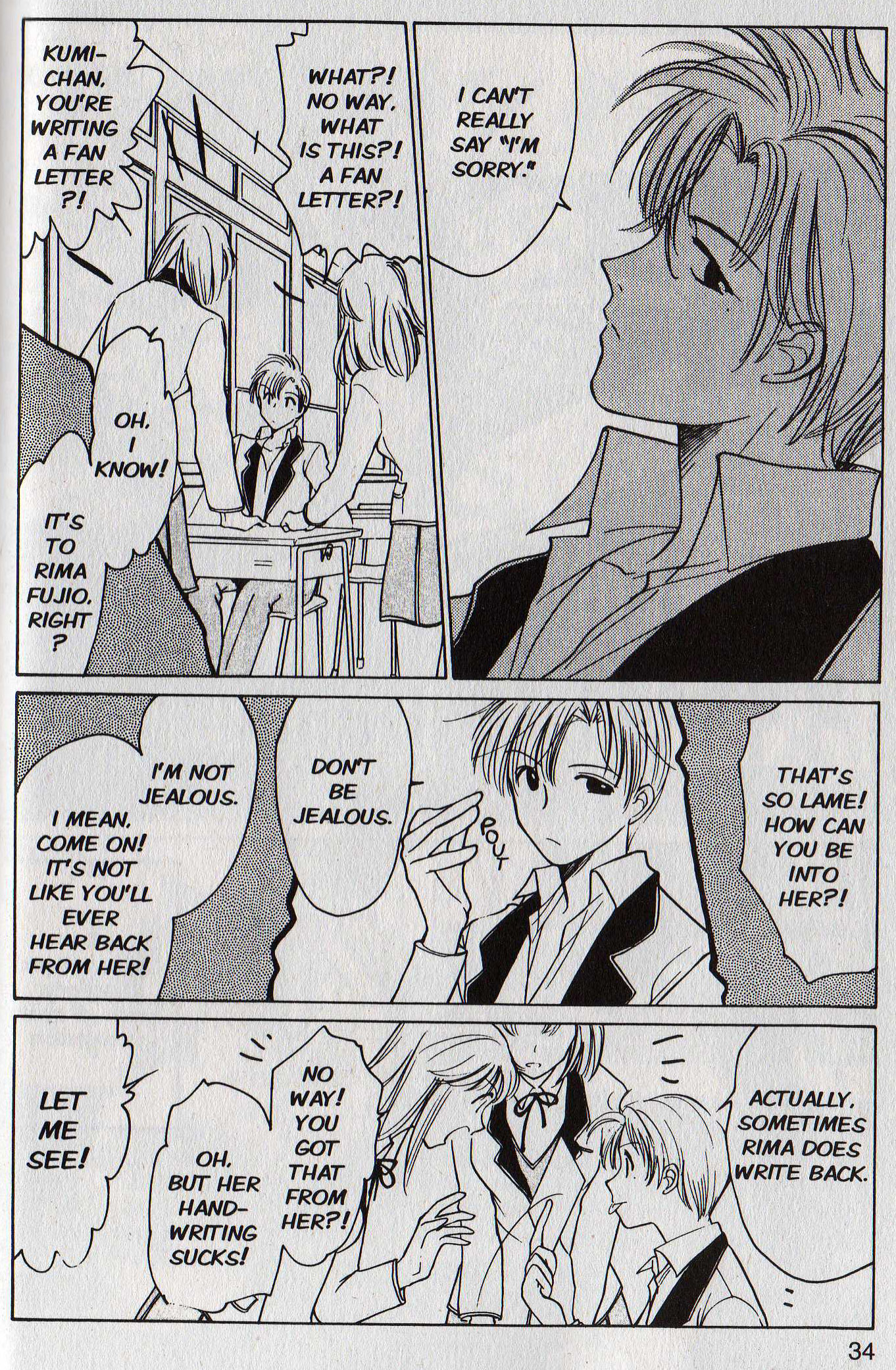
    I might have liked Crown of Love (Viz), a tale of romantically entangled pop idols, but there’s an obstacle. The font choices don’t make any sense to me.

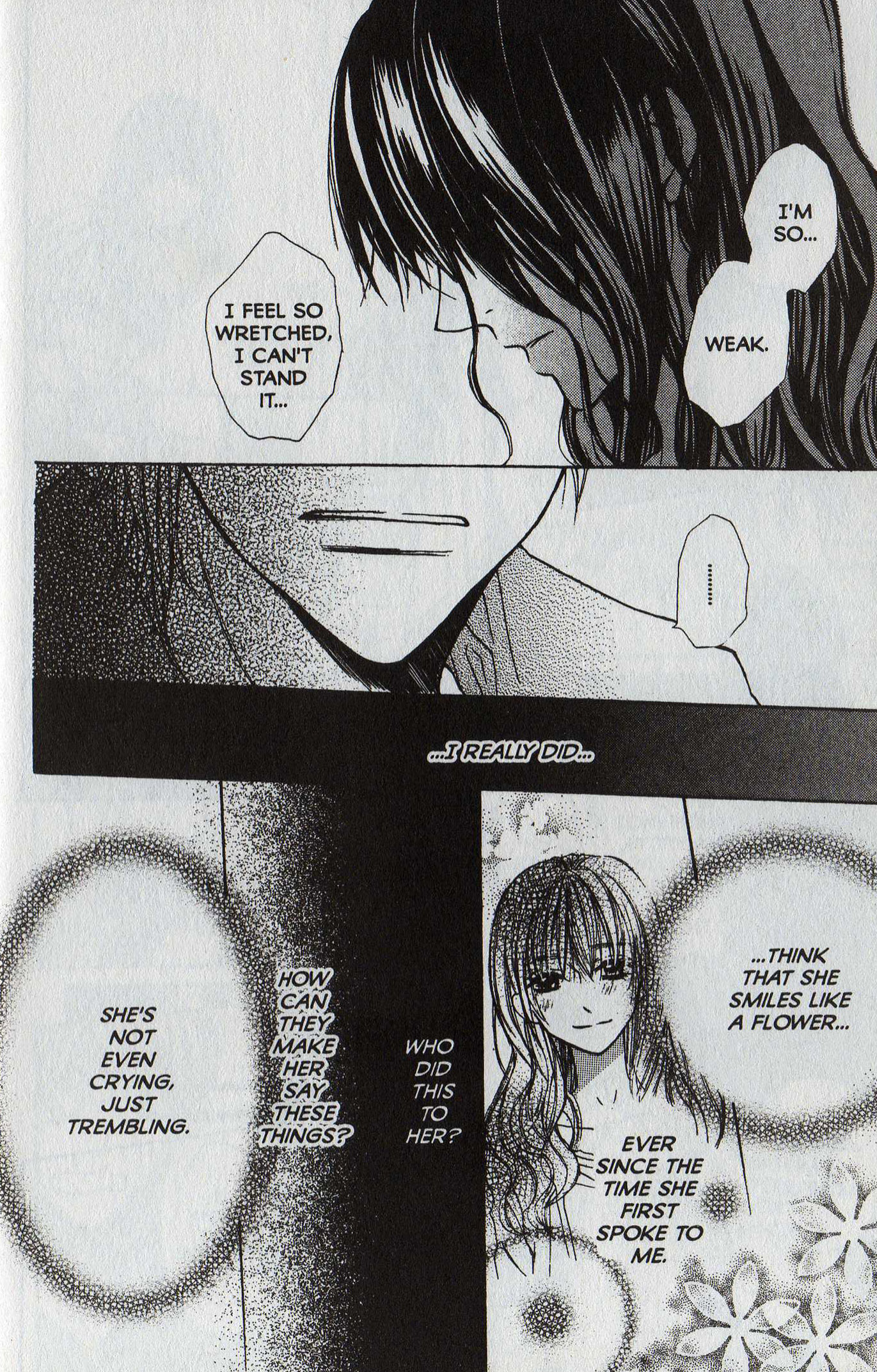
    As you can see in the image above, all of the dialogue is printed in upper-case italics. Internal monologues and asides use sentence-case italics. There’s no distinction between present-moment font choices and flashback font choices, so it can be a little confusing to determine when the story shifts to explore past events.

    So my biggest issue with Crown of Love is with the way the words are presented. In my experience, upper-case italics are the font of meaningful flashbacks. Italicized text seems best applied to either shouting or internal musings as opposed to run-of-the-mill dialogue. So the consistent use of upper-case italics puts too much import on moments that should read as breezy and conversational. For contrast, here’s a page from the third volume of Ken Saito’s The Name of the Flower (CMX) that I think uses varied lettering extremely well:

    Gradations of emotion seem important in Crown of Love, as the story shifts from classroom banter to industry scheming to intense and sudden feelings of romance. But the lettering bleeds the dialogue of visual nuance. It renders it in monotone. You can read it into the dialogue, but, frankly, there’s not that much nuance to be mined, and it seems like an awful lot of work to invest in a fairly slight outing.

    There is promise here. Kouga’s illustrations are as attractive as always, and they’re cleaner and clearer than I remember them being in other titles. I like the agent character, Ikeshiba, who uses his charges’ intense emotions to get his way and move them forward in their careers. He’s so forthright in his manipulation, which is refreshing in contrast to the scheming, capricious old pervs agents often are in idol stories. And Kumi, the boy Ikeshiba is trying to sign by dangling a female starlet in front of him, has a domestic situation that’s grippingly unpleasant.

    But the sameness of the lettering, its artificial, often misplaced urgency, flattens so many of the little peaks and valleys that could have been more meaningful. Dave (Comics-and-More) Ferraro notes that “Equal weight is put on everything as the book progresses,” though he doesn’t specifically mention the lettering. So it’s entirely possible that I’m the only person who has this problem, which suggests that I’m nitpicking. Here are a couple of links to reviews by other people:

  • Kate (The Manga Critic) Dacey
  • Sean (A Case Suitable for Treatment) Gaffney
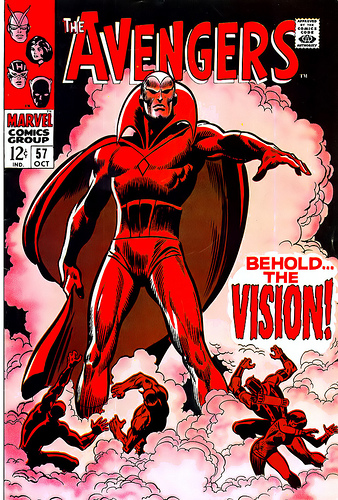
  • There’s always the possibility that my deeply ingrained association of italicized all-caps comes from another source:

    Filed Under: Blu, CMX, From the stack, Marvel, Tokyopop, Viz

    Birthday book: Lost at Sea

    February 21, 2010 by David Welsh

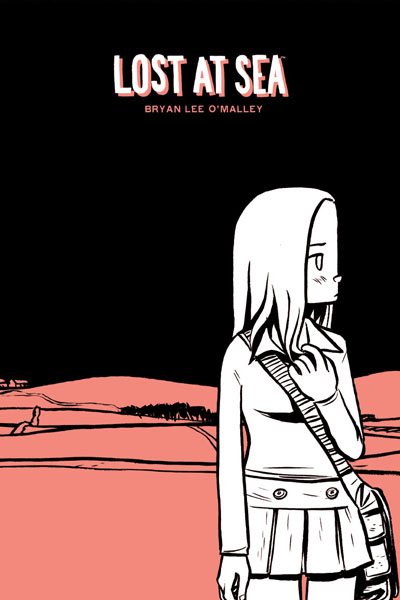
    It’s Bryan Lee O’Malley’s birthday. I can always happily recommend his Scott Pilgrim books, which Kate (The Manga Critic) Dacey puts in the number one slot of her list of ten great global manga. (That’s a great list, by the way. I can’t think of a thing I’d add.) But chances are good you’ve already read all of the Scott Pilgrim books at least once.

    Fortunately, there’s a pre-Pilgrim book I can recommend without reservation, Lost at Sea (Oni). Here’s the publisher’s description:

    “Raleigh doesn’t have a soul. A cat stole it – or at least that’s what she tells people – or at least that’s what she would tell people if she told people anything. But that would mean talking to people, and the mere thought of social interaction is terrifying. How did such a shy teenage girl end up in a car with three of her hooligan classmates on a cross-country road trip? Being forced to interact with kids her own age is a new and alarming proposition for Raleigh, but maybe it’s just what she needs – or maybe it can help her find what she needs – or maybe it can help her to realize that what she needs has been with her all along.”

    And here’s a bit from my review of the book:

    “It’s a fairly universal state of mind, but O’Malley portrays it [in] articulate, sensitive ways that are entirely specific to his protagonist. He gives Raleigh a barbed, revealing stream-of-consciousness narration that never becomes tiresome. It’s not some dreary poetry journal; it’s the often jumbled thinking of a smart young woman who doesn’t know if she’s actually in crisis or is really just like everyone else, or which of those states would be less comforting.”

    If you haven’t read Lost at Sea, celebrate O’Malley’s birthday by picking up a copy. I think you’ll really enjoy it.

    Filed Under: Birthday books, Linkblogging, Oni

    License request day: Mint na Bokura

    February 19, 2010 by David Welsh

    After a few weeks of relentless gray skies, I feel the need to ask for something sunny and sparkly this week. In my experience, Wataru Yoshizumi is a reliable purveyor of sunny and sparkly. She’s had two series published in English: Marmalade Boy (Tokyopop), which is out of print, and Ultra Maniac (Viz), which is adorable in a really good way. It seems fairly safe to assume that her other unlicensed work might help lift the serotonin levels of snowbound shôjo fans.

    So let’s take a look at the six-volume Mint na Bokura, originally serialized in Shueisha’s Ribon anthology. It’s got inappropriate sibling closeness, boarding-school antics, and cross-dressing, and none of the covers seem to suggest domestic abuse, so I think it sounds like a winner.

    It’s been published in French by Glénat, which describes the plot thusly:

    “Twins Maria and Noeru have always been very close. When Maria decides to enter to the Morinomiya School to get a closer look at the beautiful eyes of the coach of its tennis club, Noeru, who refuses to be apart from his sister, decides to enroll in the same establishment. Unfortunately, there aren’t any more places for boys. He decides to pass as a girl!

    “But school life isn’t easy when one must constantly play the fool! Especially when Noeru quickly falls in love with Miyu, a classmate, then is courted by another pupil… Wataru Yoshizumi concocts a deliciously funny story, with the talent and the sensitivity which has already made her famous throughout the world.”

    You know, I don’t think Yoshizumi is famous enough. If she was really as famous as she should be, Marmalade Boy wouldn’t be out of print. Perhaps a step towards that would be getting Marmalade Boy back in print. If only the Japanese publisher of the series co-owned a major stateside manga publisher with a big shôjo imprint. Oh, wait… they do.

    Surely a gender-bending twin comedy set in a boarding school could also help push Yoshizumi to the next tier of creator fame. Here are some preview pages from the first volume of Mint na Bokura at Shueisha’s site.

    Filed Under: License requests

    « Previous Page
    Next Page »

    Features

    • Fruits Basket MMF
    • Josei A to Z
    • License Requests
    • Seinen A to Z
    • Shôjo-Sunjeong A to Z
    • The Favorites Alphabet

    Categories

    Recent Posts

    • Hiatus
    • Upcoming 11/30/2011
    • Upcoming 11/23/2011
    • Undiscovered Ono
    • Re-flipped: not simple

    Comics

    • 4thletter!
    • Comics Alliance
    • Comics Should Be Good
    • Comics Worth Reading
    • Comics-and-More
    • Comics212
    • comiXology
    • Fantastic Fangirls
    • Good Comics for Kids
    • I Love Rob Liefeld
    • Mighty God King
    • Neilalien
    • Panel Patter
    • Paul Gravett
    • Polite Dissent
    • Progressive Ruin
    • Read About Comics
    • Robot 6
    • The Comics Curmudgeon
    • The Comics Journal
    • The Comics Reporter
    • The Hub
    • The Secret of Wednesday's Haul
    • Warren Peace
    • Yet Another Comics Blog

    Manga

    • A Case Suitable for Treatment
    • A Feminist Otaku
    • A Life in Panels
    • ABCBTom
    • About.Com on Manga
    • All About Manga
    • Comics Village
    • Experiments in Manga
    • Feh Yes Vintage Manga
    • Joy Kim
    • Kuriousity
    • Manga Out Loud
    • Manga Report
    • Manga Therapy
    • Manga Views
    • Manga Widget
    • Manga Worth Reading
    • Manga Xanadu
    • MangaBlog
    • Mecha Mecha Media
    • Ogiue Maniax
    • Okazu
    • Read All Manga
    • Reverse Thieves
    • Rocket Bomber
    • Same Hat!
    • Slightly Biased Manga
    • Soliloquy in Blue
    • The Manga Critic

    Pop Culture

    • ArtsBeat
    • Monkey See
    • Postmodern Barney
    • Something Old, Nothing New

    Publishers

    • AdHouse Books
    • Dark Horse Comics
    • Del Rey
    • Digital Manga
    • Drawn and Quarterly
    • Fanfare/Ponent Mon
    • Fantagraphics Books
    • First Second
    • Kodansha Comics USA
    • Last Gasp
    • NBM
    • Netcomics
    • Oni Press
    • SLG
    • Tokyopop
    • Top Shelf Productions
    • Vertical
    • Viz Media
    • Yen Press

    Archives

    Copyright © 2026 · Genesis Framework · WordPress · Log in