The Manga Curmudgeon

Spending too much on comics, then talking too much about them

  • Home
  • About
  • One Piece MMF
  • Sexy Voice & Robo MMF
  • Comics links
  • Year 24 Group links

Wanting far too much for far too long

March 12, 2010 by David Welsh

This week’s glorious news has left me with a question: should I just change the name of this feature to “Pestering Matt Thorn”? The idea appeals to me, but I’m reluctant to limit myself when it comes to begging. That doesn’t mean that I can’t… shall we say… fixate for a while.

But even this leaves one with a question: fixate on what? Should I focus on the kind of manga that seems to track with Thorn’s scholarly interests in his work as a part of Kyoto Seika University’s Faculty of Manga? This wouldn’t exactly be a stretch, as I routinely beg for classic shôjo, edgy shôjo, josei, and the various mix-and-match possibilities of all of those.

And then one notes that, in spite of the partnership with Shogakukan, one of the first two announcements from Fantagraphics is still in serialization in Enterbrain’s Comic Beam. And, as we all know, Comic Beam is awesome. I remember talking about Comic Beam’s curatorial sensibility during that Inkstuds podcast with Deb Aoki, Chris Butcher and Ryan Sands, so it makes me feel validated that Thorn drew from that particular well.

When one factors in the Fantagraphics brand (comics they admire from wherever or whenever), and the breadth and depth of Shogakukan’s catalog, and even Thorn’s own list of the best manga of the early 2000s, the possibilities seem satisfyingly vast. And while Gary Groth may not be the cuddliest messenger in the world (on this or any other subject), one can rest assured that his sensibility is as curatorial as it gets, and The Comics Journal wouldn’t have done an issue about Japanese comics for girls if it hadn’t been for Dirk Deppey, who was matchmaker for this whole initiative.

But really, where, oh where, to start with the begging? Thorn has noted that Moto Hagio’s The Heart of Thomas “changed [his] life,” and it’s a defining work of boys’-love manga, so it’s not unreasonable to keep one’s fingers crossed on that front. Along the same lines, Thorn included Hagio’s Otherworld Barbara among the previously mentioned best comics of the century so far, so that title doesn’t seem to represent excessive optimism either. (And, frankly, Fantagraphics triggered my want reflex for Otherworld Barbara in the first place by using art from it on the cover of The Comics Journal #269. They basically showed the gun in the first act, so somebody better be bleeding on the stage by the time the curtain comes down, is all I’m saying.)

Even just confining oneself to Hagio manga published by Shogakukan leaves one with a veritable smorgasbord. What more perfect way could there be for Fantagraphics to enter the vampire game than to publish The Poe Clan? Hagio’s award-winning A Cruel God Reigns (17 volumes of brutal family dysfunction) sounds like just the kind of challenge Fantagraphics would embrace.

And there’s the whole wide world of non-Hagio Shogakukan titles. I’ve seen Yumi Tamura’s 7 Seeds mentioned in the course of Fanta-Thorn elation, and why shouldn’t it be? Post-apocalyptic shôjo-josei about cryogenically frozen teen-agers destined to repopulate the Earth? Why yes, thank you, I’d love some!

So basically what I’m saying is that every possible request calls to mind seven or eight more. In fact, I’m on the verge of collapse under the weight of possibilities, so I throw it open to you. What titles are in your dream vision of Thorn-curated manga from Fantagraphics?

Filed Under: License requests

Emma MMF: Untidy endings

March 11, 2010 by David Welsh

I don’t know if this is exactly in the spirit of the Manga Moveable Feast, which I suspect is more to introduce people to great manga than to discuss it among the converted, but I feel like exploring the tenth and final volume of Kaoru Mori’s Emma (CMX) in depth, so this will require a bit of a spoiler warning. So click for more if you’re in a place where discussing how things end won’t have deleterious influence! If not, just enjoy this little bit of adorable nonsense from Mori.

Emma concludes with the wedding of upper-class William and former maid Emma, and in many ways it captures all of the essential ingredients of a wedding.

Familial awkwardness…

Competitive finery…

Impulsive hook-ups…

First-time tippling…

And bad dancing…

In other words, it feels true to the nuptial experience, at least as I know it. More importantly, it feels true to the kind of wedding Emma and William would have. Because while it is a happy ending, Mori is not so blinded by romanticism that she portrays it as an unblemished happy ending.

There are lots of little grace notes that let you know that the union of Emma and William has been accepted as an inevitability rather than viewed as a cause for celebration. Someone notes that the event wasn’t announced in the papers, and William’s acquaintances aren’t even sure who it is that he’s marrying. (They’re more keenly aware of who the girl is that William isn’t marrying, the pretty aristocrat who got her heart stomped. It’s generous of Mori to give Eleanor Campbell a less complicated happy ending than her titular heroine receives.)

William’s sister barely manages civility to Emma. William’s brother bluntly states that he’s only at the wedding out of family obligation. I can’t even quite bring myself to mention what William’s father does, and it doesn’t escape Emma’s notice. But, then, very little about her new, privileged world does.

Of course, it’s not a new world for Emma. Her place in it has just changed, and would that she could adapt to the new point of view without difficulty. But her nature doesn’t allow her to slip comfortably into the posture of an aristocrat. She seems at times petrified of the prospect of navigating the social world of William’s family, and nobody is callous enough to suggest that love will see them through. (You only have to look at William’s mother, wounded by her own brushes with society, to know that it’s an unforgiving milieu.) The people with whom Emma was once most at ease are now in a class below her, though nothing about Emma has changed. She still wants to be useful, to be busy, and these aren’t qualities that distinguish a woman of the upper classes.

Of course, William and Emma do love each other, and it’s difficult to imagine their fate being similar to that of William’s parents. And prim, disapproving Queen Victoria is dead, and the world is changing bit by bit. Maybe Mori is suggesting that the union of William and Emma is symbolic of that change. It’s maybe a little naïve, but it’s sweet, and when you consider the hard time she’s given her protagonists, a little sweetness isn’t a bad thing.

And overall, it’s the bittersweet quality that elevates Emma. The knowledge that the maid and the rich boy have traded one set of challenges for another helps readers savor their milestone. Their future happiness may not be assured, but they’ve overcome all obstacles so far. They also seem aware of the obstacles ahead, Emma maybe more than William, and perhaps that awareness will protect what happiness they can afford in a disapproving world.

Filed Under: CMX, Manga Moveable Feast

Quote of the day

March 11, 2010 by David Welsh

Deb (About.Com) Aoki interviews Gary (Fantagraphics) Groth about their new manga initiative:

Q: In my conversations with U.S. manga publishers, most, if not all of the mainstream U.S. manga publishers have said that they are not willing to take a chance on classic manga titles (e.g. published in Japan in the 1960’s, ’70s, ’80s or even early ’90s lately!) anymore. What does Fantagraphics hope to do differently to introduce new readers to the titles you’ll be bringing to the U.S.?

Gary Groth: “Due to my almost complete ignorance of the manga publishing industry and the editorial strictures that guide it, and my pitiful lack of guile in these matters, I was insufficiently aware of how timid and craven our editorial choices should’ve been!”

Ah, that’s just the kind of Grothian commentary I’ve been expecting.

By the way, I’m obviously still linkstalking the story, so point me to your thoughts if I’ve missed them.

Filed Under: Fantagraphics, Linkblogging

Say it with comics

March 10, 2010 by David Welsh

So you’re among the legion of people who are grateful to Fantagraphics for their recently announced manga initiative, to be curated by Matt Thorn. Who isn’t? I know I am. And you may want to express that gratitude by buying something that Fantagraphics has published. If your comics interests rest primarily in titles from Japan, you may not have sampled other works published by Fantagraphics, so here are some books for your consideration:

La Perdida, written and illustrated by Jessica Abel: This series got a really attractive hardcover collection from another publisher, but the five individual issues are handsome objects in their own right. It’s a great story about a young woman who moves to Mexico and finds her romanticized notion of the country very much at odds with the corner of its reality that she inhabits. (My review.)

Escape from “Special”, written and illustrated by Miss Lasko-Gross: This is a frank coming-of-age story about a girl who’s making the adjustment from an experimental private school to the more perilous, less forgiving world of public school. It’s like really bleak shôjo without any bishies, and I liked it quite a bit. (My review.)

Castle Waiting, written and illustrated by Linda Medley: You’ve read this book, haven’t you? If not, good grief, what are you waiting for? It’s absolutely gorgeous and utterly delightful. It takes place in a castle that “becomes a refuge for misfits, outcasts, and others seeking sanctuary.” I think we’re just about due for another collection, so now would be a good time to introduce yourself to Medley’s first collection of Castle Waiting. Of course, it isn’t as though there’s ever a bad time. (My review.)

The Squirrel Mother Stories, written and illustrated by Megan Kelso: Do I need to make any other argument for this book beyond the fact that it has what amounts to Alexander Hamilton slash fiction in it? (My review.)

I did a “Birthday Book” entry on Gilbert Hernandez’s Palomar stories from Love and Rockets, so I’ll be lazy and point you at that instead of cobbling together a new paragraph.

Filed Under: Fantagraphics, Quick Comic Comments

The Shôjo-Sunjeong Alphabet: U

March 10, 2010 by David Welsh

“U” is for…

What are some of your favorite shôjo and sunjeong titles that start with the letter “U”?

Filed Under: The Shôjo-Sunjeong Alphabet

Upcoming 3/10/2010

March 9, 2010 by David Welsh

Let me just clear a little paperwork out of the way before we delve into this week’s ComicList. I’m keeping a running list of reactions and coverage of yesterday’s grand and glorious news from Fantagraphics, so feel free to drop me a line if you’ve shared some thoughts that I might have missed. Also, the second iteration of the Manga Moveable Feast is in full swing, with Matt (Rocket Bomber) Blind keeping track of everyone’s thoughts on Kaoru Mori’s Emma (CMX), which was originally serialized in Enterbrain’s Comic Beam, the same magazine that hosted Shimura Takako’s Wandering Son. It all comes together.

Back to the ComicList and sticking with CMX, DC’s manga imprint has some fine comics shipping on Wednesday. I posted a review of the first volume of Mayu Fujikata’s My Darling! Miss Bancho last week, and Kate (The Manga Critic) Dacey rounds up some other early word of mouth in her look at this week’s arrivals.

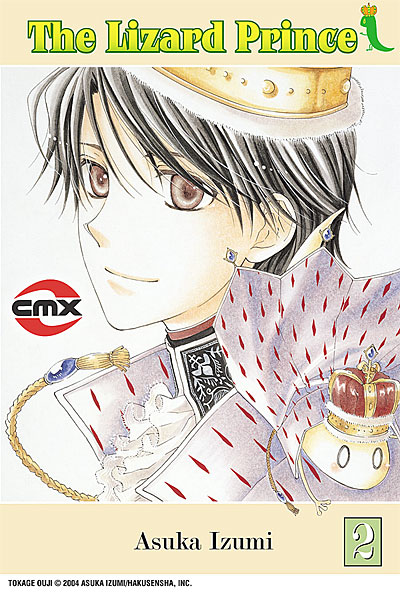
But, as exuberant pitch persons remind us, that’s not all! There’s also the second (and final) volume of Asuka Izumi’s adorable The Lizard Prince. And in a timely arrival, CMX reminds us that they’ve been putting out classic shôjo for ages. This week’s reminder comes in the form of the 15th volume of Yasuko Aoike’s From Eroica with Love.

If for some inexplicable reason you missed Scott Chantler’s Northwest Passage in its original, three-volume form or in its hardcover annotated version, Oni Press gives you yet another opportunity to enjoy this terrific period action yarn in the form of a softcover edition of the annotated collection. Chantler does an amazing job combining history and adventure, so treat yourself.

As with Miss Bancho, I’ve already reviewed the first volume of Yuu Watase’s Arata: The Legend (Viz), and so has Danielle (Comics Should Be Good) Leigh. I’ll quote Danielle so as not to bore you by repeating myself:

“In the end, the categorization of ‘shonen’ really only tells us that this was published in a shonen magazine and I suppose that makes it useful in some ways. What is more important, though, is the name of the creator attached to the work and in this instance, that name is a tried and trusted ‘brand’ in the world of fantasy manga aimed at a teen audience. Yet in spite of the Watase brand, I want to stress that nothing feels formulaic or stale here — somehow this work feels fresh and energetic and I’m quite looking forward to seeing how the two Aratas’ journeys progress in upcoming volumes.”

In a very different corner of the Viz catalog, there’s the fourth volume of Kiminori Wakasugi’s Detroit Metal City, a distasteful and hilarious tale of an acoustic kind of guy thrust into the death metal limelight. It’s in the middle of its first multi-part epic, so you might want to pick up the third volume before you read this one. Of course, you probably already own all of the available volumes, right?

And this is less a recommendation than an inquiry: I remember thinking the first volume of naked ape’s switch was kind of pallid Wild Adapter fan fiction, but I recently got a random later volume in a batch of review copies, and at some point it seems to have become very readable Wild Adapter fan fiction. So my question is this: when did that happen, and is it worth rounding up the previous volumes? Or was the 12th volume just an aberrant quality spike?

Oh, and in case you were wondering what would top the next Graphic Book Best Seller List at The New York Times, Yen Press is releasing the first volume of the graphic-novel version of Stephenie Meyers’ Twilight, adapted by Young Kim. The only question is whether it will topple Crumb in the hardcover section or Akamatsu in the manga list. I’m sure I’ll read it eventually. I don’t see any reason to rush, though.

Filed Under: CMX, ComicList, Fantagraphics, Linkblogging, Oni, Viz, Yen Press

Emma MMF: Flashback review

March 9, 2010 by David Welsh

Here’s my Flipped column on Kaoru Mori’s Emma, originally published at The Comics Reporter on April 3, 2008. It was written before the conclusion of the main narrative, so I’ll follow up later in the week with a proper review of the final volume, but I thought I’d pull it out for this second round of the Manga Moveable Feast. For a running roster of contributions, please visit Rocket Bomber.

Anyone who follows comic link aggregators has seen pieces on the “maid cafe,” a Japanese phenomenon featuring waitresses dressed up in domestic finery who provide assiduous service to patrons who like that sort of thing. At least partly responsible for the enduring popularity of these venues is Kaoru Mori, a gifted manga creator and dedicated Anglophile. Both of these qualities are on handsome display in Emma, a seven-volume manga series published in English by CMX, DC’s manga imprint.

Devotees of public television should feel right at home with the Upstairs, Downstairs romance that unfolds. William Jones, the son of upper-class English merchants, is instantly smitten with the title character, who is working as a maid for William’s former governess. Love at first sight is difficult to portray persuasively, and Mori doesn’t entirely succeed, but there’s certainly something about Emma that inspires intrigue and sympathy. Characters refer to her beauty, though her charms seem more driven by personality than physicality.

The first to be drawn to Emma is Kelly Stownar, the retired governess, who rescues the child from a life of poverty. Over the years that follow, Kelly teaches Emma the ins and outs of a life in service, and she also teaches Emma to read. Their relationship blurs, blending elements of mistress and servant with parent and child, and it’s evident that Kelly wants better for her intelligent, devoted ward. (Part of this probably stems from independent, educated Kelly’s bemused disdain for social order.)

Whether rigid class structures will allow that kind of advancement is Emma‘s principle interest. Beyond William and Emma’s fraught, tentative romance, relative status informs everything. William’s stern father is keenly aware of his stance in the societal pecking order; he has money but not the certainty of a title. His fragile mother learned the difference between country elegance and city society to her sorrow. Old money sneers at new, city servants condescend to their rural counterparts, and foreigners view the whole morass with bemused contempt.

One of the marvels of Mori’s work is that she manages to convey this without lapsing into anything resembling a social studies lesson. Her finest moments are silent and subdued, as when Emma allows herself a bashful smile as examines a gift from her suitor. At the same time, she can deliver the kind of gossipy banter that feels authentic. The complex class conflicts emerge in the below-stairs chatter among servants and pointed observations of the wealthy.

Mori has been cited for the meticulous research she conducted as a part of the manga’s creation, and the results show. The settings are rendered with lush attention to detail, and so are the mundane activities of the servants. Readers get an organic sense of the amount of work it was to maintain a household and the carefully managed division of labor that made it possible. The untroubled ease of the gentry becomes more decadent as a result, so it’s smart of Mori to give the servants pride in their accomplishments and the leisure to talk trash about their employers.

Looking back on what I’ve written so far, I may have given the false impression that Emma is a humorless affair, and it isn’t. It’s true that Emma and William’s arc is incremental and restrained, but Mori can go over the top hen the mood strikes. Beyond the barbed wit of many of the exchanges, there’s a fair sprinkling of comic supporting characters. None of them can quite compete with William’s childhood friend Hakim, a wealthy Indian who travels with an entourage straight out of a Bollywood musical. And any lingering doubts about Mori’s sense of humor are demolished by her autobiographical afterwords, where she elaborates on her creative process and personal passions with hilarious abandon.

Ultimately, the effect of Emma is one of feverish romanticism under a leisurely, measured facade. The effect is conveyed more through Mori’s passion for the period and setting she’s evoking than the specific interplay of characters and their fates. But if Mori’s love for the dramatized nuances of a different period is more engrossing than a rich boy’s love for a maid, Mori’s love is more than enough to result in a richly entertaining comic.

Filed Under: CMX, Manga Moveable Feast

Confirmation

March 8, 2010 by David Welsh

The indispensable Gia Mangry of Anime Vice spotted some intriguing listings on Amazon (while everyone else was pouncing on hardcovers), including a much-desired license request. I also got word of another manga offering from Fantagraphics in the form of a short story collection by the inimitable Moto Hagio. And just now, Dirk Deppey has revealed what’s behind these listings:

“Fantagraphics has signed an agreement with Shogakukan to launch a full manga line edited and curated by Matt Thorn.”

Fantagraphics wins spring.

Reactions and coverage:

  • Anime News Network
  • Deb (About.Com) Aoki interviews Gary (Fantagraphics) Groth
  • Melinda (Manga Bookshelf) Beasi, plus follow-up thoughts
  • Michael (NonSensical Words) Buntag
  • Chris (Comics212) Butcher
  • Kai-Ming (boiled egg) Cha
  • Dirk (Journalista) Deppey
  • Johanna (Manga Worth Reading) Draper Carlson
  • Fantagraphics, with the news that Moto Hagio will attend this year’s Comic-Con International, plus a follow-up piece with lots of reaction links
  • Sean Gaffney of A Case Suitable for Treatment
  • Shaenon Garrity at The Comics Journal blog
  • Rich (Bleeding Cool) Johnston
  • Simon (Icarus Publishing) Jones
  • Heidi (The Beat) MacDonald
  • Gia (Anime Vice) Manry
  • Publishers Weekly Comics Week
  • Robot 6 breaking news, along with a follow-up piece
  • Robot 6 interview with Matt Thorn
  • Khursten (Otaku Champloo) Santos
  • Michelle (Manga Recon) Smith
  • Tom (The Comics Reporter) Spurgeon
  • Matt Thorn
  • Matt Thorn’s interview with Moto Hagio from The Comics Journal #269, Part One, Part Two, Part Three, Part Four
  • Filed Under: Fantagraphics, Linkblogging

    From the stack: Arata: The Legend Vol. 1

    March 8, 2010 by David Welsh

    When I first looked at some pages of Arata: The Legend over at Viz’s Shonen Sunday site, my first thought was that someone was really trying for a Yuu Watase vibe, until I looked at the credits and realized that person was the venerable shôjo manga-ka herself, making her shônen magazine debut. (I’m not very bright.) For whatever reason, I tend to enjoy comics for boys created by women, but the first couple of chapters of Arata didn’t really grab my attention. Having read the first print volume, my attention is newly grabbed. This is some snappy stuff.

    I’ve liked a lot of Watase’s manga. Alice 19th and Imadoki! (both from Viz) are particular favorites. (I rather intensely disliked Absolute Boyfriend, also from Viz, but that’s neither here nor there.) I tend to like her better when she keeps things lively, and that seems to be one of the guiding principles behind Arata. Plot twists come quickly and cleanly, and they promise lots of interesting developments in future chapters.

    The series opens with a boy named Arata forced into drag to fulfill a family obligation to the local princess. This goes rather badly wrong when the princess’s ostensible protectors try and murder her and pin the blame on Arata. He flees a bit farther than he intended, winding up switching places (temporal and dimensional, apparently) with another boy named Arata.

    Modern Arata is a bully-magnet in contemporary Japan whose plans for a happy high-school life are undone when one of his chief junior-high tormentors transfers into his class. Maybe life in a mysterious dimension being chased by murderous godly swords-persons isn’t so bad? Okay, it probably is so bad, as Watase can be rather brutal to her protagonists, but both Aratas seem willing to try and make the best of their respective situations.

    It’s a great set-up for an action fantasy, and I particularly like the parallel fish-out-of-water situations. Both Aratas are appealing types, and they’re surrounded by the expected range of endearing-to-menacing supporting characters. (There’s also a bossy granny, and bossy grannies make just about every manga better.)

    Since this is Watase we’re talking about, you know it’s going to be drawn well. Her work is always detailed but clean, and her action sequences seem a little crisper than usual, if anything. It’s something of a running joke that all of her male characters look the same, but there’s an appealing variety here. Maybe having two male leads inspired her to stretch a bit more. Her designs for the fantasy world are lush and eye-catching, and it’s fun to watch a guy in a school uniform dash around in them.

    In spite of its shônen magazine home, this is really just Watase doing what she does really well – telling the story of a likeable, average person thrust into an alien situation and finding that they have a challenging destiny to fulfill. I think fans of her shôjo work will like it a lot, and I hope readers who wouldn’t touch shôjo with a ten-foot pole will discover a talented creator.

    (This review is based on a complimentary copy provided by the publisher.)

    Filed Under: Digital delivery, From the stack, Viz

    Saturday speculation

    March 6, 2010 by David Welsh

    I don’t really want to wade into the whole scanlation argument. It’s been ably covered by people on all sides of the issue, and if I started fixating on interesting or (in my opinion) arguable points, I probably wouldn’t be able to stop until Wednesday.

    I would like to restate my position, which is that I choose not to read unlicensed translations. I prefer to consume comics in ways that directly benefit the creators or at least have the creators’ consent. It’s entirely possible that, had I come of age when download culture was first emerging instead of later much, much earlier or had more of an interest in the kinds of media that were a big part of the first wave of illegal content (like music), I might have a different opinion on the subject. There’s no way for me to know. Another factor is that I tend to prefer reading physical comics rather than reading them on a computer screen. And last, and probably not least, I don’t have the time to read all of the actual comics I want to read, so the prospect of adding a great volume of legally questionable content to the stack isn’t really alluring to me.

    I would also like to restate that I find those aggregator sites that keep cropping up in online advertisements perfectly revolting, and if I never see one of those ads again, it will be too soon. If people discussing this issue can agree on nothing else, I would hope that we can all concur that those for-profit piracy sites are completely indefensible.

    But I’m all in favor of people being able to sample series online, provided all of the elements of creator consent and participation are in place. I like sampling comics of varied provenance over at the Netcomics site, and I like plunking down my micropayments for series I enjoy. I also have high hopes for Viz’s various online initiatives, the simultaneous release of Rumiko Takahashi’s Rin-Ne and the magazine-specific SigIKKI and Shonen Sunday portals.

    I would love it if Viz developed a similar infrastructure for its Shojo Beat imprint. Since the demise of the magazine, they’ve lost some exposure, and I think online serialization would be a good idea. Viz does have a large number of preview chapters available for online perusal, so that’s a start. But there is a huge catalog of Shojo Beat titles. Some of them do very well in terms of sales, but some really terrific books could probably benefit from online serialization, especially when full runs get squeezed off of bookstore shelves by longer, more popular titles.

    I know there are complications to developing this kind of initiative. In one of the many contentious comment threads that have cropped up over the last week, Erica (Okazu) Friedman noted that many manga-ka aren’t keen on digital distribution of their work. Getting permission to digitally serialize any of the Shojo Beat titles would probably require complicated renegotiation with the creators and original publishers. (Viz was able to do this with the Shonen Sunday books, many of which have been in print for ages, and for a number of series at The Rumic World, some of which were virtually out of print, so it’s not impossible.)

    Then there are potential publisher rivalries. Unlike the Shonen Jump magazine (all Shueisha titles) or the Shonen Sunday site (all Shogakukan), the Shojo Beat imprint is composed of a number of different publishers, including Hakusensha. The Sunday-Jump content divide indicates to me that even co-owning a stateside publishing outlet isn’t enough to negate publisher rivalries, but perhaps the shôjo scene is a little more cordial. The Shojo Beat magazine simultaneously serialized titles from Shueisha, Shogakukan and Hakusensha, so maybe they’d be a little more open to sharing web space. I have no idea. They might go at each other with broken bottles when not in the public eye for all I know.

    But if they do decide to pursue something like this, I think the Shonen Sunday composition of titles would be ideal – one brand-new title with the allure of simultaneous release, a scattering of series that are new to an English-reading audience rolled out before print publication, and a healthy quotient of long-running or completed series to invite new readers to sample stuff that’s already available. And since Viz seems determined to fold some josei into this imprint, I think an online venue would be a great way to build an audience for that tricky demographic.

    It goes without saying that I have no idea if this would be beneficial in terms of building audience or reducing piracy. You need only to look through my license requests to realize just how shaky by commercial sense can be. But a number of reasonable people seem to agree that the best way to minimize the reach of pirated content is to offer a legitimate alternative. This would build on an existing infrastructure and engage another demographic.

    And I won’t lie, it would be cool for me personally, which is really the only reason I suggest anything in terms of business models or licensing decisions. There are lots of Shojo Beat series I’d like to be able to sample in this way.

    Filed Under: Anthologies, Digital delivery, Linkblogging, Netcomics, Viz, Wishful thinking

    « Previous Page
    Next Page »

    Features

    • Fruits Basket MMF
    • Josei A to Z
    • License Requests
    • Seinen A to Z
    • Shôjo-Sunjeong A to Z
    • The Favorites Alphabet

    Categories

    Recent Posts

    • Hiatus
    • Upcoming 11/30/2011
    • Upcoming 11/23/2011
    • Undiscovered Ono
    • Re-flipped: not simple

    Comics

    • 4thletter!
    • Comics Alliance
    • Comics Should Be Good
    • Comics Worth Reading
    • Comics-and-More
    • Comics212
    • comiXology
    • Fantastic Fangirls
    • Good Comics for Kids
    • I Love Rob Liefeld
    • Mighty God King
    • Neilalien
    • Panel Patter
    • Paul Gravett
    • Polite Dissent
    • Progressive Ruin
    • Read About Comics
    • Robot 6
    • The Comics Curmudgeon
    • The Comics Journal
    • The Comics Reporter
    • The Hub
    • The Secret of Wednesday's Haul
    • Warren Peace
    • Yet Another Comics Blog

    Manga

    • A Case Suitable for Treatment
    • A Feminist Otaku
    • A Life in Panels
    • ABCBTom
    • About.Com on Manga
    • All About Manga
    • Comics Village
    • Experiments in Manga
    • Feh Yes Vintage Manga
    • Joy Kim
    • Kuriousity
    • Manga Out Loud
    • Manga Report
    • Manga Therapy
    • Manga Views
    • Manga Widget
    • Manga Worth Reading
    • Manga Xanadu
    • MangaBlog
    • Mecha Mecha Media
    • Ogiue Maniax
    • Okazu
    • Read All Manga
    • Reverse Thieves
    • Rocket Bomber
    • Same Hat!
    • Slightly Biased Manga
    • Soliloquy in Blue
    • The Manga Critic

    Pop Culture

    • ArtsBeat
    • Monkey See
    • Postmodern Barney
    • Something Old, Nothing New

    Publishers

    • AdHouse Books
    • Dark Horse Comics
    • Del Rey
    • Digital Manga
    • Drawn and Quarterly
    • Fanfare/Ponent Mon
    • Fantagraphics Books
    • First Second
    • Kodansha Comics USA
    • Last Gasp
    • NBM
    • Netcomics
    • Oni Press
    • SLG
    • Tokyopop
    • Top Shelf Productions
    • Vertical
    • Viz Media
    • Yen Press

    Archives

    Copyright © 2026 · Genesis Framework · WordPress · Log in