The Manga Curmudgeon

Spending too much on comics, then talking too much about them

  • Home
  • About
  • One Piece MMF
  • Sexy Voice & Robo MMF
  • Comics links
  • Year 24 Group links

Done in one

May 4, 2010 by David Welsh

The good folks at Flashlight Worthy Book Recommendations asked if I’d like to contribute a list, and after some routine indecisiveness and procrastination, I decided to focus on single-volume manga. I tried to list books that are widely available (“In Stock” being the magic phrase) and that covered a lot of ground in terms of style and content and might have some good hooks for prose readers.

So that’s probably why I ruthlessly ignored your favorite stand-alone manga.

Filed Under: Awards and lists, Linkblogging

Upcoming 5/5/2010

May 4, 2010 by David Welsh

It’s time for our weekly look at the ComicList.

Topping the list is the eighth volume of Hinako Ashihara’s Sand Chronicles (Viz). This installment marks the conclusion of the main story, which began with our heroine, Ann, as an 11-year-old moving to the countryside and ends with her as a 20-something working woman making tough life choices and evaluating the highs and lows of the years that have passed. That long-view approach to a character’s development would be reason enough to spark interest in Sand Chronicles, but it’s Ashihara’s sensitive approach to sometimes melodramatic material that really makes this series a treasure. I’m assuming that Viz will publish the ninth and tenth volumes, which apparently feature side stories about the supporting cast. I can’t wait to read them.

Sensitivity is generally kept to a minimum in Koji Kumeta’s Sayonara, Zetsubou-Sensei (Del Rey), when it isn’t actually called out as a target for mockery. That’s part of the charm. And really, everything is a target for mockery in this rapid-fire satire of contemporary culture, now up to its sixth volume.

The eighth issue of Brandon Graham’s King City arrives courtesy of Image and Tokyopop. We’re into the previously unpublished material at this point, and it’s very enjoyable stuff. The twelfth issue will be the last, at least according to the solicitation in the new Previews.

I can’t say enough good things about the first volume of Kou Yaginuma’s Twin Spica (Vertical), so I’ll point you to someone who says them better. That would be Kate (The Manga Critic) Dacey, who offers a lovely assessment of the volume here.

Back with Viz, we have the debut of Flower in a Storm, written and illustrated by Shigeyoshi Takaka. It’s about a super-rich guy who falls in love with a super-athletic girl and tries to hound her into falling in love with him. She can hold her own, and he’s lovable in a stupid sort of way (as opposed to a princely, know-it-all way), so the dynamic isn’t as gross as it could be (and has been). I read a review copy courtesy of Viz, and it’s not bad. I’ll probably read the second volume, but it doesn’t seem like the kind of title that will reside forever in my shôjo-geek heart. This is in spite of the fact that it was originally published in Hakusensha’s LaLa and LaLa DX, which almost always generate titles I love.

And it’s time for another tidal wave of One Piece (Viz), written and illustrated by Eiichiro Oda. We get volumes 44 through 48 and the omnibus collecting volumes 10 through 12. I plan on writing a full entry on the omnibus sometime in the next week, because I’m tragic that way, so I’ll just note that lots of important things happen in this omnibus. This being Oda, the milestones pass much more efficiently than they would in other shônen series so that he can fixate on what seems like a side story and turn it into an epic. I’ll also note about the series in general that it reminds me of a really good Avengers run. The cast is a great mix of heavy hitters and try hard-ers, each with their own moving, consequential back story, and they’re together because they want to be. Unlike even the best Avengers runs, the cast of One Piece actually helps people rather than just responding to attacks from people who hate them. (There’s plenty of that kind of material too.)

Filed Under: ComicList, Del Rey, Image, Linkblogging, Quick Comic Comments, Tokyopop, Vertical, Viz

Pod people

May 4, 2010 by David Welsh

Ed Sizemore, gracious master of ceremonies for the recent Manga Moveable Feast on Mushishi, hosted a podcast round-table on the book that’s now available at Manga Out Loud. I’m not going to lie. I find it nearly impossible to listen to recordings of my own voice. But don’t let that stop you.

Filed Under: Linkblogging, Manga Moveable Feast

From the stack: Satsuma Gishiden vol. 1

May 3, 2010 by David Welsh

I don’t know if thoughtful ultra-violence happens as often as its creators think it does. In fact, I generally think that imposing deep-think-y stuff on splatter usually has the effect of making the think-y stuff look dumb while taking the air out of the splatter. When I do run across brainy splatter, it tends to have come from Japan.

The latest example in this (for me) narrow field is Satsuma Gishiden (Dark Horse), written and illustrated by Hiroshi Hirata. It opens with a group of samurai playing some feudal version of rugby that involves trying to extract the liver from a criminal. It’s a morale-building exercise, you see. And while it’s muscularly drawn – snorting horses, thrusting spears, blood splatter that would keep the casts of five hour-long crime procedurals busy for a week – it’s also got a purposeful grimness that suggests to me that Hirata isn’t going to be blindly celebrating the samurai’s path.

The orgy of violence is part of a social studies lesson, you see, illustrating a strangling caste system and its consequences on individuals and their culture. The full-time samurai look down on the citizen soldiers, who can barely eke out a living. The citizen soldiers resent their apparent betters, and the highest tiers are oblivious to the strife. The system of education is designed to prop up the caste system and promote a dehumanizing form of patriotism.

Hirata shifts between displays of physical prowess and the ways it can be brutally applied and less moist passages that provide the context – the whys and wherefores of how liver soccer became a sport. The history and sociology lack the sleekness and force of the bloodshed even more than you might normally expect, but they serve the useful purpose of making that bloodshed seem less like an end in and of itself. I say “less like” because there’s too much relish in those sequences and they’re too protracted for anyone to believe that they’re entirely essential to the plot.

Still, evident as the relish for a well-drawn impaling can be, choppy as the political maneuverings can read, there’s genuine feeling here. These things matter intensely to the characters, as they should. And sometimes the pondering and the splatter work in perfect conjunction. In one sequence, the lower-class samurai take ruthless revenge on their oppressors. To call these pages beautiful is probably deeply wrong, but they work like you would not believe. They have gruesome visual fascination and substantial narrative force.

Unfortunately, Dark Horse has published only three of the six volumes of Satsuma Gishiden. They’re keeping it in print, as I picked this up via an “offered again” listing in Previews. Maybe a second bite at the apple will generate enough interest to get the rest into our hands. I know I’m going to read as much of it as I can.

Filed Under: Dark Horse, From the stack

Previews review May 2010

May 2, 2010 by David Welsh

There aren’t very many debuting titles in the May 2010 edition of the Previews catalog, but there are lots of new volumes of slow-to-arrive titles that are worth noting.

First up would have to be the omnibus collection of Yuki Urushibara’s Mushishi (Del Rey), offering volumes eight through ten. (It seems appropriate, since this is the title’s week in the Manga Moveable Feast spotlight.) These volumes were fairly meaty individually, and getting three in one for $24.99 seems like a really good value. (Page 292.) Edit: The tenth volume is the final one of the series, so this will conclude Mushishi in English.

Also on the “good manga for relatively cheap” front is the third volume of Kaoru Tada’s Itazura Na Kiss (Digital Manga). What mishaps will befall our dumb heroine Kotoko in pursuit of the smart boy of her dreams? (Page 295.)

I’m just going to come out and say that A Distant Neighborhood was my second favorite Jiro Taniguchi title of 2009. Topping that category was The Summit of the Gods, written by Yumemakura Baku. The second volume is due from Fanfare/Ponent Mon. (Page 304.)

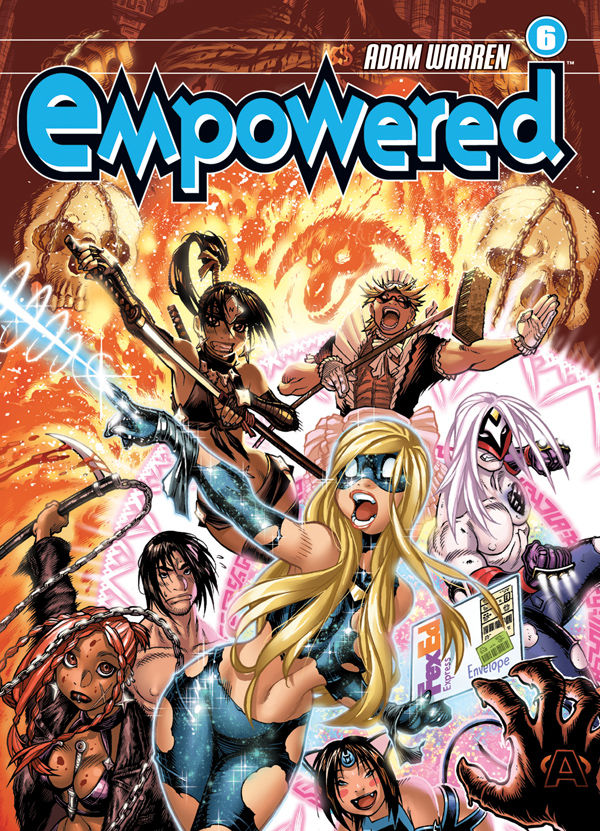
A new volume of Adam Warren’s super-smart, addictive satire, Empowered (Dark Horse), is always good news. It seems like Warren gets around to dealing with the rather loose definition of mortality among the spandex set, and I’d much rather read his take than something like Blackest Night. (Page 35.)

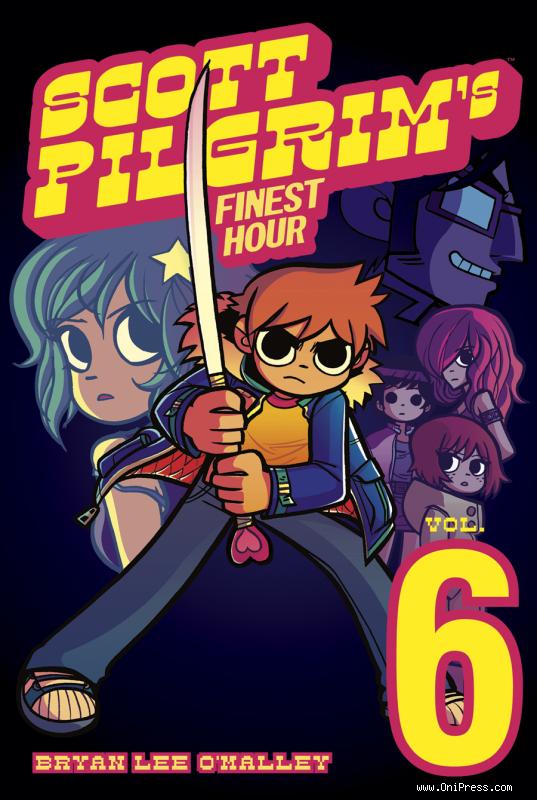
Is it ungrateful of me to be really eager to see what Bryan Lee O’Malley does next? It’s not that I’m indifferent to the conclusion of the Scott Pilgrim saga (which arrives in the form of the sixth volume, Scott Pilgrim’s Finest Hour from Oni Press), which I’m sure I’ll love as much as the previous five. But O’Malley’s been working on Scott for a long time. (Page 233.)

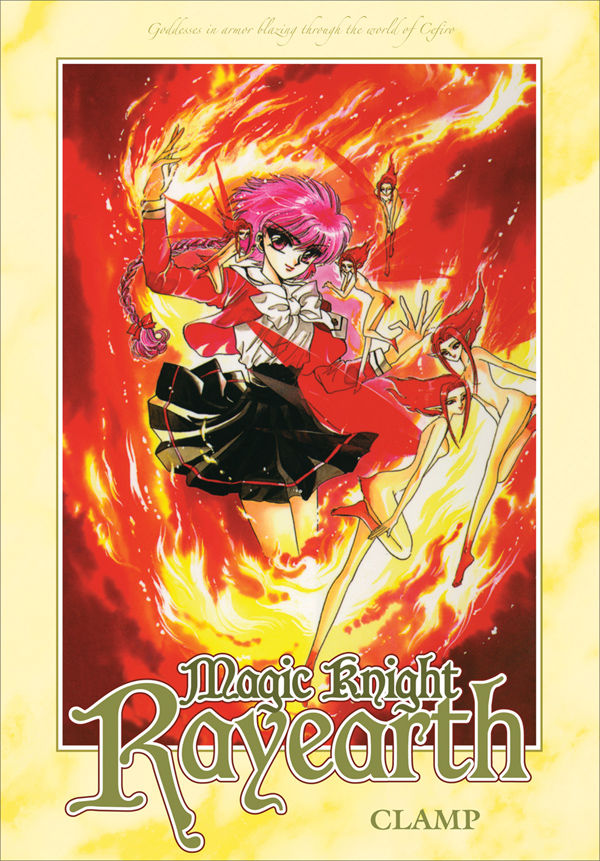
Before we jump fully into the “all-new stuff” department, I’ll bypass quickly to Dark Horse’s release of an omnibus edition of CLAMP’s Magic Knight Rayearth. You can get all three volumes of this magic-girl shôjo classic from the manga superstars. (Page 53.)

CMX publishes a lot of excellent shôjo from Hakusensha, but they branch out this month with Rika Suzuki’s Tableau Gate. It originally ran in Akita Shoten’s Princess Gold, and it’s about a guy who must help a girl capture some escaped tarot cards. I’m sort of a sucker for comics with tarot imagery, and I trust CMX’s taste in shôjo. (Page 129.)

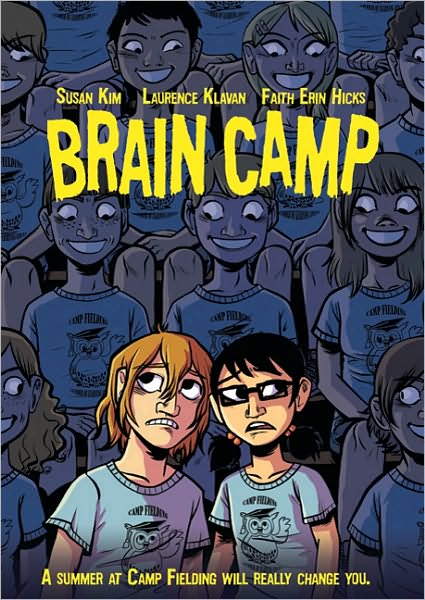
I’m always game for a new graphic novel drawn by Faith Erin Hicks, and First Second is kind enough to provide one. It’s called Brain Camp, and it’s about oddballs dealing with mysterious forces, which is right in Hicks’s wheelhouse. The script is by Susan Kim and Laurence Klavan. (Page 305.)

It’s coming! It’s coming! Top Shelf’s 400-page collection of alternative manga, AX, finally hits the solicitation phase, and it should be very exciting to see. (Page 342.)

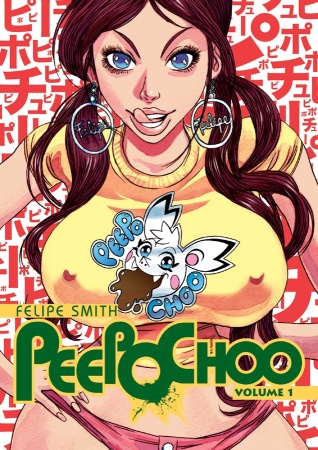
Vertical continues to branch out of classic manga mode with the English-language debut of Felibe Smith’s Peepo Choo. For those who’ve forgotten, Smith has been creating the series for Kodansha’s Morning Two magazine. It’s about a kid from Chicago who gets mixed up with a model from Tokyo and a lot of underworld mayhem. (Page 346.)

I don’t get a particularly good vibe off of Kaneyoshi Izumi’s Seiho Boys’ High School!, due out from Viz. It’s about the student body of an isolated, all-boys’ high school. Anyone who’s read more than one boys’-love title would know how these lads could deal with their isolation, but Izumi apparently decided to take a different approach. The series originally ran in Shogakukan’s Betsucomi.

Filed Under: CMX, Dark Horse, Del Rey, DMP, Fanfare/Ponent Mon, First Second, Oni, Previews, Top Shelf, Vertical, Viz

License request day: Filament

April 30, 2010 by David Welsh

A Manga Moveable Feast is always a good opportunity to see what else the creator has to offer. The weeklong look at Iou Kuroda’s Sexy Voice and Robo (Viz) led me to request for Japan Tengu Party Illustrated, and I’d already asked for Kuroda’s Nasu. By the time the feast focused on Kaoru Mori’s Emma came around, I’d already issued a plea for Otoyomegatari, which is her only other major ongoing work. (Note to self: look into Violet Blossoms at some future date.) So let’s see what’s in store for fans of Yuki Urushibara.

The answer is “Not a whole lot,” but what’s there certainly seems to be worth a look. Filament is a collection of Urushibara’s shorter works that was published by Kodansha in 2004.

“She Got off the Bus at the Peninsula” is about a single mother who takes over the family’s isolated grocery store (conveniently located next to a popular suicide spot). “The Labyrinth Cat” is about a helpful feline who helps humans navigate their baffling apartment complex. “Bio Luminescence” was created under her pen name, Soyogo Shima. I’m not having much luck figuring out what the collection’s title story is about, but the book also contains two of what might be described as Mushishi-verse tales, moving the action into contemporary times and featuring different characters.

Based on the episodic nature of Mushishi, I think it would be fascinating to see a grouping of Urushibara’s shorter, unconnected works. Plus there are apparently several color pages in Filament, and I’d love to see her work in that state, since the Mushishi covers are so gorgeous.

She also has a new ongoing series, Suiiki, which is running in Kodansha’s Afternoon magazine. It’s about a girl who mysteriously travels to a different world every time she dozes off. I don’t think it’s been running long enough to generate a paperback just yet.

Filed Under: License requests, Manga Moveable Feast

If you like Mushishi…

April 29, 2010 by David Welsh

I’m a big fan of Yuki Urushibara’s Mushishi (Del Rey), and I’m a big fan of episodic manga in general. I particularly like Urushibara’s thoughtful, expansive take on her subject matter. For this installment of the Manga Moveable Feast, I thought I’d do something a little different and play a round of the “If you like…” game, finding titles that share qualities with Mushishi and that fans of the series might also enjoy.

If you like the meditative, gentle quality of Mushishi, then I strongly recommend you pick up a volume of Natsume’s Book of Friends (Viz), written and illustrated by Yuki Midorikawa. This shôjo series has a number of qualities in common with Mushishi – an isolated but basically good-natured protagonist, a stand-alone approach to chapter storytelling, and a wide variety of supernatural forces on display. Like Urushibara, Midorikawa is concerned with the coexistence of the mortal and the mysterious, positioning her hero as a sort of diplomat between humans and yôkai, the often mischievous minor demons of Japanese folklore. I find Urushibara and Midorikawa’s visual styles to be similar as well, though whether that’s a selling point for you or not is a matter of taste.

If you just can’t get enough of an optically challenged guy in a trench coat, then Mail (Dark Horse), written and illustrated by Housui Yamazaki, might be the book for you. Like Mushishi’s Ginko, Mail’s Reiji is a man with a mission, though his approach is far less benevolent. He can see ghosts, and he can exorcise them with his trusty firearm. While Urushibara is focused on rural folklore, Yamazaki leads his hero through ghostly urban legends. As with Mushishi, there’s no real underlying narrative, though Reiji gets a nifty origin story, just as Ginko does. Yamazaki’s art is crisp and imaginative, and Mail is excellent companion reading for The Kurosagi Corpse Delivery Service (Dark Horse), also illustrated by Yamazaki and written by Eiji Otsuka.

If you want your well-informed protagonist to be a whole lot meaner, then look no further than Osamu Tezuka’s Black Jack (Vertical). I’m not saying that Ginko is the nicest guy on the block, but he’s positively cuddly next to Tezuka’s mercenary, antisocial surgeon. Black Jack, you see, is so contrary that he won’t even bother to become a licensed physician, no matter how legendary his surgical skills are. Perhaps that’s because he puts “First, do no harm” after “Run a credit check” when it comes to patient care. Black Jack may not have a diploma hanging on his wall, but his nigh-supernatural abilities as a physician put him in tremendous demand with the desperately ill and their loved ones. He has no cuddly bedside manner to offer, but he will travel the world to cure you, if you can afford it. (Black Jack also has the creepiest sidekick imaginable, a sentient tumor named Pinoko trapped in a child’s artificial body, even though she’s been around for 18 years.)

If you just can’t get enough of pesky microbes that influence day-to-day human existence, there’s always Moyasimon (Del Rey), written and illustrated by Masayuki Ishikawa. Unlike the magical microbes in Mushishi, the bacterial supporting cast of Moyasimon can be found in any respectable taxonomy of the tiny. Sometimes they’re beneficial, sometimes they’re malignant, and sometimes they can be both. And where better to ponder their myriad qualities than in an agricultural college? And who better than a student who can actually see and speak to them? That’s what his nutty, fermentation-obsessed professor thinks, and if Tadayasu wanted a normal life, he shouldn’t have signed up for manga stardom. Only one volume is available so far, and the comedic results can be a little scattered, but the series shows a lot of promise.

If you like a little more wrathful judgment in your episodic manga, then unwrap a volume of Presents (CMX), written and illustrated by Kanako Inuki, to see terrible things happen to awful people. This is the title that inspired John Jakala to coin the immortal term “comeuppance theatre,” which has subsequently served countless manga bloggers, me included. In these three volumes, the selfish, greedy, stupid, and neglectful get what’s coming to them just as they grab for what they think they deserve, and Inuki stages these moments of karma with real glee. Mushishi is all about the balance of things, of sometimes opposing forces being restored to equanimity and learning to accept that neither acts with malice. There’s malice aplenty in Presents, which offers a refreshingly nasty change of pace as that malice boomerangs back onto the people who send it out into the karmic ecosystem.

Filed Under: CMX, Dark Horse, Del Rey, Manga Moveable Feast, Quick Comic Comments, Vertical, Viz

Swinging the AX

April 28, 2010 by David Welsh

Speaking of people and things that start with the letter “A,” Brigid Alverson shares some joyous news at Robot 6: that Top Shelf has solicited its eagerly anticipated AX collection of alternative manga. Here’s the blurb from the Top Shelf newsletter that just arrived in my in-box:

PREORDER TOP SHELF’S JULY RELEASES IN THE CURRENT DIAMOND PREVIEWS!

The new May Diamond Previews catalog has THREE great titles available for pre-ordering: Top Shelf’s first foray into the world of alternative Manga with AX (VOL 1), the debut volume of James Kochalka’s new all-ages series DRAGON PUNCHER, and Renee French’s THE TICKING, finally coming back in print!

AX (VOL 1): A COLLECTION OF ALTERNATIVE MANGA

Edited by Sean Michael Wilson

Compiled by Mitsuhiro Asakawa

— A 400-Page Graphic Novel with French Flaps, $29.95 (US)

— Diamond: MAY10-1136

— ISBN 978-1-60309-042-1

Ax is the premier Japanese magazine for alternative comics. Published bi-monthly for over ten years now, the pages of Ax contain the most creative and cutting-edge works of independent comics from the world’s largest comics industry. Now Top Shelf presents a 400-page collection of stories from ten years of Ax history, translated into English for the first time! This groundbreaking book includes work by 33 artists, including Yoshihiro Tatsumi (A Drifting Life), Imiri Sakabashira (The Box Man), Kazuichi Hanawa (Doing Time), Akino Kondoh, Shin’ichi Abe, and many many more!

I was starting to worry that this might wind up on my “most anticipated titles” list for three years in a row.

Filed Under: Anthologies, Press releases, Top Shelf

The Seinen Alphabet: A

April 28, 2010 by David Welsh

Welcome to the first installment of The Seinen Alphabet! As you can see, I’m going to take a slightly different (and marginally less lazy) approach this time around, with snippets about magazines and individual titles (licensed and still yet-to-be translated) primarily targeted at adult men and creators who’ve worked in the category. As you’ll hopefully see, seinen seems like one of the more fluid demographic categories, sometimes seeming more aimed at people who just plain like good comics. But don’t worry! I’ll try not to skimp on the boobs and violence that seem so at home in some seinen quarters. Without further ado…

“A” is for…

AFTERNOON, a monthly manga anthology published by Kodansha. Many excellent comics been serialized in this magazine, some of which have been published in English, and some of which are high on the list of titles I’d like to see licensed. (In the former category is Yuki Urushibara’s Mushishi, which is the topic of the current installment of the Manga Moveable Feast.) Here’s the link to the magazine’s website.

One of those is by Hitoshi ASHINANO, and it’s called Yokohama Kaidashi Kikō. I’ve written about that book here.

Staying on the subject of unlicensed seinen, devotees of culinary manga yearn for an English-language version of ADDICTED TO CURRY, written and illustrated by Kazuki Funatsu and serialized in Shueisha’s Weekly Young Jump. Over 30 collected volumes of the tale of a struggling restaurant are in print.

One of the most well-known seinen titles is probably Katsuhiro Otomo’s AKIRA, which has been available in English for many years and is being re-released by Kodansha USA. Many people cite AKIRA as their gateway manga, and it’s been adapted into a highly regarded animated film. The manga originally ran in Kodansha’s Young Magazine.

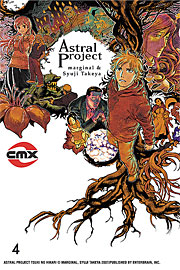
CMX has released the four volumes of ASTRAL PROJECT, written by marginal (also known as Garon Tsuchiya of Old Boy fame) and illustrated by Syuji Takeya. It’s a meditative piece of science fiction, sprinkled liberally with social commentary, and it’s excellent and odd. It originally ran in Enterbrain’s Comic Beam, a rich vein of clean-burning seinen ore.

One should always take the opportunity to mention the godfathers when such opportunities present themselves, so I’ll note that Viz published Osamu Tezuka’s ADOLF, a five-volume thriller about three men with that unfortunate name, including the one who made it so infamous. ADOLF originally ran in Bungeishunjû’s Shukan Bunshun. I’ll also note that another seinen work by Tezuka, AYAKO, is due for publication in October 2010 by Vertical.

Both of these either fall into or were inspired by the seinen subcategory known as gekiga, offering realistic drama based on real-world concerns and complex interpersonal relationships. While Tezuka can be credited with a lot of the building blocks of what we consider modern manga, we must cede ownership of the gekiga movement to Yoshihiro Tatsumi. Some of Tatsumi’s startling and bleak gekiga stories have been collected by Drawn & Quarterly as ABANDON THE OLD IN TOKYO.

One of the most interesting things about seinen is that it seems like such an equal-opportunity category to me. Many of my favorite works have been written and illustrated by women. Perhaps this is because many seinen magazines are less for the vague demographic of “adult men” and more for “people who still like comics after adolescence is over.” I could be wrong, but it seems like more women and girls read seinen and shônen than men and boys read josei and shôjo, so perhaps it isn’t surprising that a respectable number of women create seinen and shônen.

One of those women is Kumiko Suekane, creator of AFTERSCHOOL CHARISMA, which originally ran in Shogakukan’s IKKI and is now being serialized online by Viz prior to print publication. It’s about a high school for clones of famous and infamous historical figures. If you’ve ever yearned to read of the teen adventures of bishie versions of Napoleon, Freud, and Hitler, this is the comic for you. I didn’t even know that I’d yearned to read such a thing until Viz made it possible.

Another is Moyoco ANNO. She’s worked in shôjo (Sugar Sugar Rune) and josei (Happy Mania), but I believe one of her biggest hits runs in a seinen magazine, Kodansha’s Morning. It’s called Hataraki Man, and I want very badly for someone to license it. She’s also done a one-volume series called Sakuran for Kodansha’s Evening.

So, what starts with the letter “A” in your seinen alphabet?

Updated: I can’t believe I forgot another great creator, Hideo AZUMA, who has worked in a variety of categories during his career. He also created a wonderful autobiography, Disappearance Diary, which was published in English by Fanfare/Ponent Mon. One of his seinen titles, Yakekuso Tenshi, was serialized by AKITA SHOTEN in its Play Comic anthology.

Updated again: In the comments and on Twitter, the redoubtable Ed Chavez, who has probably forgotten more about seinen than I’ll ever know, unravels Wikipedia’s web of lies and assures me that Denkeki Daioh, a MediaWorks magazine, falls in the seinen demographic. I thought it did, but all of the references I could find indicated that it was shônen, so I blinked. (Maybe it’s just targeted at developmentally arrested adult males. It would hardly be the first entertainment to do so.) Anyway, this allows me to celebrate not only the brilliantly funny KIYOHIKO AZUMA, but also his AZUMANGA DAIOH (Yen Press), simply the funniest four-panel manga ever to be made available in English. (I’ll get to Yotsuba&! later, presuming the four million magazines that start with the word “Young” don’t push me over the edge as I work on the “Y” entry.)

And JTabon reminds me of INIO ASANO, that gifted portrayer of disaffected youth. Viz has published Asano’s single-volume solanin and two-volume What a Wonderful World! solanin originally ran in Shogakukan’s Young Sunday, and What a Wonderful World! ran in Shogakukan’s Sunday GX. Asano was recently profiled in The Daily Yomiuri and credited with “stories of youth that would be too alien or embarrassing for full-fledged adults.” As a full-fledged adult, I have to take issue with that, though I do tend to view them with a little bit of what I can only describe as old-man smugness.

Filed Under: The Seinen Alphabet

Last straws

April 27, 2010 by David Welsh

Over at Robot 6, Sean T. Collins asks an interesting question:

“[W]e’ve probably all permanently dropped a comic, a character, or a creator we once got something out of. My question for you is, What was it, and what did it?”

Here are the two last straws for me with Marvel and DC.

In fairness, I didn’t expect much from the re-launch of the Avengers brand, since I had no affection for the “Disassembled” arc that paved the way for it. But this was when morbid curiosity held more sway in my purchasing decisions, so in spite of a team roster that looked like a Marvel house ad from 1982 and a writer who had drastically fallen out of my favor, I gave it a look. The comic itself was tolerable up until the point that two of the hold-over characters (Iron Man and Captain America) talked in a Mamet-in-spandex way about how awesome the previous 15 pages had been. It’s one thing to drastically remake a franchise into a blandly wide-screen, marquee-friendly property, but the self-congratulatory tone was just too much.

Do I even need to explain myself with this one? Following a needlessly brutal first issue in which an amiable, B-list supporting character is murdered, we get some needlessly brutal back story on how that character was raped. Beyond the baseline grossness of the actual events depicted, there was the very real sense that this thing and its tone and its study-hall gravitas was going to be the company’s tent pole for years to come, so I got while the getting was good.

Filed Under: DC, Linkblogging, Marvel

« Previous Page
Next Page »

Features

  • Fruits Basket MMF
  • Josei A to Z
  • License Requests
  • Seinen A to Z
  • Shôjo-Sunjeong A to Z
  • The Favorites Alphabet

Categories

Recent Posts

  • Hiatus
  • Upcoming 11/30/2011
  • Upcoming 11/23/2011
  • Undiscovered Ono
  • Re-flipped: not simple

Comics

  • 4thletter!
  • Comics Alliance
  • Comics Should Be Good
  • Comics Worth Reading
  • Comics-and-More
  • Comics212
  • comiXology
  • Fantastic Fangirls
  • Good Comics for Kids
  • I Love Rob Liefeld
  • Mighty God King
  • Neilalien
  • Panel Patter
  • Paul Gravett
  • Polite Dissent
  • Progressive Ruin
  • Read About Comics
  • Robot 6
  • The Comics Curmudgeon
  • The Comics Journal
  • The Comics Reporter
  • The Hub
  • The Secret of Wednesday's Haul
  • Warren Peace
  • Yet Another Comics Blog

Manga

  • A Case Suitable for Treatment
  • A Feminist Otaku
  • A Life in Panels
  • ABCBTom
  • About.Com on Manga
  • All About Manga
  • Comics Village
  • Experiments in Manga
  • Feh Yes Vintage Manga
  • Joy Kim
  • Kuriousity
  • Manga Out Loud
  • Manga Report
  • Manga Therapy
  • Manga Views
  • Manga Widget
  • Manga Worth Reading
  • Manga Xanadu
  • MangaBlog
  • Mecha Mecha Media
  • Ogiue Maniax
  • Okazu
  • Read All Manga
  • Reverse Thieves
  • Rocket Bomber
  • Same Hat!
  • Slightly Biased Manga
  • Soliloquy in Blue
  • The Manga Critic

Pop Culture

  • ArtsBeat
  • Monkey See
  • Postmodern Barney
  • Something Old, Nothing New

Publishers

  • AdHouse Books
  • Dark Horse Comics
  • Del Rey
  • Digital Manga
  • Drawn and Quarterly
  • Fanfare/Ponent Mon
  • Fantagraphics Books
  • First Second
  • Kodansha Comics USA
  • Last Gasp
  • NBM
  • Netcomics
  • Oni Press
  • SLG
  • Tokyopop
  • Top Shelf Productions
  • Vertical
  • Viz Media
  • Yen Press

Archives

Copyright © 2026 · Genesis Framework · WordPress · Log in